

March 17, 461 (or 493)
Christianity, Language, and the Evolution of English
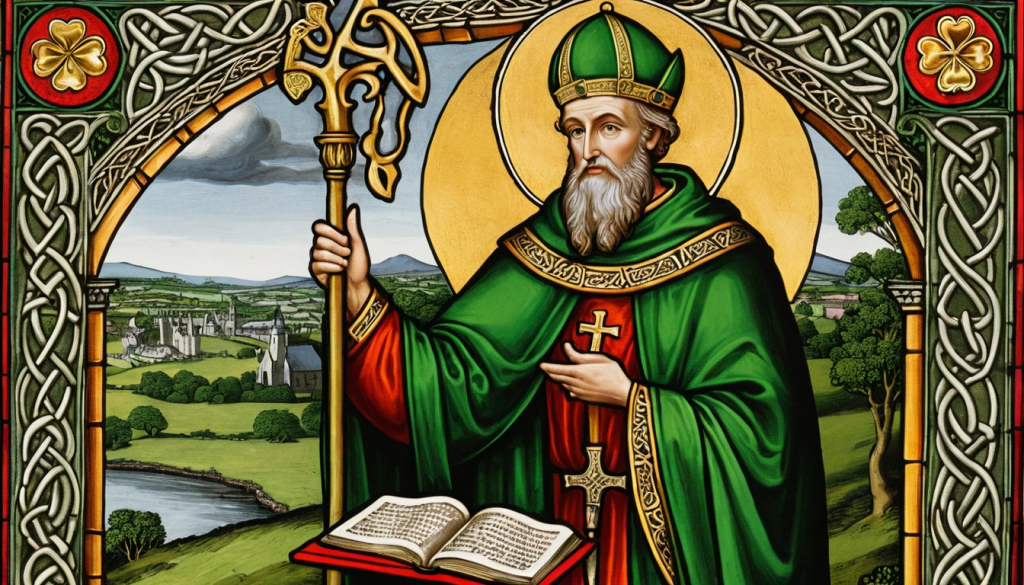
On March 17, Saint Patrick, the patron saint of Ireland, is traditionally believed to have passed away, though historical sources vary on whether this occurred in 461 or 493. His missionary work in Ireland during the 5th century played a pivotal role in Christianizing the region, bringing Latin religious texts, prayers, and scholarship into contact with the Celtic languages spoken by the Irish. Over time, this fusion of Latin, Old Irish, and early English influences contributed to the linguistic and literary development of English as a language of faith, poetry, and historical record.
Saint Patrick and the Linguistic Influence of Christianity
Saint Patrick, originally from Roman Britain, was instrumental in converting the Irish to Christianity, which led to the widespread use of Latin in religious and scholarly contexts. His influence helped shape the linguistic evolution of the British Isles in several ways:
1. The Introduction of Latin Religious Terminology into Old English
The spread of Christianity in Ireland and Britain introduced Latin words into local languages, many of which later became integral to English religious and literary traditions. Terms such as:
- Clergy-related words: bishop, priest, altar, hymn, psalm
- Doctrinal terms: grace, sacrament, redemption, repentance
- Monastic life vocabulary: abbot, monastery, parchment, scribe
These words, initially borrowed from Latin, became foundational elements of Christian English discourse, shaping how religious texts and teachings were communicated.
2. The Growth of Written English Through Irish Monasticism
Ireland’s early monasteries, established following Patrick’s missionary efforts, became centers of learning and manuscript preservation. By the early medieval period, Irish monks played a crucial role in:
- Copying and preserving Latin manuscripts, ensuring the survival of classical knowledge.
- Developing illuminated manuscripts, such as the Book of Kells, which set aesthetic and linguistic standards for written English.
- Influencing the use of Latin script, which helped transition Old English from its earlier runic writing system into the Roman alphabet, still used today.
3. The Influence of Old Irish on English Vocabulary
Through the interaction of Irish missionaries with Anglo-Saxon England, Old Irish words found their way into English, particularly in areas related to:
- Spirituality and folklore: banshee (bean sí, meaning “fairy woman”), leprechaun (leipreachán, a small supernatural being), and shamrock (seamróg, meaning “little clover”).
- Daily life and poetry: Irish poetic structures and traditions influenced Anglo-Saxon verse, contributing to the evolution of oral storytelling in English literature.
The Cultural and Literary Impact of Saint Patrick’s Legacy
The enduring influence of Saint Patrick’s mission extended beyond religion and into the realms of literature, mythology, and national identity, shaping how the English language absorbed Irish and Christian elements.
1. The Celebration of St. Patrick’s Day and Its Linguistic Influence
The commemoration of Saint Patrick’s death on March 17 evolved into St. Patrick’s Day, a cultural and linguistic phenomenon that introduced terms like:
- “Emerald Isle” – A poetic reference to Ireland, which became widely used in English literature.
- “Wearing of the green” – A phrase linked to Irish nationalism and the tradition of wearing green on St. Patrick’s Day.
- “Luck of the Irish” – A phrase that became embedded in English idioms, often used to refer to unexpected fortune.
Through centuries of Irish emigration, particularly to the United States, Canada, and Australia, St. Patrick’s Day became an internationally recognized holiday, bringing Irish vocabulary and traditions into global English usage.
2. The Role of Irish Storytelling and Mythology in English Literature
Ireland’s rich oral storytelling tradition, deeply influenced by early monastic scholars, shaped the development of medieval and later English literature. Irish myths, many of which were first transcribed by Christian monks, influenced:
- Arthurian legends, as Irish heroic tales were absorbed into medieval romance literature.
- English poetry, with Irish-influenced rhythmic patterns and alliteration appearing in works like Beowulf.
- Fantasy literature, as Irish folklore provided inspiration for modern authors like J.R.R. Tolkien, who incorporated elements of Celtic myth into The Lord of the Rings.
Saint Patrick’s Enduring Legacy in the English Language
Saint Patrick’s influence extends far beyond his lifetime, having shaped how English evolved in religious, literary, and everyday contexts. His mission led to:
- The introduction of Latin religious vocabulary into early English.
- The rise of Irish monastic scholarship, which preserved and refined English literacy.
- The integration of Irish words and folklore into English, enriching its storytelling tradition.
- The global spread of Irish cultural expressions, especially through St. Patrick’s Day celebrations.
Through these contributions, Saint Patrick not only changed the course of Irish and Christian history, but also left a linguistic and literary legacy that continues to influence the English-speaking world to this day.
From prayers to poetry, Saint Patrick’s legacy isn’t just history—it’s woven into the very words we speak today!
Originally published on March 17, 2025, on The-English-Nook.com.
Visit my page to find out ‘What Happened on this Day?‘ and learn ‘The Word of the Day‘—you’ll find it here first and all in one place!
If you’re a language enthusiast, you’ll have access to a variety of resources, including short stories in English and Spanish, interesting readings, vocabulary, and much more—not just for English, but also for Spanish. Come check it out!
 What Happened on This Day?
Leave a comment