
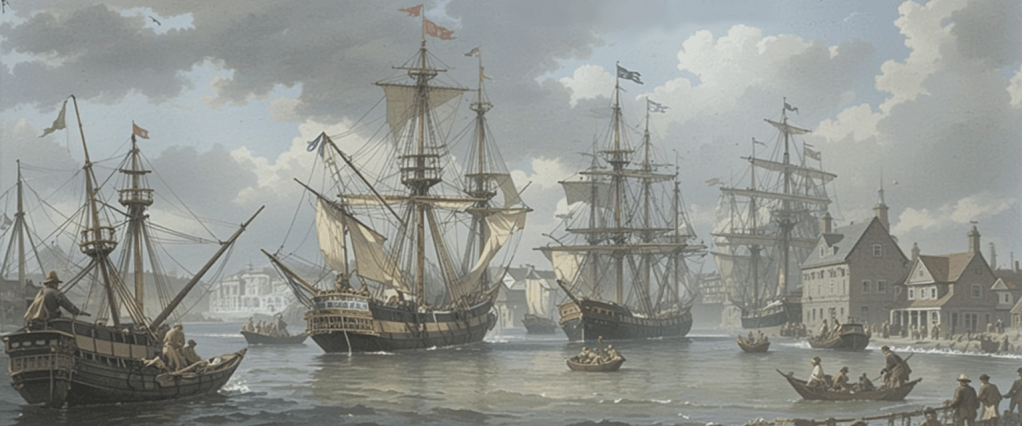
March 31, 1774
A Turning Point in Colonial Resistance
On March 31, 1774, the British Parliament passed the Boston Port Act, one of the Coercive Acts (also known as the Intolerable Acts), in response to the Boston Tea Party of December 1773. This legislation closed the port of Boston until the East India Company was compensated for the destroyed tea, aiming to punish the rebellious colony of Massachusetts and reassert British control. However, rather than subduing resistance, the act intensified colonial grievances and fueled revolutionary discourse.
The period surrounding the American Revolution saw a surge in political pamphlets, speeches, and debates that significantly shaped the English language, particularly in the realms of political rhetoric and persuasive writing. Many of the expressions and ideas formulated during this time remain central to discussions of governance, liberty, and rights.
Revolutionary Rhetoric and the Evolution of Political Language
The passage of the Boston Port Act marked a shift in colonial political discourse, with an increasing emphasis on rights, representation, and resistance to tyranny. This era saw the popularization of key phrases and rhetorical devices that continue to influence political speech today.
- “No taxation without representation” – Though already in use before the Boston Port Act, this phrase gained renewed prominence as colonial leaders denounced British policies. It set a precedent for later political movements advocating representative government.
- “Intolerable Acts” – A term coined by American patriots to describe the Coercive Acts, including the Boston Port Act. The word intolerable became a powerful descriptor of unjust governance, reinforcing its use in later protest movements.
- “Tyranny” and “Tyrannical rule” – Frequently used by American revolutionaries to describe British policies, these terms became embedded in the English language as shorthand for oppressive government, influencing later democratic rhetoric.
- “Unalienable rights” – Though most famously appearing in the Declaration of Independence (1776), the concept was already circulating in revolutionary discourse, reflecting the philosophical influence of Enlightenment thinkers such as John Locke.
These phrases not only shaped the American Revolution but also became part of the broader English lexicon, influencing political discussions worldwide.
The Influence of Pamphleteers and Orators on English Political Speech
The Boston Port Act and the broader Coercive Acts spurred an explosion of pamphlets and speeches that refined and expanded English political language. Figures such as Samuel Adams, John Adams, and Patrick Henry played a pivotal role in shaping the rhetoric of revolution.
- Samuel Adams and the Language of Resistance – In his fiery essays and public addresses, Adams frequently used words such as despotism, oppression, and arbitrary power to describe British rule. His language set the tone for later political activism.
- John Adams and Legal Justifications for Rebellion – A lawyer by trade, Adams contributed to the development of legal and constitutional arguments against British policies, helping to formalize terms such as natural rights, rule of law, and legislative authority.
- Patrick Henry’s Persuasive Oratory – Best known for his “Give me liberty, or give me death!” speech, Henry’s rhetorical style popularized impassioned appeals to justice and freedom, reinforcing the use of liberty as a rallying cry in English political discourse.
These pamphleteers and orators did more than advocate for independence; they enriched the English language with political terminology and persuasive techniques that continue to shape public discourse.
The Boston Port Act’s Legacy in Political and Legal Language
The rhetoric developed in response to the Boston Port Act and other British policies laid the foundation for political speech in the English-speaking world. It influenced not only the American Revolution but also later movements advocating democracy, human rights, and civil liberties.
- Constitutional Language – Many of the phrases and arguments crafted during this time found their way into foundational documents such as the U.S. Constitution and Bill of Rights, cementing terms like due process, checks and balances, and separation of powers in English legal vocabulary.
- Political Debates and Protest Movements – The language of resistance developed during the American Revolution reappeared in later struggles, from the abolitionist movement to the civil rights movement, with phrases like unjust laws and the will of the people drawing direct inspiration from 18th-century rhetoric.
- Persuasive Writing and Oratory – The techniques refined by revolutionary leaders—such as the use of parallel structure, rhetorical questions, and appeals to shared values—became standard tools in English political and legal discourse.
The Enduring Impact of Revolutionary Language
The Boston Port Act, intended to suppress colonial defiance, instead ignited a firestorm of political discourse that profoundly shaped the English language. The words and phrases coined in response to British rule continue to influence debates on governance, liberty, and justice.
- The act contributed to the development of powerful political expressions, including “no taxation without representation” and “unalienable rights.”
- The pamphlets and speeches of the period refined the art of political persuasion, introducing rhetorical techniques that remain central to public speaking.
- The legal and philosophical arguments developed in response to British policies shaped constitutional language and democratic principles.
More than just a historical event, the Boston Port Act played a crucial role in the evolution of political rhetoric in the English language, leaving a lasting impact on the way people discuss governance and rights to this day.
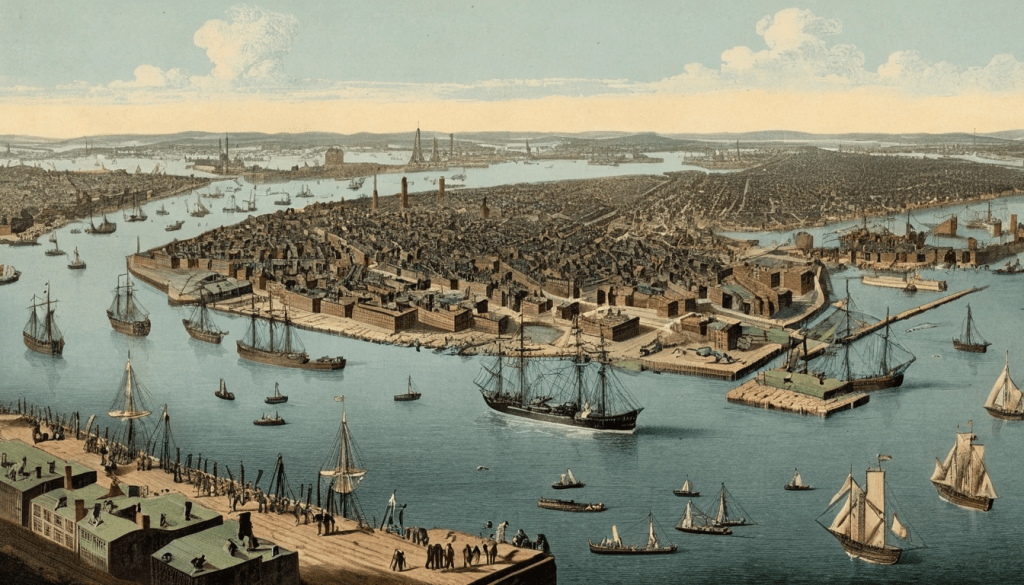
When Britain shut Boston’s port, it opened the floodgates of revolution!
Originally published on March 31, 2025, on The-English-Nook.com.
Visit my page to find out ‘What Happened on this Day?‘ and learn ‘The Word of the Day‘—you’ll find it here first and all in one place!
If you’re a language enthusiast, you’ll have access to a variety of resources, including short stories in English and Spanish, interesting readings, vocabulary, and much more—not just for English, but also for Spanish. Come check it out!
 What Happened on This Day?
Leave a comment