

March 30, 1820
A Literary Voice for Animal Welfare and Social Reform
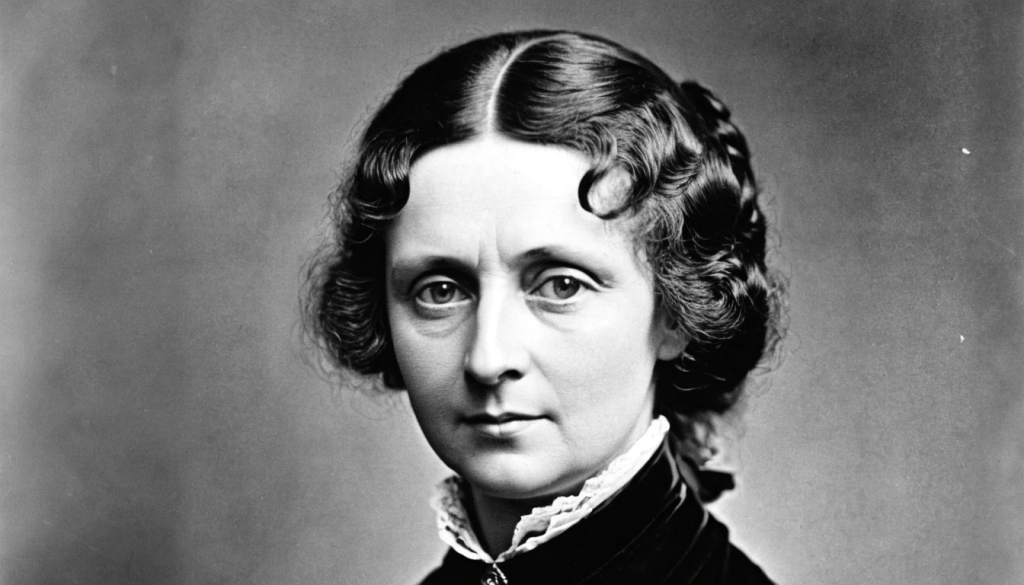
On March 30, 1820, English novelist Anna Sewell was born in Norfolk, England. Though she only wrote one novel, Black Beauty (1877), its impact on the English language and literature has been profound. Written during her prolonged illness and published just months before her death, Black Beauty was unique in its time for being narrated from the perspective of a horse. More than just a work of fiction, the novel served as a social commentary on the ethical treatment of animals, influencing both public attitudes and the vocabulary used to discuss animal welfare, labor rights, and compassion.
Through its widespread readership and translation into multiple languages, Black Beauty introduced new phrases, reinforced existing idioms, and contributed to the evolution of ethical discourse in English.
The Novel’s Influence on English Idioms and Expressions
Sewell’s writing played a key role in shaping certain English expressions and metaphors, many of which remain in common use today.
- “Breaking in” – The process of training a horse to accept a rider was well known before Black Beauty, but the novel popularized its metaphorical application to humans. Today, “breaking in” is commonly used to describe adjusting someone to a new job, lifestyle, or routine.
- “Overworking” – Black Beauty vividly illustrated the cruelty of overburdening working horses, reinforcing the term “overworked” as a critique of excessive labor. This contributed to later discussions on workers’ rights, making “overwork” a central term in debates on fair labor conditions.
- “A good master makes a good servant” – A phrase from the novel that highlights the idea that kind and fair leadership results in loyalty and productivity. This expression has since been adapted in various leadership and management contexts.
- “Bearing rein” – This controversial piece of horse tack, which forced a horse’s head unnaturally high, became a powerful symbol of unnecessary suffering. In English, “bearing rein” has since been metaphorically used to describe oppressive restrictions in both personal and professional contexts.
The novel’s influence extended beyond equestrian language, encouraging a broader awareness of ethical responsibility and humane treatment across different aspects of society.
Impact on Animal Welfare and Ethical Discourse
Beyond idioms and expressions, Black Beauty helped establish key vocabulary in discussions on animal welfare, reinforcing terms such as:
- “Humane treatment” – A phrase Sewell helped popularize in the context of animals, which later expanded to discussions about human rights and ethical labor practices.
- “Kind handling” – Emphasized throughout the novel, this phrase promoted the idea that treating animals (and by extension, people) with respect leads to better outcomes.
- “Working animals” – Sewell’s depiction of horses as laborers contributed to a wider acknowledgment of their physical and emotional needs, shaping the way people discuss and legislate animal welfare.
The book’s success played a pivotal role in the animal rights movement, influencing organizations such as the Royal Society for the Prevention of Cruelty to Animals (RSPCA). Its emphasis on ethical responsibility encouraged the use of new terms in discussions surrounding the treatment of both animals and humans.
A Legacy in Literature and Linguistic Development
Black Beauty is more than just a children’s classic—it is a linguistic and cultural milestone. By blending storytelling with social critique, Sewell enriched English vocabulary with terms and expressions that continue to shape discussions on kindness, labor, and ethical responsibility.
The novel also paved the way for sentimental literature, inspiring later works that used an animal’s perspective to evoke empathy and moral reflection. This led to the increased use of terms like “anthropomorphic storytelling” and “animal ethics” in literary and philosophical discussions.
The Enduring Power of Black Beauty in the English Language
Although Black Beauty was written as a fictional autobiography of a horse, its influence extends far beyond equestrian literature. Its contributions to English language development include:
- The reinforcement and expansion of idiomatic expressions related to labor and fairness.
- The introduction of ethical vocabulary that continues to shape discussions on humane treatment.
- The inspiration for later works in sentimental and advocacy literature, strengthening the language of social reform.
Today, Black Beauty remains one of the most widely read novels in English, with over fifty million copies sold. More than a century after its publication, its linguistic impact endures, proving that literature has the power to shape both language and social consciousness.
One novel, one voice, a lifetime of change—Black Beauty still speaks volumes!
🐎
Originally published on March 30, 2025, on The-English-Nook.com.
Visit my page to find out ‘What Happened on this Day?‘ and learn ‘The Word of the Day‘—you’ll find it here first and all in one place!
If you’re a language enthusiast, you’ll have access to a variety of resources, including short stories in English and Spanish, interesting readings, vocabulary, and much more—not just for English, but also for Spanish. Come check it out!
 What Happened on This Day?
Leave a comment