
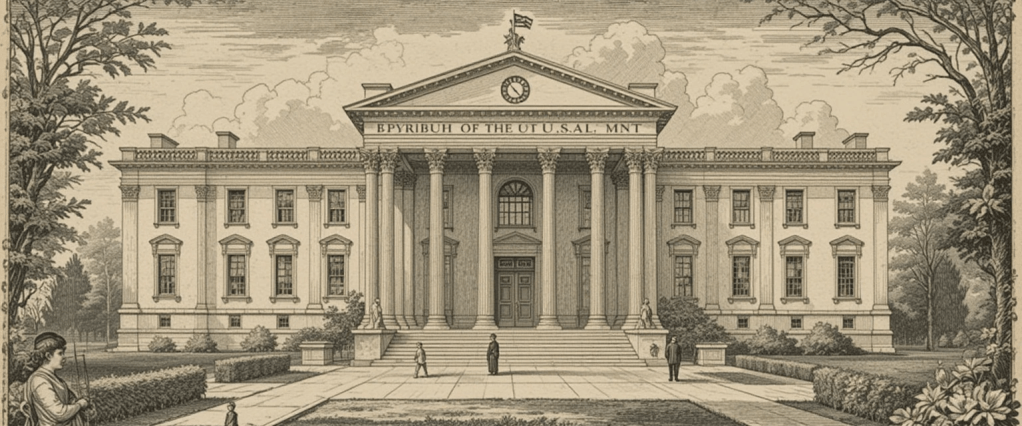
April 2, 1792
The Establishment of the U.S. Mint and Its Linguistic Legacy
On April 2, 1792, the United States Congress passed the Coinage Act, formally creating the U.S. Mint and standardizing the nation’s currency. This legislation was a critical step in establishing financial stability in the young nation, ensuring a uniform system of money that replaced the use of foreign coins and inconsistent state currencies. Beyond its economic significance, the Coinage Act played a key role in shaping American English by introducing and popularizing monetary terms that remain fundamental to the language today.
Key Terms Introduced by the Coinage Act
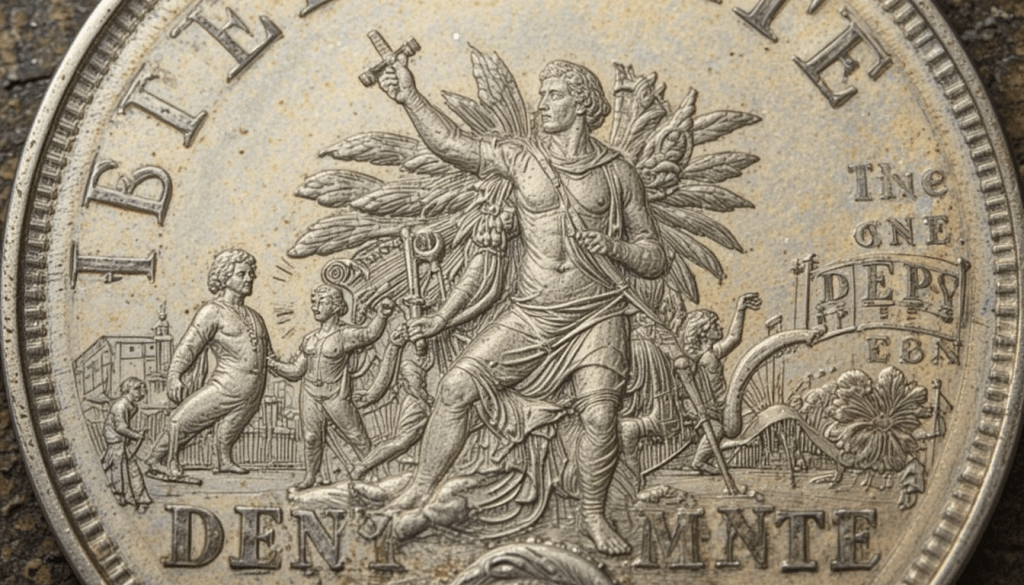
The Coinage Act standardized several denominations of U.S. currency, many of which became integral to everyday English vocabulary. These include:
- “Dollar” – Derived from the German thaler, the term dollar was officially adopted as the primary unit of U.S. currency, solidifying its place in English. Over time, it became a widely recognized term not only in the United States but also internationally.
- “Cent” – Based on the Latin centum (meaning “one hundred”), the cent was introduced as one-hundredth of a dollar. This term reinforced numerical concepts in English and is frequently used in expressions like a penny for your thoughts or not worth a cent.
- “Dime” – From the French dîme, meaning “tenth,” the dime represented one-tenth of a dollar. This word entered common parlance and later inspired idioms such as stop on a dime and nickel-and-dime.
- “Eagle” – While no longer in use, the eagle was originally a gold coin worth ten dollars. Though it faded from circulation, it influenced American heraldry and expressions related to strength and value.
The Influence of U.S. Currency on English Idioms and Expressions
The widespread use of standardized currency following the Coinage Act led to the creation and reinforcement of various English idioms and phrases related to money. Some notable examples include:
- “A dime a dozen” – Meaning something is very common or inexpensive, this phrase stems from the dime’s role as a small yet significant denomination.
- “Dollar for dollar” – Expressing equal value in exchange, this phrase highlights the importance of the dollar as the base unit of currency.
- “Not worth a cent” – Indicating something of little or no value, this expression emphasizes the cent as the smallest unit of monetary worth.
- “Nickel-and-dime” – Originally referring to small amounts of money, this phrase evolved to describe trivial matters or excessive frugality.
- “A pretty penny” – Referring to something expensive, this phrase derives from early coinage and the idea that accumulating wealth in small denominations could be significant.
The Coinage Act’s Lasting Impact on Language and Culture
The passage of the Coinage Act of 1792 not only established the foundation of the U.S. financial system but also left a lasting imprint on the English language.
- The terms introduced by the act—such as dollar, cent, and dime—became deeply embedded in American English and influenced monetary terminology worldwide.
- Currency-related idioms enriched the language, providing new ways to express ideas of value, exchange, and financial worth.
- The act reinforced the role of money in shaping cultural expressions, storytelling, and communication, making financial terminology a key component of everyday speech.
From its legal origins to its linguistic influence, the Coinage Act remains a pivotal moment in history that continues to shape how English speakers talk about money and value.
From coins to catchphrases—the Coinage Act didn’t just mint money, it minted language! 💰🗣️
Originally published on April 2, 2025, on The-English-Nook.com.
Visit my page to find out ‘What Happened on this Day?‘ and learn ‘The Word of the Day‘—you’ll find it here first and all in one place!
If you’re a language enthusiast, you’ll have access to a variety of resources, including short stories in English and Spanish, interesting readings, vocabulary, and much more—not just for English, but also for Spanish. Come check it out!
 What Happened on This Day?
Leave a comment