
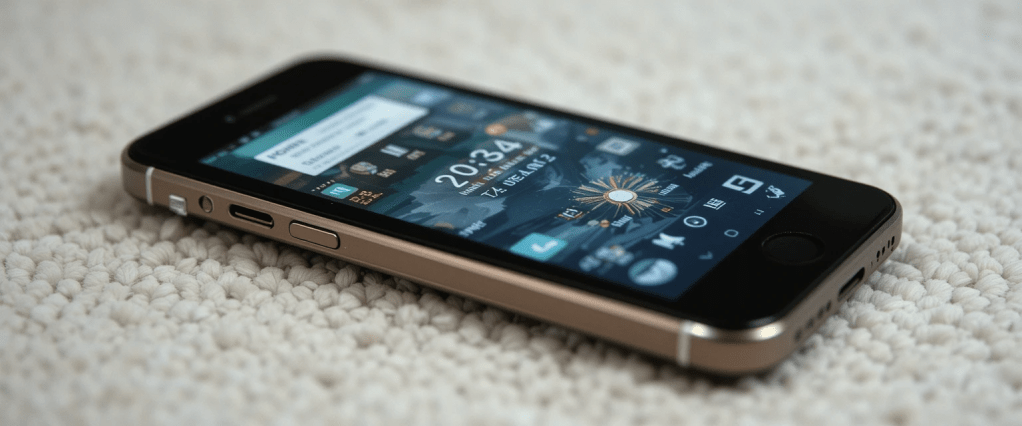
April 3, 1973
A Revolutionary Moment in Communication
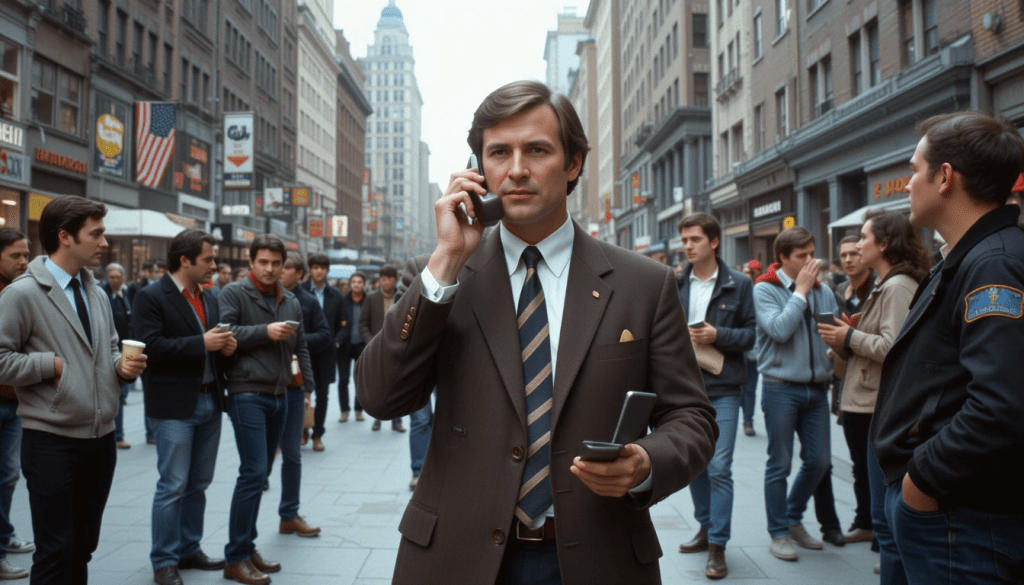
On April 3, 1973, Motorola executive Martin Cooper made history by placing the first-ever public call from a handheld mobile phone. Standing on a street in New York City, he called his rival at Bell Labs to demonstrate the groundbreaking technology. This moment marked the beginning of the mobile communication era, paving the way for devices that would transform how people connect across the world. Beyond its technological significance, this innovation introduced new vocabulary and concepts into the English language, many of which remain central to modern communication.
The Emergence of Mobile Phone Terminology
The advent of handheld mobile phones required new terminology to describe their function and usage. Some of the most influential terms that entered English due to this breakthrough include:
- “Mobile phone” – Derived from the idea of mobility, this term emphasized the device’s ability to be used on the go, distinguishing it from traditional landline telephones.
- “Cell phone” – Short for cellular phone, this term became especially popular in American English, referencing the cellular network infrastructure that enables mobile communication.
- “Handheld” – While this word existed before mobile phones, its association with personal communication devices became more widespread after the first call.
- “Wireless” – Previously used in the context of radio communication, wireless became more commonly associated with mobile technology, eventually influencing terms like wireless network and Wi-Fi.
- “Call drop” – With mobile communication came the possibility of interrupted connections, leading to the widespread usage of phrases like dropped call.
- “Signal strength” – A term referring to the quality of a mobile phone’s connection to a network, now commonly represented by bars or icons on a screen.
- “Roaming” – Originally a technical term, roaming refers to a mobile phone’s ability to connect to networks outside its home area, often leading to additional charges.
- “Antenna” – While antennas existed before mobile phones, the miniaturized, built-in antennas of handheld devices popularized the term in daily conversations.
- “Battery life” – As mobile phones relied on rechargeable batteries, discussions around battery life became crucial to phone users.
- “Charger” – Though chargers were used for other electronic devices, their significance grew with mobile phones, leading to the development of terms like fast charger and wireless charger.
The Evolution of Mobile Phone-Related Expressions
As mobile phones became a part of everyday life, new expressions and idioms emerged, reflecting their cultural impact:
- “Hang up” – Originally referring to ending a landline call by physically hanging up the receiver, this phrase persisted in the mobile era, even though mobile phones lack a hook to hang up.
- “Text me” – With the rise of SMS (short message service), text evolved from a noun to a verb, commonly used to refer to sending short written messages.
- “Missed call” – A term for an unanswered call, which later became a form of nonverbal communication in some cultures (e.g., a single ring as a signal).
- “Voicemail” – An evolution of the traditional answering machine, voicemail became an integral part of mobile communication.
- “Pocket call” or “Butt dial” – Describing accidental phone calls made when a mobile device is unintentionally activated in a pocket or bag.
- “Screen time” – With mobile phones becoming multifunctional devices, discussions around screen time emerged to address concerns about excessive usage.
- “Phone addiction” – A term that arose as mobile devices became integral to daily life, highlighting concerns about excessive phone use.
- “Low battery anxiety” – A modern phrase referring to the stress people feel when their phone’s battery is nearly depleted, illustrating the deep dependence on mobile technology.
- “Ping” – Originally a networking term, ping has evolved into everyday language, referring to sending a quick message or checking someone’s availability.
- “Swipe” – The rise of touchscreen mobile phones introduced swipe into common vocabulary, particularly in contexts like unlocking phones and dating apps (swipe left/right).
- “Push notification” – A term for automatic messages sent to a mobile device, keeping users updated on apps, messages, or news.
- “Tapping” – Originally meaning to lightly strike something, tapping took on new meaning with touchscreens, now referring to selecting an item by pressing on a screen.
- “Autocorrect” – A feature that automatically corrects spelling errors in text messages, leading to humorous mistakes and expressions like autocorrect fail.
- “Selfie” – Though the concept of self-portraits existed, the term selfie became widespread with mobile phone cameras, defining a new cultural phenomenon.
- “Bluetooth” – A technology enabling wireless connectivity between devices, the word Bluetooth has become synonymous with hands-free communication.
- “Airplane mode” – A term describing a phone setting that disables wireless communication, originating from flight safety regulations.
The Lasting Influence of the First Mobile Phone Call
The first handheld mobile phone call in 1973 was more than a technological milestone—it was a turning point in how people communicate and how language adapts to innovation.
- The widespread adoption of mobile phones led to the creation and evolution of new words, phrases, and idioms in the English language.
- The shift to mobile communication changed social behaviors, influencing how people talk about availability, connectivity, and digital presence.
- As technology advanced, mobile phone terminology continued to expand, influencing later innovations such as smartphones, apps, and mobile internet.
- The rise of texting, social media, and mobile applications introduced even more linguistic changes, including abbreviations (LOL, BRB, DM), new verbs (Google, Snapchat, FaceTime), and emojis as a form of digital expression.
From a single call on a New York City street to a world where billions of people rely on mobile devices daily, Martin Cooper’s pioneering moment fundamentally changed communication—and the language used to describe it.
From one call to billions—April 3, 1973, wasn’t just a conversation; it was the start of a global connection.
Originally published on April 3, 2025, on The-English-Nook.com.
Visit my page to find out ‘What Happened on this Day?‘ and learn ‘The Word of the Day‘—you’ll find it here first and all in one place!
If you’re a language enthusiast, you’ll have access to a variety of resources, including short stories in English and Spanish, interesting readings, vocabulary, and much more—not just for English, but also for Spanish. Come check it out!
 What Happened on This Day?
Leave a comment