

April 14, 1912
The Collision That Changed the World
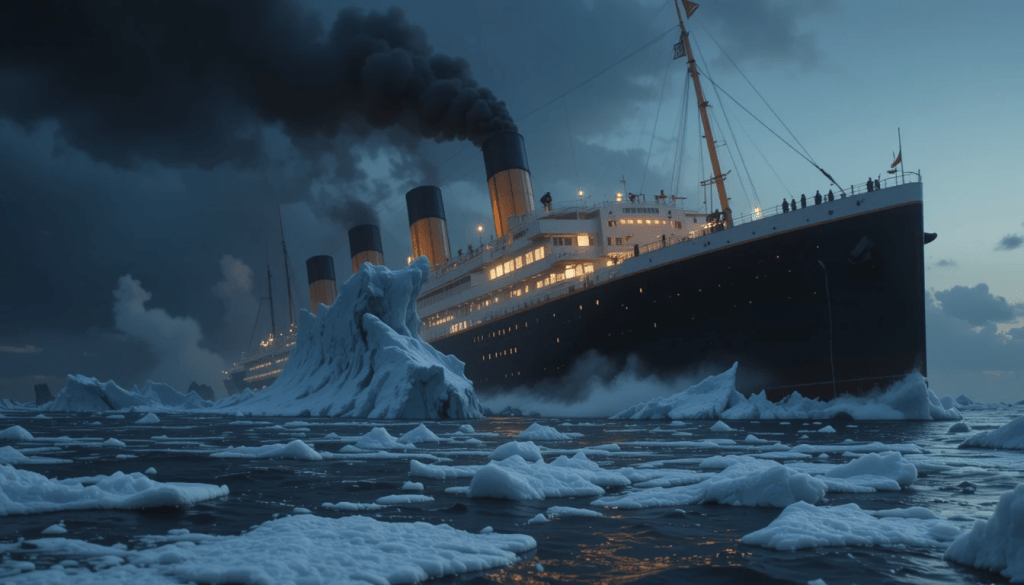
On the night of April 14, 1912, the RMS Titanic, one of the most luxurious and largest passenger ships of its time, struck an iceberg in the North Atlantic Ocean. The collision occurred during the ship’s maiden voyage from Southampton to New York City. In the early hours of April 15, the Titanic sank, leading to the deaths of over 1,500 people. The disaster became an enduring symbol of human ambition, hubris, and vulnerability—captivating public imagination and giving rise to a wealth of expressions, idioms, and metaphors that have become ingrained in the English language.
Linguistic Legacy and Iconic Phrases
The Titanic tragedy contributed several notable phrases and concepts to the English lexicon, many of which continue to evoke broader ideas of disaster, irony, and heroism.
- “The unsinkable ship” – Originally a marketing claim, this phrase took on tragic irony after the ship’s demise. Today, it is used metaphorically to describe overconfidence in seemingly infallible systems or entities that eventually fail.
- “Women and children first” – This maritime code of conduct, reportedly followed during the evacuation, became a symbolic expression of gallantry and sacrifice. It is now used broadly to suggest prioritizing the vulnerable during crises.
- “Like rearranging deck chairs on the Titanic” – A modern idiom born from retrospective critiques of the ship’s final hours. It implies futile or superficial action in the face of impending catastrophe.
- “Titanic struggle” / “Titanic failure” – The ship’s name has transcended its literal meaning, becoming a metaphor for massive efforts or monumental disasters, often used in political, economic, or athletic contexts.
Impact on English Maritime Terminology
The Titanic disaster spurred intense public discourse and reform, leading to changes not just in maritime regulations, but also in the language surrounding ship safety and navigation.
- “Lifeboat drill,” “watertight compartments,” and “ice patrol” became household terms as inquiries into the tragedy revealed critical safety failures.
- Increased references to “radio distress signals” and the Marconi wireless brought technological vocabulary into the public domain, as communication (or lack thereof) became a focal point in analyzing the event.
- The phrase “Maritime disaster” gained broader resonance and is now often used generically in news and legal contexts to refer to large-scale accidents at sea.
Narratives of Class, Heroism, and Tragedy in Literature and Popular Culture
The Titanic’s story quickly entered the realms of literature, film, and popular culture, shaping both the language of storytelling and the themes explored in English fiction.
- Accounts of passengers from first, second, and third class highlighted social divides and introduced terminology reflecting socioeconomic hierarchy aboard early 20th-century liners.
- The notion of the “unsinkable Molly Brown” and other tales of survival and bravery became mythologized in newspapers, books, and eventually cinema, reinforcing tropes of human resilience and fate.
- Countless novels, poems, documentaries, and films—especially James Cameron’s Titanic (1997)—have contributed new idioms and references to English discourse, such as “I’ll never let go,” used both humorously and emotionally to signify unwavering attachment or loyalty.
Cultural Metaphors and Enduring Symbolism
Beyond its historical context, the Titanic has become a cultural metaphor in English-speaking societies, representing everything from corporate downfall to environmental disaster.
- In economics, the metaphor of “steering the Titanic toward the iceberg” suggests the inevitable failure of flawed strategies.
- In media critique and satire, references to “Titanic hubris” or “Titanic blindness” illustrate a willful ignorance of warning signs, often in political or institutional contexts.
- The tragedy has inspired philosophical and existential reflection, with the ship often invoked to explore the tension between human progress and natural forces.
A Ship That Sailed Into Language and Memory
The events of April 14, 1912, did more than sink a ship—they launched an enduring narrative that reshaped maritime safety, public imagination, and the English language itself. From iconic idioms like “rearranging deck chairs on the Titanic” to the symbolic use of the ship’s name as shorthand for tragic irony, the Titanic remains embedded in the ways we express loss, failure, and hubris.
Its legacy lives not only in history books, but also in the idioms we use, the stories we tell, and the metaphors we reach for when confronting the fragility of even our greatest human achievements.
One iceberg, one night, and a ship that never stopped sailing—through our words, our stories, and our warnings.
Originally published on April 14, 2025, on The-English-Nook.com.
Visit my page to find out ‘What Happened on this Day?‘ and learn ‘The Word of the Day‘—you’ll find it here first and all in one place!
If you’re a language enthusiast, you’ll have access to a variety of resources, including short stories in English and Spanish, interesting readings, vocabulary, and much more—not just for English, but also for Spanish. Come check it out!
 What Happened on This Day?
Leave a comment