
April 15, 1755
A Defining Day for the English Language
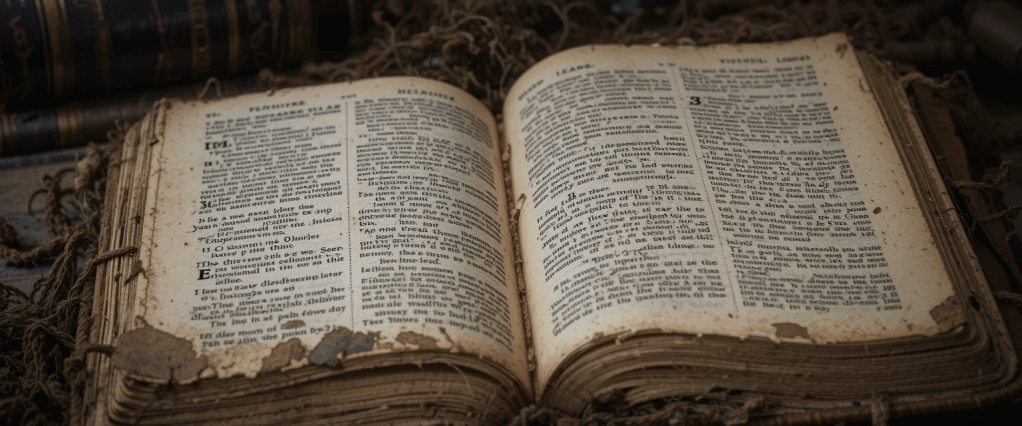
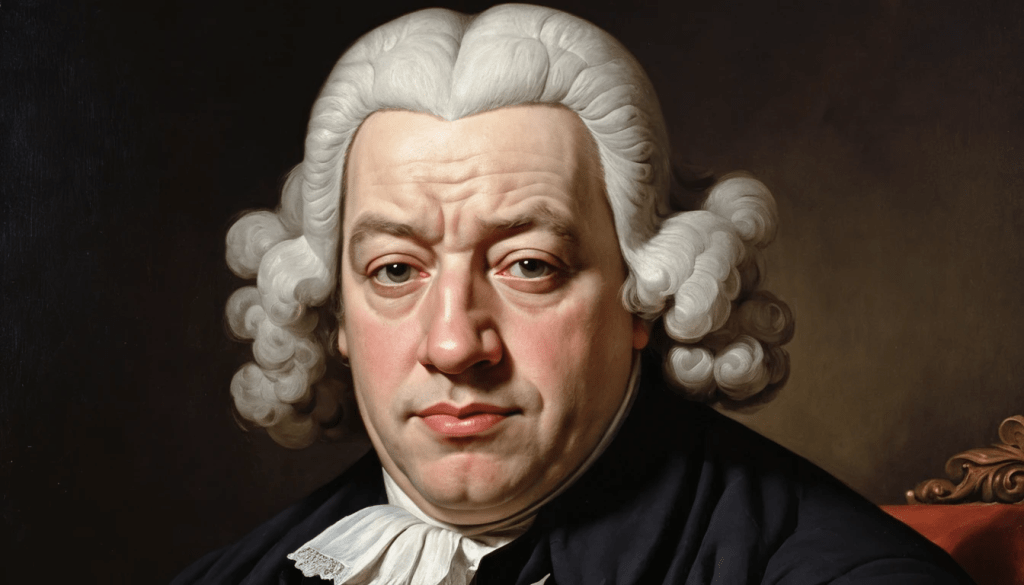
On April 15, 1755, Samuel Johnson published A Dictionary of the English Language in London after nearly a decade of solitary labor. At over 2,300 pages and containing around 43,000 entries, Johnson’s dictionary was the most comprehensive and authoritative English-language reference of its time. It quickly became the standard reference for English vocabulary, usage, and orthography for over a century—until the publication of the Oxford English Dictionary began in the late 19th century.
This landmark publication not only organized the English language but also influenced how people thought about words, meaning, and usage—laying the groundwork for modern lexicography.
Innovations in Definition and Style
Samuel Johnson’s dictionary was not the first English dictionary, but it was by far the most ambitious, scholarly, and literary. It introduced a more systematic approach to word definition, usage, and citation.
- Definitions with Depth and Wit – Unlike previous dictionaries, Johnson’s entries often included humor, moral commentary, and rich illustrations from literary sources. For example, he famously defined oats as “a grain, which in England is generally given to horses, but in Scotland supports the people,” reflecting both wit and social commentary.
- Citations from Literature – Johnson revolutionized lexicography by including quotations from leading writers, particularly Shakespeare, Milton, and Dryden, to demonstrate word usage. This elevated the dictionary to a literary reference as much as a linguistic tool.
- Standardized Spelling and Grammar – Johnson’s decisions on spelling (e.g., color vs. colour) helped shape standardized British English. His dictionary was widely adopted in schools and institutions, helping to unify English spelling during a time of great variation.
Vocabulary and Expressions Introduced or Preserved
Although Johnson didn’t invent new words outright, his definitions and examples preserved and popularized many expressions and idioms that are now firmly rooted in English.
- Elevated Everyday Words – Through his literary choices, Johnson lent prestige to common vocabulary, giving cultural weight to words like virtue, liberty, reason, and conscience.
- Humorous or Subjective Definitions – His sometimes opinionated definitions (e.g., lexicographer as “a harmless drudge”) sparked debate and became legendary in English-speaking academic and literary circles.
- Moral and Philosophical Nuance – Many definitions reveal Johnson’s deeply moral and philosophical lens, giving subtle distinctions to terms like duty, truth, and honor.
Cultural and Educational Impact
Johnson’s dictionary quickly became essential in education, governance, and literary production.
- It was used in British and American schools for generations, helping to establish English as a standardized subject of study.
- Writers, editors, and publishers referred to it to maintain linguistic consistency, which had previously been a matter of personal or regional style.
- Johnson’s method of citing contextual usage influenced how dictionaries and style guides were constructed in the centuries to follow.
Influence on Future Lexicography and Literary Tradition
The success of A Dictionary of the English Language had a long-lasting influence:
- It laid the foundation for future dictionaries, including Noah Webster’s American Dictionary of the English Language (1828) and the Oxford English Dictionary (begun in 1884).
- Johnson himself became a cultural and literary figure, his life famously chronicled in James Boswell’s The Life of Samuel Johnson (1791), one of the most celebrated biographies in English literature.
- The dictionary influenced how language itself was viewed—as something not only functional but also artistic, historical, and ideological.
A Living Legacy in the English Language
Samuel Johnson’s Dictionary marked a turning point in the evolution of English. It standardized the language, enriched its descriptive tools, and introduced a human, literary voice to what had previously been dry word lists.
- Many of Johnson’s definitions and quoted usages remain familiar to modern readers.
- His example of treating language as a reflection of culture, thought, and character endures in how we teach and study English today.
- The very idea of a dictionary as a cultural artifact—not just a technical tool—began with Johnson.
More than two centuries later, Johnson’s achievement is still celebrated as a feat of both scholarship and literary genius—one that gave the English language a greater sense of coherence, identity, and expressive power.
He didn’t just define words—he defined the way we think about language.
Originally published on April 15, 2025, on The-English-Nook.com.
Visit my page to find out ‘What Happened on this Day?‘ and learn ‘The Word of the Day‘—you’ll find it here first and all in one place!
If you’re a language enthusiast, you’ll have access to a variety of resources, including short stories in English and Spanish, interesting readings, vocabulary, and much more—not just for English, but also for Spanish. Come check it out!
 What Happened on This Day?
Leave a comment