
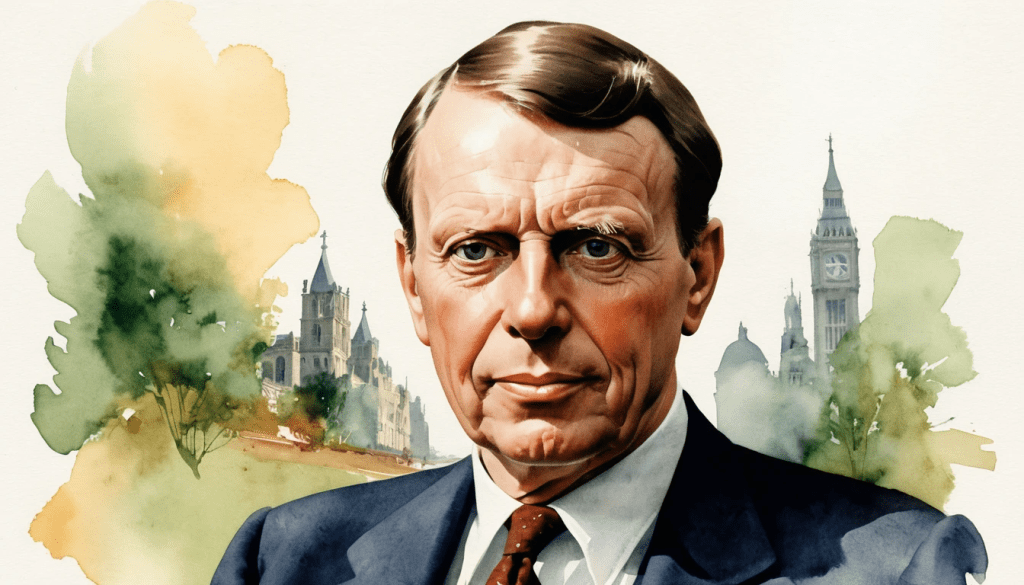
June 23, 1999
Death of David Ogilvy (1911–1999)
On June 23, 1999, the world lost David Ogilvy, a British advertising legend whose influence on the English language extends far beyond Madison Avenue. Often called the “Father of Advertising,” Ogilvy revolutionized the way English was used to persuade, sell, and brand—turning clear, conversational copy into a science and an art.
His legacy is visible in the English we hear and read every day: in commercials, slogans, campaigns, headlines, and digital media. Through his writing and campaigns, Ogilvy redefined what it meant to communicate with a public audience—with precision, charm, and results.
Advertising’s New English: Precision, Power, and Personality
Ogilvy’s work helped develop a new vocabulary for a changing commercial age. Phrases like:
- “Brand image” – A term Ogilvy helped popularize, now central in business, marketing, and pop culture. It gave English speakers a way to talk about not just what a product is, but what it feels like.
- “Copywriting” – Once a niche term, it became a recognized profession, complete with its own style guides, ethics, and schools of thought—many rooted in Ogilvy’s teachings.
- “The big idea”, “positioning”, and “headline power” – Ogilvy codified these as the language of modern advertising strategy, now echoed across industries.
He wrote not only ads but also influential books like Confessions of an Advertising Man (1963) and Ogilvy on Advertising (1983), both of which became handbooks for clear, persuasive English writing—well beyond the ad world.
The Ogilvy Style: Conversational Authority
Ogilvy believed that good English was good business. His prose was clean, respectful, and intelligent—never patronizing. He taught that advertisers should:
- “Talk to the customer in the language they use at home.”
- Use short words, short sentences, and short paragraphs.
- Avoid jargon unless it added trust or authority.
His style helped mainstream an Anglo-American hybrid of business-friendly English—a tone we now associate with tech brands, corporate storytelling, and political campaigns.
Beyond Ads: Cultural and Linguistic Reach
Ogilvy’s impact went far beyond the private sector. His language of persuasion was adopted by:
- Political consultants who borrowed his tone of urgency and relatability.
- Nonprofits and public health campaigns, learning to make their calls to action clear, emotional, and concise.
- Global English speakers, who adopted his rules to create effective English-language content in multilingual contexts.
A Global Voice in Commercial English
Though born in West Horsley, England, Ogilvy’s influence was profoundly international. His campaigns for Dove, Rolls-Royce, and Shell shaped global perceptions, all while relying on tight, trustworthy English copy.
He emphasized consumer intelligence, coining the famous rule:
“The consumer isn’t a moron, she’s your wife.”
That ethos reshaped how brands spoke to the public—not as targets, but as partners in conversation. His respectful, data-driven, and elegant English still defines ethical marketing language today.
A Legacy Written in Headlines
David Ogilvy died at age 88, but his imprint remains in every product description, sponsored post, and marketing email that uses English to inspire action.
His legacy is not just in slogans—but in how modern English learned to combine clarity with creativity, commerce with character.
David Ogilvy didn’t just shape the image of brands—he helped brand the modern English sentence.
 What Happened on This Day?
Leave a comment