
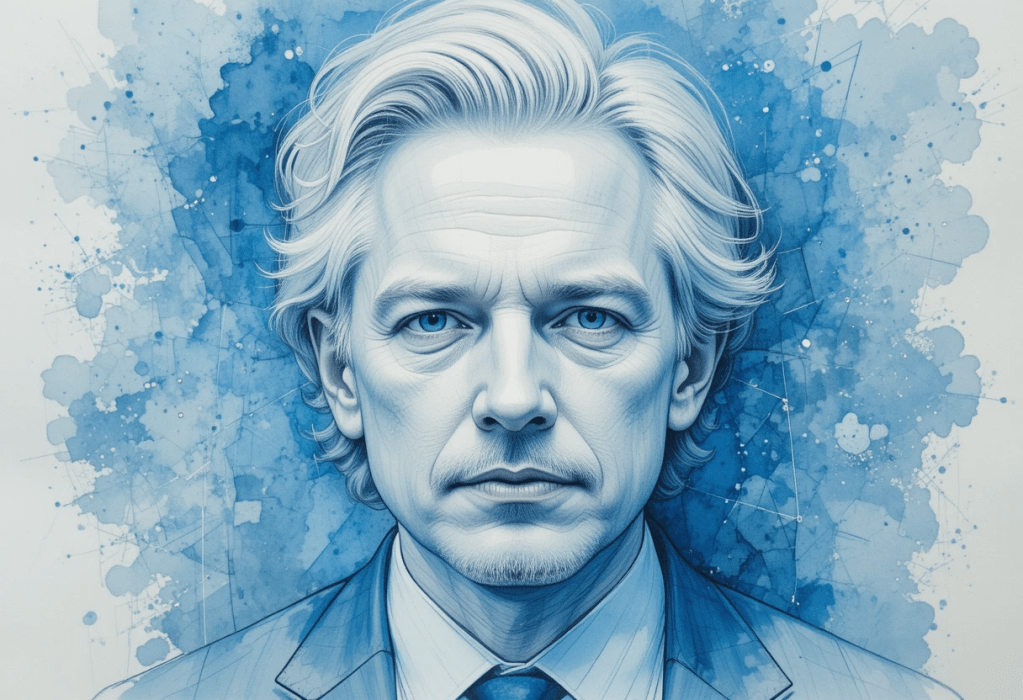
July 3, 1971
Birth of Julian Assange
On July 3, 1971, Julian Assange was born in Townsville, Australia. A programmer-turned-publisher, Assange would become one of the most controversial and linguistically impactful figures of the 21st century through his founding of WikiLeaks—the international non-profit organization that publishes classified and sensitive documents.
Assange’s rise to global notoriety didn’t just reshape journalism and geopolitics—it also transformed the language English speakers use to talk about truth, secrecy, state power, and technology.
New Terms for a New Transparency
The WikiLeaks phenomenon popularized and redefined an entire lexicon, embedding once-specialist terms into the core of public English-language discourse. These include:
- “Whistle-blower” – formerly confined to corporate or legal contexts, it now evokes global political dissent, transparency, and personal risk.
- “Leak” – expanded from plumbing and IT to mean high-stakes revelations of classified or hidden truths.
- “Redaction,” “data dump,” “classified material,” “source protection,” and “zero-day” became widely known outside of legal or technical fields.
- “Transparency,” “secrecy,” “surveillance,” and “asymmetric warfare” were given renewed, politicized meanings in both media and academia.
Assange’s role in these shifts was not just passive: WikiLeaks consciously framed its releases using vocabulary that emphasized truth, justice, and exposure—terms that resonated with democratic ideals and thus shaped how they evolved in English usage.
English as the Language of Leverage
Though Assange is Australian and WikiLeaks is international, its primary linguistic arena has been English:
- The major leaks—from the Collateral Murder video to Cablegate and Guantánamo files—were released with English as their central language, positioning English as the platform for global moral debate.
- Terms like “open government,” “radical transparency,” “media complicity,” and “deep state” surged in popularity across English-language journalism, political commentary, and academic critique.
Assange’s legal battles also contributed to a flood of terminology into common English, such as:
- “extradition,” “diplomatic asylum,” “press freedom,” “espionage charges,” and “journalistic shield”—once reserved for specialist discussion, now part of widespread political vocabulary.
Shaping English Thought Around Power and Ethics
Assange’s influence extends beyond terms to the moral and rhetorical framing of truth in the digital age. English-language debates around “the public’s right to know” versus “national security” were dramatically reframed post-WikiLeaks:
- The phrase “information wants to be free”—originating decades earlier—took on new urgency in English cyberactivist and journalistic circles.
- Discussions of “editorial responsibility,” “platform neutrality,” and “digital sovereignty” became common across English-speaking institutions and media outlets.
Assange himself spoke and wrote in stark, direct English, often deploying minimalist phrasing designed for maximum ethical resonance:
“You can either be informed and your views can be powerful, or you can be ignorant and your views can be powerless.”
A Legacy Written in Controversy—and in English
Whether viewed as a hero of free speech or a reckless provocateur, Assange’s legacy in the English language is secure. He contributed to:
- The vocabulary of dissent in the 21st century.
- A linguistic framework for describing digital-age journalism, cyber-leaks, and surveillance.
- The way English now articulates the ethical dilemmas of transparency and control.
Assange’s WikiLeaks has been name-checked in English-language novels, documentaries, op-eds, government hearings, and university curricula—where his influence continues to spark debate on the power of truth and the meaning of responsibility.
“If wars can be started by lies, peace can be started by truth.”
— Julian Assange
 What Happened on This Day?
Leave a comment