
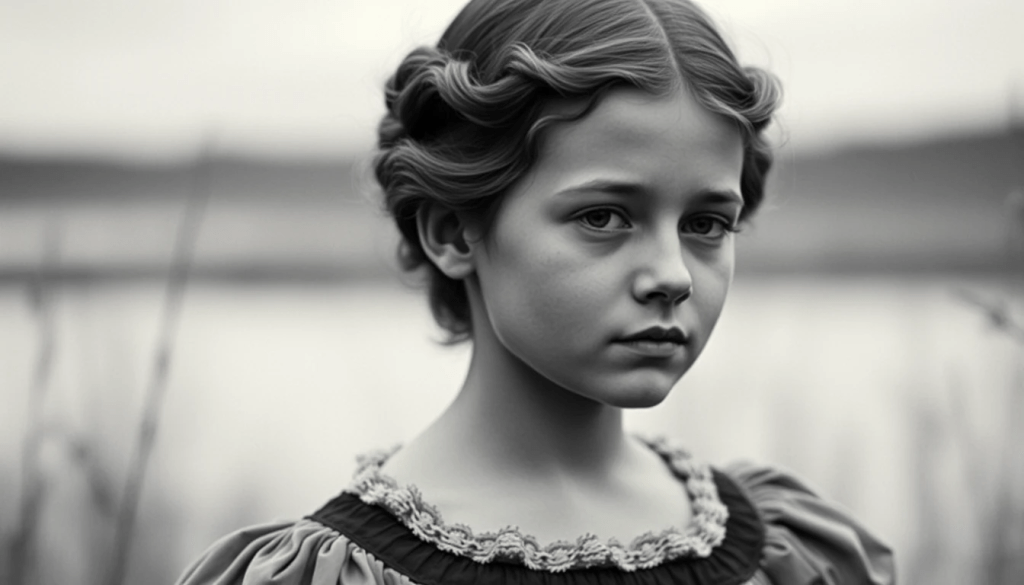
August 18, 1587
The First English Child Born in America and the Vocabulary of the “Lost Colony”
On August 18, 1587, Virginia Dare was born in the Roanoke Colony, on Roanoke Island (in present-day North Carolina). She was the first English child born in the Americas, and her name, legacy, and disappearance became central to the mythos of early English colonization. Though her life remains historically obscure—disappearing along with the so-called Lost Colony—the language that grew around her and her birthplace has shaped American-English historical and cultural vocabulary for centuries.
1. “First English Child Born in America” as Foundational Terminology
- The phrase “first English child born in America” became a permanent marker in English colonial histories, signaling the beginnings of English settler identity in the New World.
- “Virginia Dare” herself functions almost as a mythological eponym, embodying English ambitions in the Americas. Her name is often invoked in English-language narratives of colonial beginnings, innocence, and loss.
2. Vocabulary of the “Lost Colony”
Virginia Dare’s fate remains unknown, but this mystery gave rise to enduring English terms and phrases:
- “Lost Colony” → a powerful phrase coined in English historiography to describe the disappearance of Roanoke’s settlers. It has since become shorthand in English for any vanished community or unresolved historical mystery.
- “Colonial myth” → used in English critical writing to describe semi-legendary narratives like Dare’s that blend history and folklore.
- “Roanoke mystery” → a recurrent phrase in American-English, appearing in literature, journalism, and even popular culture, evoking disappearance and unresolved origins.
3. Virginia Dare as a Symbol in English Storytelling
Over time, Virginia Dare became more than a historical figure—she was absorbed into the mythological and literary vocabulary of American-English:
- “Virginia Dare legend” → used in English writing to signal stories that combine historical record with speculation and romance.
- “Pale child of Roanoke” → a poetic phrase appearing in 19th- and 20th-century English retellings, connecting Dare with imagery of innocence and haunting absence.
- “The American Eve” → some writers in English dubbed her symbolically as a counterpart to Eve, positioning her as a mythical first woman of Anglo-America.
4. Colonial and National Vocabulary Influenced by Her Story
Virginia Dare’s name became linked to colonial ambition and American identity:
- “Virginian heritage” → reinforced through her naming, as she was born in the “Virginia” claimed for Elizabeth I, the “Virgin Queen.”
- “Colonial birthright” → phrase sometimes used in English genealogical and historical writing, with Dare representing the earliest imagined roots of English America.
- “Roanoke bloodline” → speculative term in English folklore, referring to theories of settlers absorbed into Native American tribes, which wove Dare into discussions of cultural hybridity.
5. Linguistic Afterlives in English Popular Culture
Her legend has reappeared across centuries, embedding new phrases into English cultural discourse:
- “Virginia Dare mythos” → used in English literary criticism for works that draw on her legend.
- “Roanoke haunting” → in modern English pop culture (TV, novels, folklore), this phrase invokes Dare and the colony as symbols of ghostly disappearance.
- Commercial Naming: In the 19th–20th centuries, “Virginia Dare” was used as a brand name (e.g., wines, products), embedding her name into English consumer culture as a symbol of heritage and mystery.
6. Lasting Vocabulary and Expressions
- “Virginia Dare” → shorthand for colonial innocence, myth, and disappearance.
- “Lost Colony” → enduring metaphor in English for vanished communities.
- “Roanoke mystery” → phrase for unresolved historical enigmas.
- “Colonial myth” → genre term in English describing semi-historical legends.
- “American Eve” → symbolic nickname, positioning her at the start of Anglo-American cultural mythology.
Language Legacy of August 18, 1587
Virginia Dare’s birth did not just mark a historical milestone—it coined and solidified vocabulary that English still uses to narrate its colonial past. Her story intertwines genealogy, national identity, and myth, embedding terms like “Lost Colony” and “Virginia Dare legend” into the English historical imagination. Whether invoked in serious scholarship, popular retellings, or cultural myth-making, Virginia Dare remains a linguistic symbol of beginnings, mysteries, and the fragility of origins in American-English storytelling.
Virginia Dare: the child who vanished, but whose name never disappeared.
Curious about what happened today in history? Want to learn a new word every day?
You’ll find it all—first and in one place—at The-English-Nook.com!
If you love languages, this is your space.
Enjoy bilingual short stories, fun readings, useful vocabulary, and so much more in both English and Spanish.
Come explore!
 What Happened on This Day?
Leave a comment