
September 5, 1946
A Lexicon of Rock, Identity, and Theatrical Power
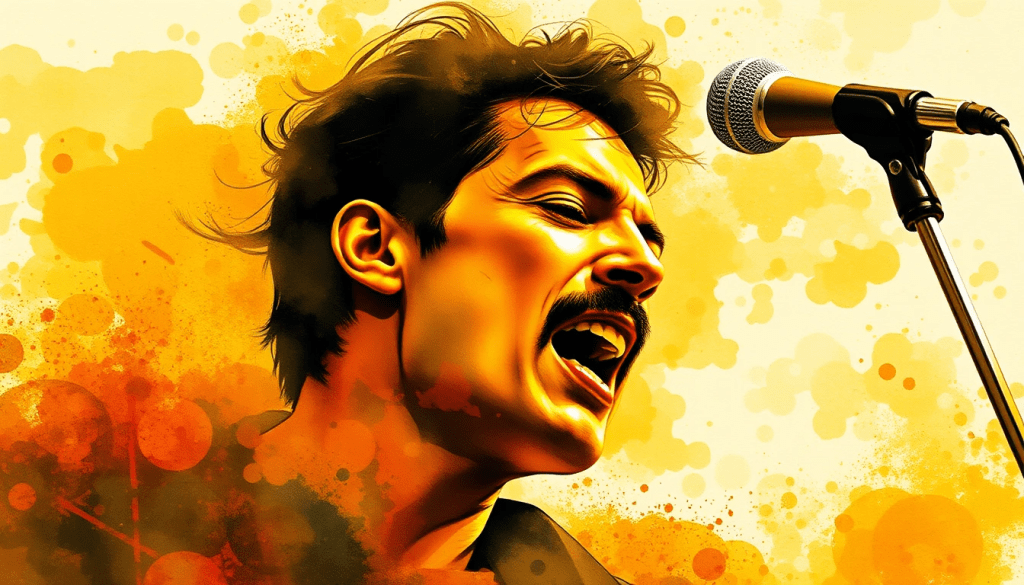
On September 5, 1946, Farrokh Bulsara—later known to the world as Freddie Mercury—was born in Zanzibar. As the electrifying frontman of Queen, Mercury’s voice, presence, and inventiveness permanently altered not just rock history but also the vocabulary of English performance, identity, and cultural criticism. Over the decades, his artistry generated expressions, metaphors, and idioms that continue to circulate in both popular English and scholarly commentary.
1. The Birth of “Mercurial” Language
Mercury’s very name became a linguistic gift to English:
- “Mercurial stage presence” – a phrase that critics applied to his volatile mix of elegance and fire. It reframed “mercurial” from simply “changeable” to a rock-critical term meaning “brilliantly unpredictable.”
- “Mercury moment” – coined in reviews and fan discourse to describe that peak instant of theatrical, transcendent performance.
- “Mercury flash” – used in journalistic accounts to convey a sudden burst of dazzling flamboyance.
- “Quicksilver charisma” – another turn of phrase borrowed from his name, symbolizing his lightning-fast energy.
- His surname itself became shorthand: “to go full Mercury” in commentary now means to perform with unrestrained, spectacular intensity.
2. The Vocabulary of Rock Theatricality
Mercury demanded new English terminology to describe the spectacle he created:
- “Rock opera” – established as mainstream by Bohemian Rhapsody, cementing a hybrid of theatrical narrative and rock dynamism.
- “Arena anthem” / “stadium anthem” – terms coined in part through Queen’s iconic crowd-driven choruses (We Will Rock You, We Are the Champions).
- “Stadium rock” – popularized in the 1970s and forever linked with Mercury’s ability to command 100,000 fans with a single gesture.
- “Camp rock” – borrowing theatrical language of “camp” (exaggerated style, irony, flamboyance) to describe Queen’s sequined, dramatic edge.
- “Glam theatrics” / “glam spectacle” – English critics fused glam-rock vocabulary with operatic description when writing about Mercury’s stagecraft.
- “Showstopper” – revived in reviews of his performances as a technical term meaning a piece that halts a show with overwhelming impact.
3. Identity and the Language of Persona
Mercury blurred lines between stage persona and personal identity, creating new terms and refreshing old ones:
- “Gender-bending performance” – used widely in English music criticism, especially after the I Want to Break Free video.
- “Flamboyant frontman” – a journalistic cliché solidified through Mercury, now shorthand for an openly extravagant band leader.
- “Bohemian” – recharged in English discourse by Bohemian Rhapsody, no longer merely meaning “artistic outsider,” but also embodying flamboyant freedom.
- “Camp icon” – borrowed from queer cultural vocabulary and applied to Mercury by critics to celebrate his playful theatrical excess.
- “Persona-driven artistry” – Mercury became a textbook case in literary and cultural studies for how artists construct performance identities.
- “Mercury archetype” – coined in cultural commentary to define a model of fluid, self-invented identity in performance.
4. Everyday Idioms from Mercury’s Legacy
Mercury’s work gave rise to idioms and catchphrases that seeped into wider English:
- “We are the champions” – an instant idiom of victory, used in sports, politics, and everyday triumphs.
- “The show must go on” – centuries old, but Mercury recharged the phrase with tragic urgency, embedding it in modern resilience vocabulary.
- “We will rock you” – once a lyric, now a colloquial expression of challenge, solidarity, or confidence.
- “Radio Ga Ga” – reintroduced “ga ga” (meaning nonsense or obsession) into English pop vocabulary; later gave Lady Gaga her stage name.
- “Killer Queen” – became a catchphrase for dangerous glamour in English journalism and fashion writing.
- “Don’t stop me now” – adopted widely as an English idiom of unstoppable enthusiasm.
- “Stadium rock spectacle” – phrase used to define not only Queen’s sound but an entire genre of live performance.
5. Vocabulary List: Freddie Mercury in English
Mercury’s influence can be summarized in a lexicon that scholars and critics routinely draw upon:
- Mercurial – unpredictable brilliance in performance.
- Mercury moment – a peak instance of spectacle.
- Arena anthem / stadium rock – mass-participation rock performance.
- Bohemian – reframed as flamboyant outsider freedom.
- Camp rock – theatrical, exaggerated performance in rock.
- Flamboyant frontman – archetype of extravagant leadership.
- Killer Queen – shorthand for glamorous danger.
- The show must go on – resilience mantra, now Mercury-inflected.
- Mercury archetype – critical term for self-invented performance identity.
Mercury’s Living Lexicon
Freddie Mercury’s birth on September 5, 1946 gave the world a legend whose impact transcended melody. He left behind not only songs but also a language—an arsenal of phrases, idioms, and metaphors that enriched English cultural discourse. From “mercurial stage presence” to “arena anthems,” from “We are the champions” to “the show must go on,” Mercury forged a vocabulary of brilliance. His very name is now embedded in English as a marker of flamboyance, freedom, and performance at its highest intensity.
Mercury did not simply sing—he expanded the dictionary of English cultural imagination.
He didn’t just sing—he rewrote the language of rock.
Curious about what happened today in history? Want to learn a new word every day?
You’ll find it all—first and in one place—at The-English-Nook.com!
If you love languages, this is your space.
Enjoy bilingual short stories, fun readings, useful vocabulary, and so much more in both English and Spanish.
Come explore!
 What Happened on This Day?
Leave a comment