
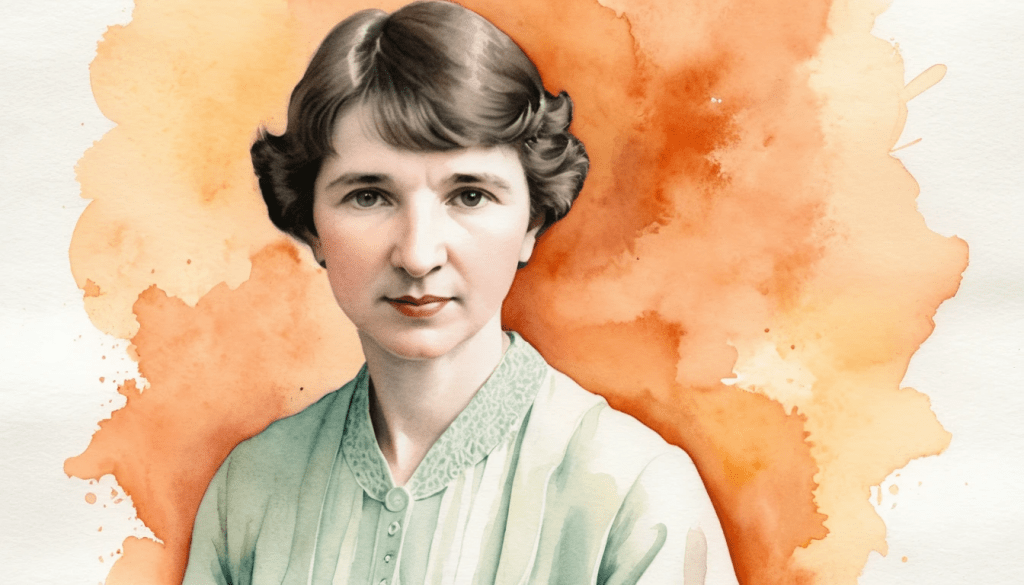
September 14, 1879
The Activist Who Gave English the Vocabulary of “Birth Control” and “Planned Parenthood”
On September 14, 1879, Margaret Sanger was born in Corning, New York. A pioneering nurse, activist, and reformer, Sanger became one of the most influential voices in shaping modern reproductive rights discourse. More than her political work, her greatest and most enduring legacy is linguistic: she coined and popularized terms that reshaped English vocabulary around sexuality, family planning, and women’s health.
Through her tireless advocacy, expressions like “birth control,” “planned parenthood,” and “reproductive rights” became standard in English. These terms not only gave language to a social movement but also created a lexicon for debates that continue in medical, political, and cultural English to this day.
1. Coining “Birth Control”
Sanger is credited with introducing the phrase “birth control” into English in the 1910s.
- Before this, discussions of contraception were couched in euphemism or medical jargon.
- By pairing the familiar words birth and control, Sanger created a phrase at once plain, memorable, and politically charged.
- “Birth control” gave English a new activist vocabulary, empowering public debate on family size, women’s autonomy, and medical freedom.
The phrase spread rapidly, entering journalism, medical writing, and political discourse—and remains one of the most recognizable socio-medical terms in English today.
2. Establishing “Planned Parenthood”
Sanger also helped institutionalize another phrase that became a cornerstone of English vocabulary: “Planned Parenthood.”
- Originally used to describe the idea of intentional family planning, the phrase was formalized in the 1940s when Sanger helped establish the Planned Parenthood Federation of America.
- Linguistically, “planned parenthood” reframed the issue from control and restriction to choice, foresight, and responsibility.
- This shift in terminology softened the controversy, allowing wider acceptance in English-speaking political and social discourse.
The phrase has since become so iconic that “Planned Parenthood” functions as both a proper noun (the organization) and a cultural shorthand for reproductive health services.
3. Vocabulary of Rights and Liberation
Through her activism, Sanger also helped normalize other expressions in English critical and political language:
- “Reproductive rights” — linking reproduction to the broader vocabulary of human rights.
- “Family planning” — a softer, more diplomatic synonym for birth control, used widely in English policy discourse.
- “Voluntary motherhood” — an early phrase Sanger promoted, framing motherhood as a matter of conscious choice, not fate.
These terms gave English speakers conceptual tools to discuss issues of sexuality, gender, and health openly and with precision.
4. Media, Controversy, and Cultural Resonance
Sanger’s bold vocabulary was often at the center of public controversy:
- The phrase “birth control” was condemned by church leaders but embraced by reformers, cementing its place in English as a battle-word.
- Newspapers, pamphlets, and courtroom debates amplified her terminology, ensuring its survival in the English lexicon.
- Over time, terms she introduced shifted from being taboo to becoming part of mainstream English medical and political discourse.
5. Enduring English Expressions from Sanger’s Legacy
- Birth control — Sanger’s most famous coinage, still central to public debate.
- Planned parenthood — phrase institutionalized by her movement, now global in scope.
- Family planning — a euphemism popularized in English policy circles.
- Reproductive rights — linking reproduction with broader civil rights vocabulary.
- Voluntary motherhood — early slogan highlighting autonomy in language.
Margaret Sanger’s Linguistic Revolution
Margaret Sanger transformed not only the politics of reproductive health but also the English language itself. By coining “birth control” and institutionalizing “planned parenthood,” she gave English speakers the words to articulate some of the most urgent social and medical debates of the 20th and 21st centuries.
Her phrases moved from radical rallying cries to household terms, proving that language is often the first battleground of reform. Today, every time English speakers use words like birth control or family planning, they are echoing the linguistic revolution Sanger set in motion—a revolution that ensured the language of choice, freedom, and responsibility would endure.
She didn’t just fight for rights—she gave English the words to defend them.
Curious about what happened today in history? Want to learn a new word every day?
You’ll find it all—first and in one place—at The-English-Nook.com!
If you love languages, this is your space.
Enjoy bilingual short stories, fun readings, useful vocabulary, and so much more in both English and Spanish.
Come explore!
 What Happened on This Day?
Leave a comment