
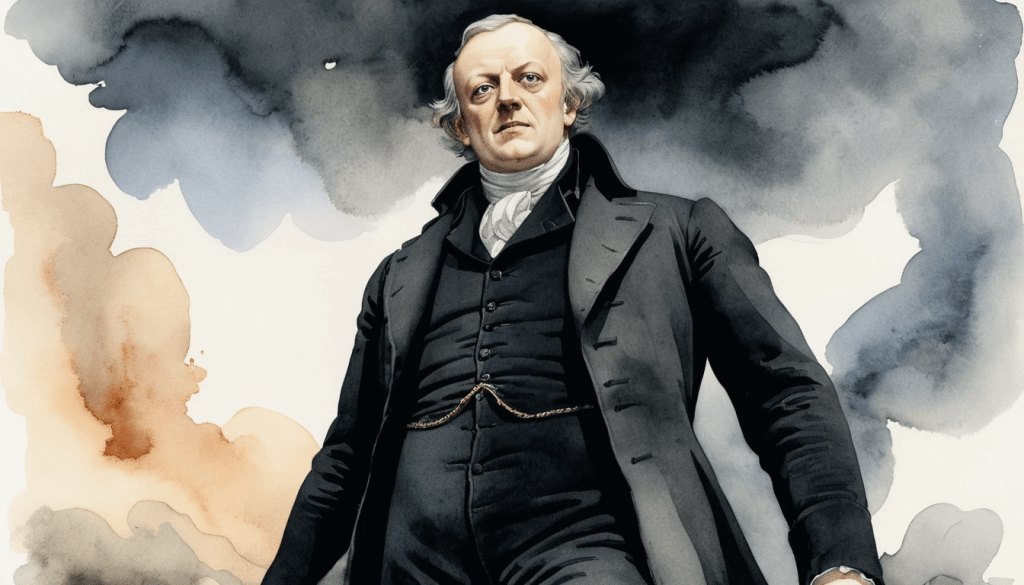
November 28, 1757
The Prophetic Artist Whose Mystical Language Redefined the Power of English Poetry
On November 28, 1757, William Blake was born in Soho, London — a poet, painter, engraver, and visionary whose work would come to shape the very foundations of English Romanticism. Though largely unrecognized in his lifetime, Blake is now regarded as one of the greatest creative figures in English literary history. His unique fusion of lyric poetry, prophetic imagination, and intricate symbolism expanded the expressive possibilities of the English language in ways no poet before him had attempted.
From Songs of Innocence and Experience to The Marriage of Heaven and Hell and his prophetic books culminating in Jerusalem, Blake created a mythic universe whose linguistic force still resonates across literature, philosophy, theology, and the arts.
1. A Poetic Voice Unlike Any Other
Blake wrote with a visionary intensity that broke sharply from the rational style of 18th-century neoclassicism. His work introduced:
- a new emotional vocabulary of innocence, experience, prophecy, and revolt
- symbolic and mythological language that invited readers into private spiritual visions
- a revolutionary poetic diction, both simple and exalted, capable of expressing the cosmic through everyday English
- lyric clarity combined with metaphysical depth, seen in lines such as “Tyger Tyger, burning bright,” which revolutionized English poetic rhythm and imagery
By infusing English verse with mysticism, moral passion, and mythic structure, Blake opened the door for Romantic poetry, paving the way for Wordsworth, Coleridge, Shelley, and countless others.
2. How Blake Changed the English Language
Blake’s influence on English poetic language is profound and enduring. He:
- expanded the imaginative range of English, showing that poetry could express visions, revelations, and inner worlds
- revitalized symbolic vocabulary, giving new life to words like innocence, experience, energy, divinity, vision, and revolution
- introduced a prophetic mode of English, blending biblical cadence with modern political critique
- helped shape the Romantic rejection of rigid poetic diction, encouraging poets to write in deeply personal, emotional English
- forged new syntactic freedoms, using repetition, inversion, and incantatory rhythms to create a new sound for English poetry
His works became touchstones for how English can convey the ineffable — the spiritual, the metaphorical, the unseen.
3. A Legacy That Echoes Through English Literature and Culture
Blake’s impact extends far beyond the Romantic era:
- Modernist and postmodern poets drew inspiration from his myth-making and linguistic daring.
- Songwriters, artists, and filmmakers have adapted his imagery and vocabulary, making his lines part of the broader English cultural lexicon.
- English literary criticism devotes entire schools of thought to Blake as a theorist of imagination and language.
- Phrases like “mind-forg’d manacles” and “the doors of perception” have become fixtures of English intellectual discourse.
Few writers have inspired such a broad array of English-language creators across centuries.
A Visionary Presence in the History of English
Born on November 28, 1757, William Blake forever changed the landscape of English poetry. Through his startling imagery, symbolic language, and prophetic voice, he redefined what English could express — emotionally, philosophically, and spiritually.
Blake showed that the English language is not merely a vehicle for description but a medium for revelation.
His words continue to illuminate, challenge, and awaken the imagination of every age that reads him.
William Blake didn’t just write poetry — he reinvented what English could dream.
Curious about what happened today in history? Want to learn a new word every day?
You’ll find it all—first and in one place—at The-English-Nook.com!
If you love languages, this is your space.
Enjoy bilingual short stories, fun readings, useful vocabulary, and so much more in both English and Spanish.
Come explore!
 What Happened on This Day?
Leave a comment