
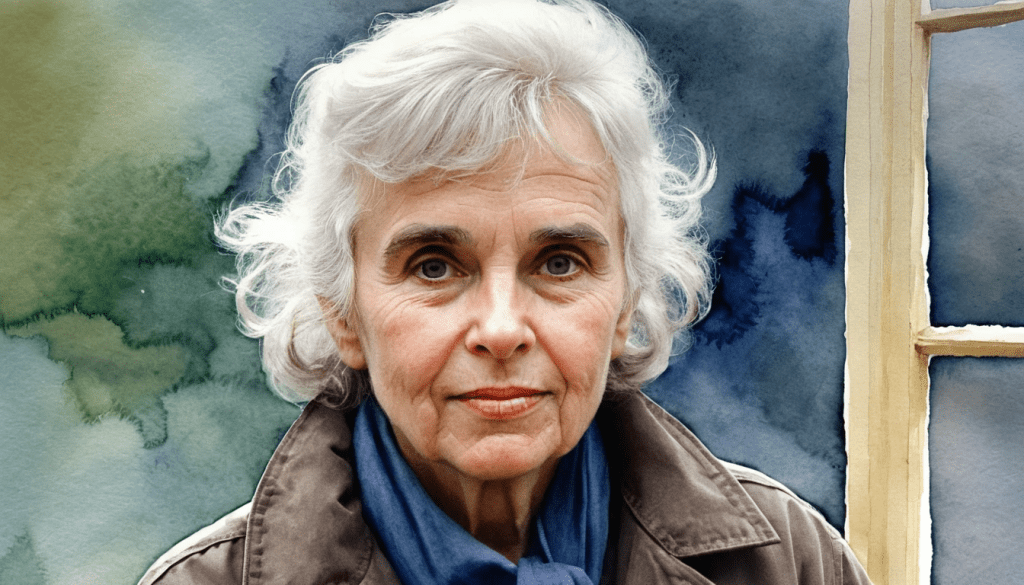
December 11, 1922
The Voice Who Turned Ordinary Speech into Extraordinary Literature
On December 11, 1922, Grace Paley was born in the Bronx to Ukrainian Jewish immigrant parents. A short-story writer, poet, teacher, and lifelong activist, Paley became one of the most distinctive voices in American and English-language literature.
Her stories—compressed, vivid, and intensely human—captured the rhythms of everyday urban speech. Through her characters’ voices, she introduced into English literature the cadences of New York neighborhoods, immigrant households, and women’s conversations. Her work became a model for how spoken English, with all its interruptions, humor, sharpness, and improvisation, could serve as a powerful literary medium.
She made English prose sound like the people who lived inside it.
1. The Master of the Spoken American Sentence
Paley’s prose changed the way contemporary writers listened to English.
- She brought colloquial speech—with its hesitations, jokes, and abrupt shifts—into literary form.
- Her sentences feel overheard yet crafted, balancing naturalism with precision.
- She captured the sound of English in New York’s multilingual, working-class communities, giving literary authority to voices long overlooked.
Her influence is visible in contemporary English-language fiction that privileges voice, dialogue, and the intimate textures of everyday speech.
2. The Short Story as Social Space
Paley used the English short story as a place where personal life, domestic struggle, and social conscience intersect.
- Her stories are short but expansive, leaping between humor and sorrow with conversational ease.
- She wrote about motherhood, friendship, aging, and political responsibility—often in the same breath.
- Her characters talk their way through crises, revealing how English can enact community, argument, and tenderness at once.
Through her, the short story became a form of social listening, attuned to the vibrations of lived English.
3. Influence on English-Language Feminist and Activist Writing
Paley’s writing is inseparable from her activism—antiwar work, feminism, civil rights.
- She showed that English-language literature could be political without sacrificing art.
- Her portrayal of women’s voices and domestic labor influenced later feminist storytellers.
- She treated storytelling as a moral act, proving that small narratives can illuminate large social truths.
Her fusion of activism and artistry opened new paths for community-centered English prose.
4. Teacher, Mentor, and Shaper of Literary English
Paley spent decades teaching creative writing, shaping generations of English-language authors.
- She encouraged writers to trust the sound of their own voices.
- She emphasized authenticity, compression, and emotional honesty over literary ornament.
- Her influence is felt in the rise of minimalist and voice-driven fiction in contemporary English literature.
She taught writers that their particular English—whatever its origin—deserved a place on the page.
Glossary of Enduring Ideas from Paley
- Colloquial lyricism — everyday speech as an art form
- Voice-driven narrative — character through sound and cadence
- Social storytelling — community life reflected in small scenes
- Compressed realism — short form, deep resonance
- Ethical imagination — art shaped by conscience
Paley’s Enduring Voice
Born on December 11, 1922, Grace Paley transformed English literature by insisting that the cadences of ordinary life were worthy of artistic attention. Her stories proved that English—messy, musical, argumentative, tender—could contain whole worlds in a few pages.
Her characters spoke; English listened.
One city, one voice, one fierce compassion — Grace Paley taught English to hear the truth in everyday speech.
Curious about what happened today in history? Want to learn a new word every day?
You’ll find it all—first and in one place—at The-English-Nook.com!
If you love languages, this is your space.
Enjoy bilingual short stories, fun readings, useful vocabulary, and so much more in both English and Spanish.
Come explore!
 What Happened on This Day?
Leave a comment