
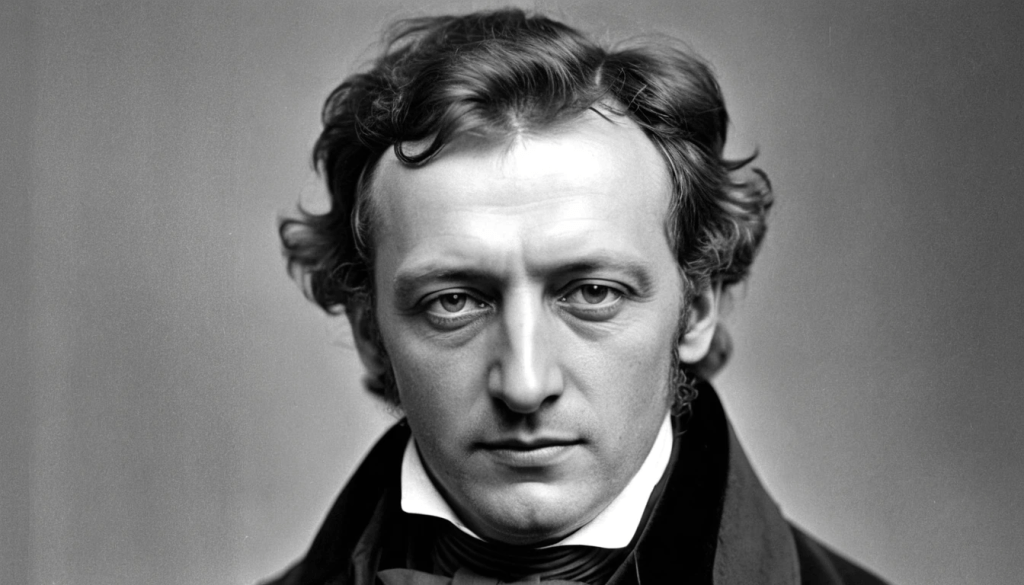
December 13, 1797
The German Poet Whose Voice Entered English Through Song, Satire, and Translation
On December 13, 1797, Heinrich Heine was born in Düsseldorf. A poet, essayist, journalist, and literary critic, Heine became one of the most influential European writers of the nineteenth century. Though he wrote in German, his lyric poetry and incisive prose traveled rapidly beyond national borders, shaping literary cultures across Europe—especially in the English-speaking world.
Through translation, imitation, and critical debate, Heine’s voice entered English poetry and prose as a model of lyrical economy, emotional clarity, and ironic self-awareness. English Romanticism, Victorian lyricism, and later modernist sensibilities all absorbed something of his tone: passionate yet skeptical, musical yet intellectually sharp.
Heine helped teach English poetry how to sing and smile at the same time.
1. Heine’s Arrival in English: Translation as Transformation
Heine was one of the most translated Continental poets in nineteenth-century England.
- His lyric poems appeared in English translation throughout the Victorian era, circulating widely in literary journals and anthologies.
- English translators admired his simplicity of diction and melodic clarity, which suited English lyric traditions.
- Through translation, Heine became a familiar presence in English poetic culture—sometimes more influential than many native contemporaries.
In English, Heine’s poems became models of brevity, songlike structure, and emotional directness.
2. Shaping English Lyric Tone: Irony, Music, and Modern Feeling
Heine’s influence was less about subject matter than about tone.
- He fused Romantic lyricism with irony, sentiment with self-critique.
- English poets learned from him how to balance emotional intensity with detachment.
- His poems showed that lyric sincerity need not exclude wit, skepticism, or political awareness.
This tonal complexity deeply influenced English Victorian poetry and anticipated modernist lyric restraint.
3. Influence on English Poets and Song Culture
Heine’s poems entered English culture through multiple channels.
- Many were adapted into English songs and art music, reinforcing their lyrical presence.
- Poets such as Elizabeth Barrett Browning, Christina Rossetti, and later modernists encountered Heine through translation.
- His compressed emotional style and musical line offered an alternative to English rhetorical expansiveness.
Through Heine, English lyric poetry gained a sharper, leaner, more ironic voice.
4. Prose, Criticism, and the Europeanizing of English Literary Thought
Beyond poetry, Heine’s essays and critical prose influenced English literary discourse.
- His journalistic style—brilliant, ironic, politically engaged—offered English writers a model of literary criticism as cultural commentary.
- English readers encountered in Heine a fusion of art, politics, and irony that challenged insular national traditions.
- His essays helped broaden English literary consciousness toward continental intellectual life.
Heine functioned as a bridge, drawing English literature more deeply into European conversation.
Glossary of Enduring Ideas from Heine
- Lyric irony — emotional expression tempered by self-awareness
- Musical brevity — songlike compression in poetry
- Romantic skepticism — feeling combined with critique
- Transnational influence — literature crossing languages through translation
- Cultural mediation — shaping English taste via continental models
Heine’s Enduring Voice
Born on December 13, 1797, Heinrich Heine became one of Europe’s most influential lyric poets—and one of the most quietly transformative figures in English literary history. Through translation and imitation, his voice reshaped English poetic tone, introducing irony, musical economy, and modern emotional complexity.
He never wrote in English, yet English learned from him how to sound more supple, more self-aware, and more modern.
One poet, many languages, one enduring music — Heine taught English how to sing with a smile.
Curious about what happened today in history? Want to learn a new word every day?
You’ll find it all—first and in one place—at The-English-Nook.com!
If you love languages, this is your space.
Enjoy bilingual short stories, fun readings, useful vocabulary, and so much more in both English and Spanish.
Come explore!

 What Happened on This Day?
Leave a reply to Birth of Heinrich Heine (1797–1856) – The European Lyric Who Recast English Romantic Irony – penwithlit Cancel reply