
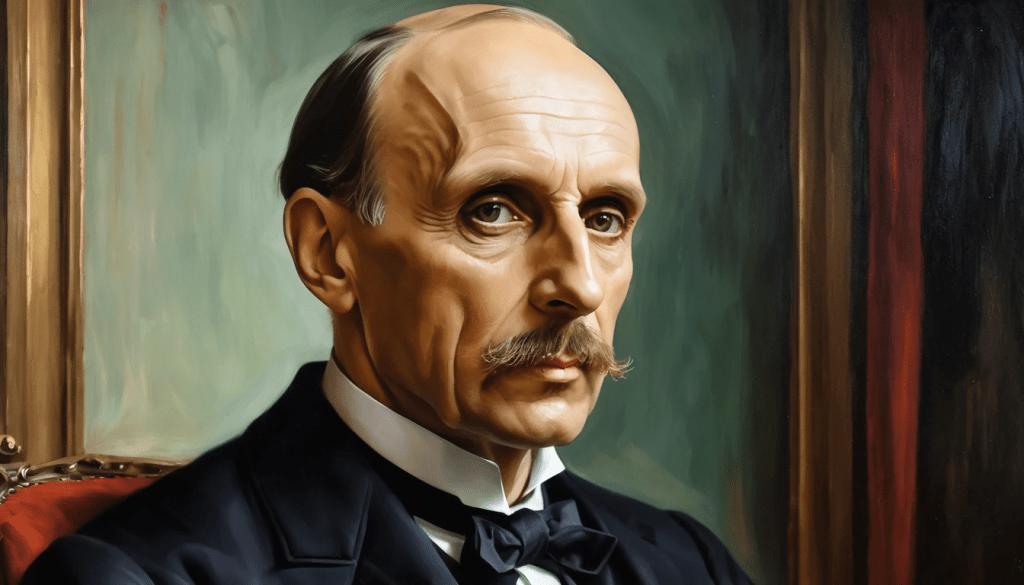
December 30, 1944
The Writer Who Gave English a Language of Intellectual Conscience
On December 30, 1944, Romain Rolland died in Vézelay, France. Though he wrote in French, Rolland became one of the most influential moral voices in English-language culture during the early twentieth century through translation, critical reception, and sustained engagement by English and American readers. Novelist, essayist, biographer, and public intellectual, he shaped how English-language writers and thinkers spoke about war, conscience, pacifism, and intellectual responsibility.
Rolland mattered not because English adopted his style wholesale, but because English listened to him.
1. A Translated Voice That Entered English Moral Debate
Rolland’s influence on English was largely mediated through translation—but profoundly so.
- His major works, including Jean-Christophe and his political essays, circulated widely in English.
- English readers encountered a model of the writer as moral witness rather than entertainer.
- Translation carried not only content, but tone: seriousness, ethical urgency, and restraint.
English prose absorbed a heightened sense of moral gravity through his example.
2. Pacifism and the Language of Conscience
Rolland’s pacifist stance during World War I made him a central figure in English-language debate.
- His essays articulated opposition to war without sentimentality or evasion.
- English political and moral prose gained a vocabulary for dissent grounded in conscience rather than ideology.
- Words such as responsibility, humanity, truth, and moral courage were sharpened through his influence.
He helped English articulate ethical resistance without rhetorical violence.
3. The Intellectual as a Public Moral Figure
Rolland helped define a role that English writers would repeatedly revisit.
- The writer as ethical authority rather than partisan voice.
- Intellectual independence as a moral stance.
- Responsibility to humanity over nation.
English-language essays and criticism increasingly adopted this model in the twentieth century, especially in times of crisis.
4. Moral Fiction and the Serious Novel
Rolland’s novels influenced English conceptions of what fiction could do.
- Narrative as ethical exploration rather than plot-driven entertainment.
- Characters serve as sites of moral struggle.
- Prose prioritizes clarity, seriousness, and inward responsibility.
This aligned with—and reinforced—English traditions of the novel as a moral instrument.
5. Influence on English Writers and Thinkers
Rolland was read and engaged by English-language figures concerned with war and ethics.
- His work circulated among pacifists, humanists, and critics.
- He became a touchstone in discussions of cultural responsibility.
- English writers grappling with war found in him a precedent for principled opposition.
His influence often appeared as alignment rather than imitation.
6. Style: Restraint, Clarity, and Ethical Weight
Rolland’s prose style shaped expectations in translation.
- Clear, direct sentences.
- Minimal ornament.
- Moral seriousness carried by calm articulation rather than emotional excess.
This reinforced a model of ethical English prose defined by restraint and clarity.
7. Rolland and the English Tradition of Moral Seriousness
Rolland entered English culture alongside writers wrestling with similar questions.
- War and guilt.
- Conscience versus obedience.
- The responsibility of the educated mind.
He became part of a shared moral vocabulary rather than a foreign import.
Glossary of Enduring Contributions from Rolland
Moral conscience — ethical responsibility in prose
Pacifist argument — dissent without sensationalism
Intellectual responsibility — thought as ethical action
Translated seriousness — moral tone crossing languages
Humanist clarity — ethics expressed plainly
Romain Rolland’s Enduring Presence in English
Romain Rolland died on December 30, 1944, but his voice continued to resonate in English-language culture long after. Through translation and reception, he helped English articulate a language of conscience—measured, principled, and morally serious—at moments when such a language was urgently needed.
He did not reshape English syntax.
He reshaped its ethical register.
One mind, one conscience, one transnational voice —
December 30 stands as a date when English remembered how to speak for humanity.
Curious about what happened today in history? Want to learn a new word every day?
You’ll find it all—first and in one place—at The-English-Nook.com!
If you love languages, this is your space.
Enjoy bilingual short stories, fun readings, useful vocabulary, and so much more in both English and Spanish.
Come explore!

 What Happened on This Day?
Leave a reply to Death of Romain Rolland (1866–1944) – The Moral Conscience Heard Through English – penwithlit Cancel reply