
November 12, 1933
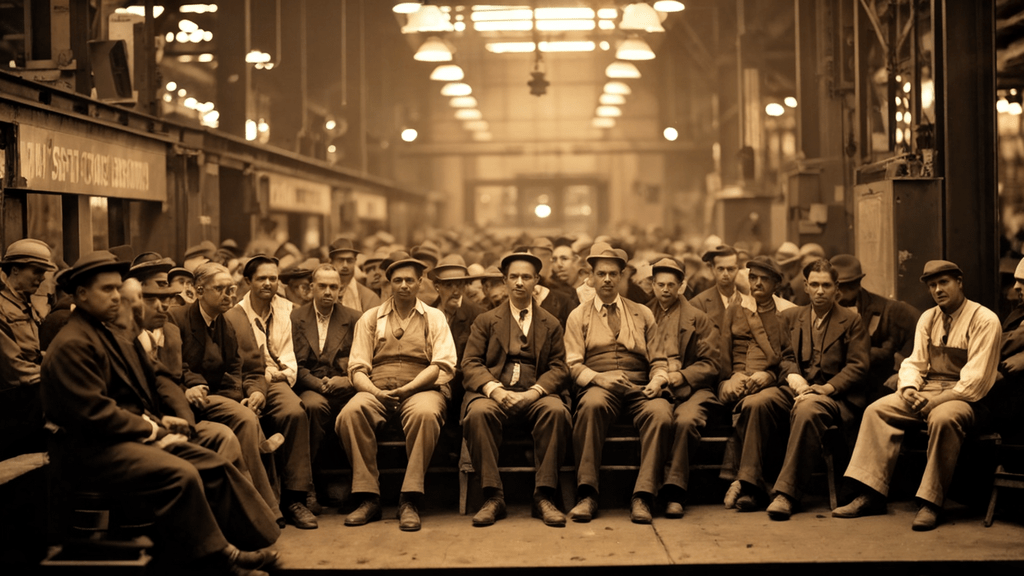
On November 12, 1933, the first recorded sit-down strike in American history took place in Detroit, Michigan. This pivotal moment marked a significant shift in labor protests, as workers began using “sit-down” tactics to demand fairer working conditions. The concept of a “sit-down strike” quickly gained traction, representing a unique form of protest in which workers remained at their workstations, refusing to leave until their demands were met. This protest style proved to be powerful and transformative, not only in labor history but also in shaping the vocabulary around workers’ rights, civil disobedience, and peaceful protest. Terms like “occupy,” “strike action,” and “solidarity” entered common English usage, expanding discussions on labor rights and social movements in English-speaking countries.
The “Sit-Down Strike” and Its Influence on Labor Terminology
A “sit-down strike” differs from traditional strikes where workers simply leave their jobs; instead, they occupy their positions in the workplace, making it difficult for employers to replace them. This tactic was particularly effective in the auto industry, where skilled labor was essential, and it minimized the risk of strikebreakers taking over the job. The term “sit-down strike” thus symbolized a form of organized resistance that disrupted the status quo without requiring physical confrontation. The term quickly became central in the language of labor movements, resonating as a strategy of empowerment for workers facing unsafe conditions, low wages, or unfair treatment.
The sit-down strike in Detroit served as a model for future labor actions, contributing key vocabulary to labor activism in English. Expressions like “hold the line” and “stand firm” became rallying cries that encouraged workers to maintain their resolve. The strike helped workers and union organizers frame their cause in terms of resilience and unity, shaping a vocabulary of labor rights that conveyed both solidarity and determination.
Expanding English Discourse on Civil Disobedience and Worker Solidarity
The language of the sit-down strike contributed to a broader vocabulary of peaceful civil disobedience. Terms like “occupation” and “direct action” grew in prominence, moving beyond the factory setting to influence wider social justice movements. For labor activists, “sit-down” protests became symbolic of nonviolent resistance, where workers could assert their rights without resorting to violence. The effectiveness of sit-down strikes inspired other forms of “occupy” protests, where individuals would peacefully gather in symbolic locations to demand change.
The concept of “solidarity” became especially significant during these labor protests. Sit-down strikes required workers to band together in collective action, reinforcing mutual trust and support. The strike not only emphasized the importance of solidarity in achieving labor goals but also helped popularize the term in English-speaking social movements. “Solidarity” became a widely used word to signify unity and shared purpose, extending beyond labor disputes to other civil rights movements and social justice causes. The influence of the sit-down strike thus extended to shaping how English speakers discuss teamwork, mutual support, and the strength of collective action.
Lasting Influence on the Vocabulary of Labor Rights and Social Movements
The impact of the sit-down strike on English is still seen today in discussions around labor rights, where phrases such as “strike action” and “collective bargaining” have become foundational. The sit-down strike also highlighted the power of “grassroots” efforts, as these protests were often organized and sustained by the workers themselves rather than through external leadership. This vocabulary gave voice to labor movements as worker-driven efforts, creating language that emphasized both independence and empowerment.
As labor unions grew in influence, they adapted the sit-down strike tactic and the language that accompanied it. The event in Detroit sparked a series of similar strikes across various industries, helping to legitimize labor unions as crucial advocates for workers’ rights and safe working environments. Phrases such as “labor action,” “union strong,” and “worker’s rights” became ingrained in English, framing labor discussions in terms of justice, fairness, and legal protections.
The success of the sit-down strike as a form of protest also influenced other forms of activism, contributing vocabulary that remains central to English discussions on social justice. Terms like “peaceful protest” and “nonviolent resistance” now appear frequently in English to describe various forms of civil action, thanks to the precedents set by early labor protests.
The Legacy of Sit-Down Strikes in English and the Language of Modern Labor Movements
Today, the term “sit-down strike” is a reminder of the struggles and achievements of early labor activists who fought for improved working conditions and fair wages. The language that emerged from these protests continues to shape how English speakers talk about labor rights, collective bargaining, and social justice. The sit-down strike showed that words could serve as powerful tools of resistance, fostering a shared vocabulary that empowers workers to express their grievances and unite around a common cause.
By contributing language that emphasized resilience, unity, and determination, the sit-down strike expanded English vocabulary in ways that have resonated across generations. As the labor movement evolved, this vocabulary grew alongside it, providing the terms and phrases necessary to continue the fight for workers’ rights and inspire collective action.
Originally published on November 12, 2024, on The-English-Nook.com.
 What Happened on This Day?
Leave a comment