
February 4, 1902
The Aviator Who Redefined Exploration and Expression
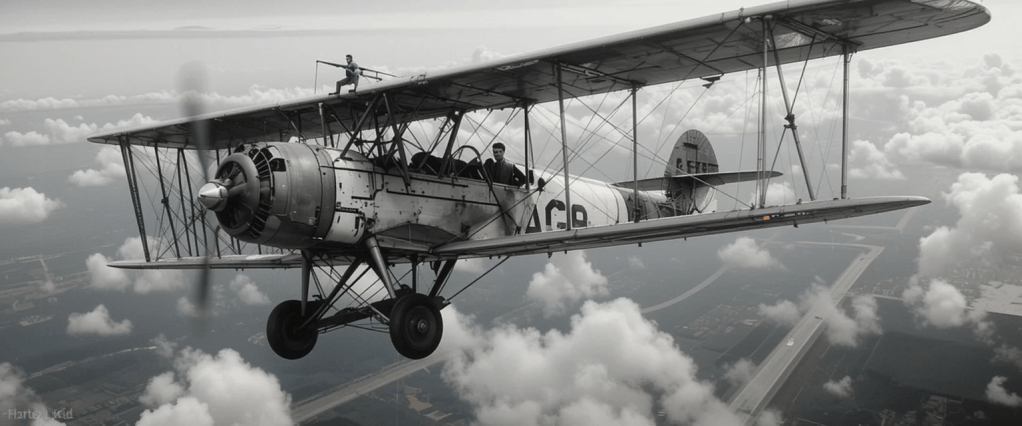
On February 4, 1902, Charles Lindbergh, one of the most iconic figures in aviation history, was born. His daring feats in the early 20th century, particularly his 1927 solo nonstop transatlantic flight from New York to Paris, captured global imagination and solidified his place in history. Lindbergh’s achievements not only revolutionized air travel but also introduced new terminology into the English language, shaping the way people spoke about flight, exploration, and adventure.
Before Lindbergh, aviation was a niche field, with limited public interest. His successful flight aboard the Spirit of St. Louis proved that long-distance air travel was possible, paving the way for commercial aviation and inspiring a lexicon that would become essential in the modern world.
Key Linguistic and Cultural Impacts of Charles Lindbergh and Aviation
1. The Rise of Aviation Terminology in Everyday English
Lindbergh’s success brought aviation-related words and phrases into mainstream usage, as air travel evolved from a dangerous pursuit to a viable mode of transportation. Some key terms include:
- “Aviator” – Originally used to describe early pilots, this word became synonymous with courage and pioneering spirit.
- “Nonstop flight” – Lindbergh’s flight was the first solo, nonstop transatlantic journey, making this phrase part of common vocabulary.
- “Transatlantic crossing” – His flight popularized the term for air travel between continents.
- “Solo flight” – Before Lindbergh, few had attempted long solo journeys. His flight gave this term broader recognition.
- “Flight plan” – The meticulous preparation for Lindbergh’s historic journey helped standardize this term in aviation.
Lindbergh’s success also helped aviation-related metaphors take flight in English, as people began to associate flying with ambition, freedom, and progress.
2. Expressions Inspired by Lindbergh’s Feats
Lindbergh’s daring journey and celebrity status made his name a symbol of exploration and courage, leading to phrases and idioms inspired by his achievements:
- “Doing a Lindbergh” – Used (at least briefly) to describe anyone attempting an ambitious solo endeavor.
- “The Lindbergh Boom” – Referring to the explosion of interest in aviation and aircraft investment after his historic flight.
- “Lucky Lindy” – A nickname that reflected both his skill and public perception of his good fortune.
- “The Lone Eagle” – A phrase that romanticized his solitary adventure and later became a metaphor for independent achievement.
His achievements also contributed to a growing aeronautical lexicon that included phrases like:
- “Take off” – While already in use, this phrase gained metaphorical meaning (as in “a career taking off”) with the rise of aviation.
- “Flying high” – Used both literally and metaphorically to describe soaring success.
- “Touchdown” – Originally an aviation term for landing, later adopted into American football.
3. The Impact on Commercial Air Travel Language
Lindbergh’s flight transformed public perception of aviation, making it seem feasible for passenger travel. His journey led to a boom in aviation investment and helped establish new terms related to commercial flight:
- “Airline” – The term was in use before, but Lindbergh’s success helped drive the expansion of commercial airlines.
- “Passenger plane” – As air travel became more accessible, this term distinguished it from military or cargo aircraft.
- “Flight crew” – With the growth of commercial aviation, this phrase became standard for pilots, co-pilots, and attendants.
- “Transcontinental” – Though mostly associated with trains before, this term became widely used in aviation to describe cross-country air travel.
4. The Lindbergh Legacy in Popular Culture and Language
Lindbergh became a global icon, influencing literature, films, and journalism. His fame led to the creation of aviation-themed stories, and his name became shorthand for daring adventure. Notably:
- Pulp fiction and early adventure novels romanticized pilots, using Lindbergh as inspiration.
- The term “barnstormer” (used for daredevil stunt pilots) gained popularity in the wake of aviation enthusiasm.
- Aviation slang, such as “prop wash” (air turbulence from a plane’s propeller) and “deadstick landing” (landing without engine power), became more commonly recognized.
Even political discourse borrowed from aviation metaphors, with phrases like:
- “Navigating a crisis” – Drawing parallels between flying and decision-making.
- “A smooth landing” – Describing a successful resolution to a complex problem.
- “Grounded in reality” – A contrast to soaring aspirations, emphasizing realism.
Enduring Linguistic and Cultural Impact
Lindbergh’s influence on the English language remains evident today in:
- Aviation terminology – Everyday terms like “cockpit,” “altitude,” and “runway” became more widely known.
- Metaphors of flight – Phrases like “soaring success” and “crash and burn” are commonly used in business and life.
- The global spread of English aviation terms – Many aviation words coined in the early 20th century remain international standards, thanks to pioneers like Lindbergh.
Though air travel is now routine, Charles Lindbergh’s achievements took language to new heights, embedding aviation into everyday speech and shaping the way English speakers talk about exploration, ambition, and success.
Lindbergh didn’t just soar through the skies—he elevated the English language, too!
Originally published on February 4, 2025, on The-English-Nook.com.
Visit my page to find out ‘what happened on this day?‘ and learn ‘the word of the day‘—you’ll find it here first and all in one place!
If you’re a language enthusiast, you’ll have access to a variety of resources, including short stories in English and Spanish, interesting readings, vocabulary, and much more—not just for English, but also for Spanish. Come check it out!
 What Happened on This Day?
Leave a comment