
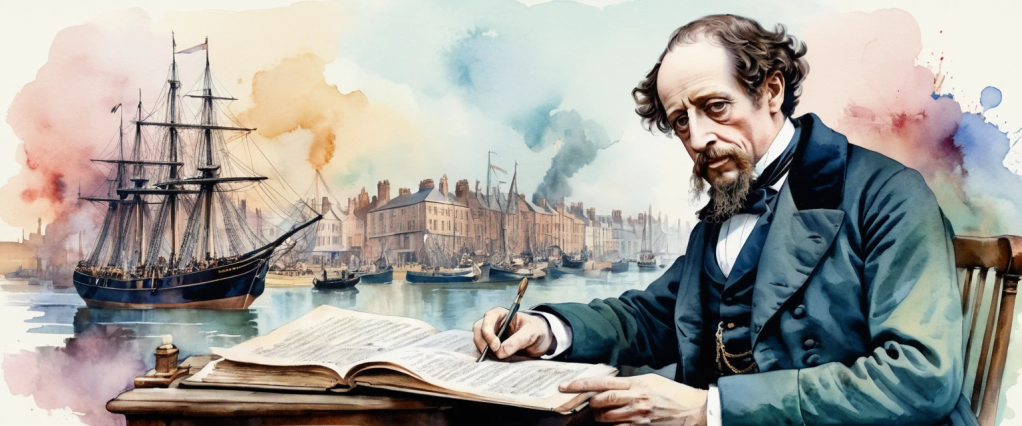
February 7, 1812
The Literary Genius Who Shaped English
On February 7, 1812, Charles Dickens, one of the most influential and celebrated writers in English literature, was born in Portsmouth, England. His works captured the social struggles, injustices, and complexities of Victorian England, providing a vivid window into 19th-century British life. Dickens’ novels, including Oliver Twist, A Christmas Carol, David Copperfield, Bleak House, and Great Expectations, not only entertained readers but also sparked social consciousness and reform. His masterful use of language, unforgettable characters, and satirical social commentary helped shape modern English vocabulary, idioms, and storytelling techniques.
Throughout his career, Dickens introduced and popularized numerous words, phrases, and expressions that are still in common use today. His works also contributed to the development of serialized storytelling, modern journalism, and the way the English language is used to portray emotion, satire, and realism in literature.
Dickens’ Influence on the English Language
1. Iconic Words and Phrases Coined or Popularized by Dickens
Dickens had an extraordinary gift for coining memorable terms, many of which have entered everyday English:
- “Scrooge” – From A Christmas Carol, Ebenezer Scrooge became the ultimate symbol of greed and miserliness. Today, “Scrooge” is used as a general term for a tightfisted or uncharitable person.
- “Bah! Humbug!” – Scrooge’s famous exclamation dismissing Christmas cheer became a widely recognized phrase used to express cynicism or skepticism.
- “Dickensian” – This adjective is now used to describe grim, poverty-stricken, or harsh social conditions, especially in reference to Victorian-era hardships, but also to describe elaborate and detailed storytelling in literature.
- “The best of times, the worst of times” – The famous opening line from A Tale of Two Cities has become a universal way to describe contrasting fortunes, uncertainty, or turbulent events.
- “Fagin” – From Oliver Twist, the name of the cunning criminal who trains children to steal has become shorthand for a person who exploits or manipulates others for their own gain.
- “Bleak House” – While originally the title of his novel, the phrase is often used metaphorically to describe a place or situation that feels dreary, neglected, or filled with bureaucracy.
- “Pecksniffian” – Named after the hypocritical character Mr. Pecksniff from Martin Chuzzlewit, this term means sanctimonious, insincere, or hypocritically moralistic behavior.
- “Uriah Heep” – The name of the obsequious, deceitful villain in David Copperfield became a descriptor for someone overly servile and insincere.
- “Bumbledom” – Based on Mr. Bumble, the pompous and self-important character from Oliver Twist, this term refers to petty, self-important bureaucracy or excessive red tape.
These words and phrases are now an integral part of English vocabulary, reflecting Dickens’ extraordinary ability to capture human behavior in language.
2. Dickens’ Influence on Idioms and Popular Expressions
Many of Dickens’ memorable lines and expressions have been woven into everyday English speech, often used without people realizing their origins:
- “Something will turn up” – A phrase associated with the ever-optimistic yet irresponsible character Mr. Micawber from David Copperfield, it is now commonly used to express hope or wishful thinking in difficult times.
- “A man’s gotta eat” – A sentiment found in Dickens’ portrayals of struggling lower-class characters, reinforcing the idea of survival above all.
- “Dead as a doornail” – Used in A Christmas Carol, this phrase had existed before Dickens, but his use of it helped cement its popularity as a metaphor for something unquestionably dead or obsolete.
- “Ghost of Christmas Past/Present/Future” – Dickens’ spirits from A Christmas Carol have become universal metaphors for reflection on one’s past, present circumstances, or future destiny.
- “Gone to the dogs” – Dickens helped popularize this phrase, meaning that a situation or person has deteriorated or declined drastically.
3. Dickens’ Impact on Storytelling and Serial Fiction
Dickens was one of the earliest authors to publish novels in serial format, releasing stories in monthly or weekly installments. His method of ending each installment with a dramatic cliffhanger ensured that readers eagerly awaited the next issue—an approach that influenced modern television, episodic storytelling, and serialized novels.
His use of vivid characterization, humor, satire, and deep social themes also helped define realistic fiction and social commentary in literature. His ability to blend serious issues with engaging storytelling made his works both educational and entertaining, influencing later writers such as George Orwell, J.K. Rowling, and Stephen King.
4. Social and Linguistic Influence on English-Speaking Cultures
Beyond literature, Dickens’ works played a major role in shaping discussions on social justice, poverty, and inequality, leading to real-world reforms. His depictions of child labor, workhouses, and class struggles brought attention to these issues and even helped shape Victorian policies on education and labor rights.
Because of his global popularity, Dickensian language and phrases have also shaped American, British, and global English, influencing:
- Legal and political discussions (e.g., “Dickensian bureaucracy”)
- Christmas traditions (A Christmas Carol helped popularize Christmas cheer, generosity, and festive celebrations)
- The portrayal of urban life (e.g., descriptions of London slums and industrial hardship became synonymous with the term “Dickensian”)
His novels were also among the first to showcase regional British dialects, helping preserve and spread working-class speech patterns into mainstream English literature.
The Enduring Linguistic Legacy of Charles Dickens
Charles Dickens was more than just a novelist—he was a linguistic innovator whose works shaped English vocabulary, storytelling techniques, and social discourse. His characters, expressions, and themes continue to resonate across cultures, generations, and literary traditions.
His words, phrases, and idioms remain deeply embedded in modern English, and his social commentary still influences discussions on poverty, justice, and the human condition. Whether through his unforgettable characters, rich dialogue, or powerful social critiques, Dickens left an indelible mark on the English language and global literature.
From “Scrooge” to storytelling—Dickens didn’t just write history, he rewrote the English language!
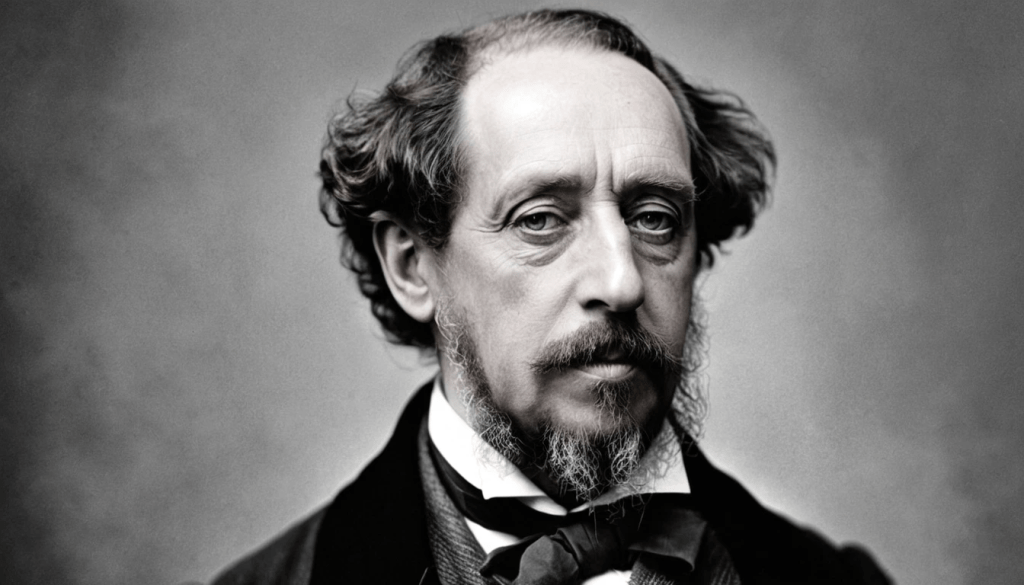
Originally published on February 7, 2025, on The-English-Nook.com.
Visit my page to find out ‘what happened on this day?‘ and learn ‘the word of the day‘—you’ll find it here first and all in one place!
If you’re a language enthusiast, you’ll have access to a variety of resources, including short stories in English and Spanish, interesting readings, vocabulary, and much more—not just for English, but also for Spanish. Come check it out!
 What Happened on This Day?
Leave a comment