
March 4, 1837
How a City Shaped American English
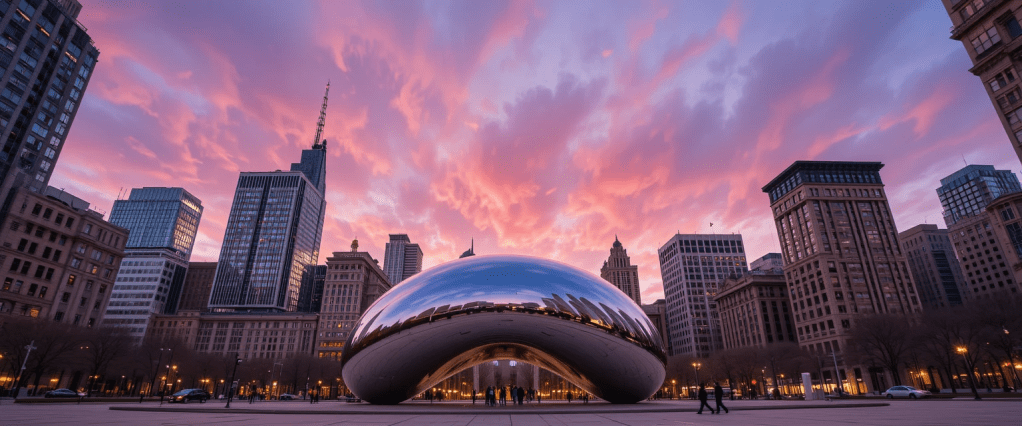
On this day in 1837, Chicago was officially incorporated as a city, marking the beginning of its rise as one of the most significant urban and economic centers in the United States. Over the following decades, Chicago became a hub for industry, transportation, journalism, and culture, influencing the evolution of American English in profound ways. The city’s rapid expansion, diverse population, and pioneering developments in architecture, media, and commerce led to the creation and popularization of numerous words and expressions that remain central to English vocabulary today.
From architectural innovations like the skyscraper to regional slang that shaped American vernacular, Chicago’s linguistic contributions reflect its status as a city of ambition, resilience, and reinvention. Its influence on journalism, advertising, and political rhetoric further cemented its role in shaping modern media language.
Urban and Industrial Vocabulary Shaped by Chicago
As Chicago grew into a major metropolis, it introduced and popularized several terms that are now widely used in urban and industrial discourse.
Architecture and City Planning
- Skyscraper – One of Chicago’s most famous contributions to English, this word originated in the late 19th century as the city pioneered tall building construction. The first modern skyscrapers were built in Chicago, leading to the term’s widespread use to describe towering urban structures.
- The Loop – Referring to the central business district of Chicago, this term originally described the circular route of the elevated train system. Today, it is used more broadly to describe central commercial areas in other cities or being “in the loop” (meaning informed and involved).
- El (Elevated Train) – Chicago’s rapid transit system, the “El,” short for “elevated,” influenced how Americans refer to similar rail systems in other cities, reinforcing the term in urban planning discourse.
- Stockyard – Chicago’s prominence in the meatpacking industry popularized this term, originally referring to large facilities for processing livestock. It remains in use to describe large-scale meat distribution centers worldwide.
- Union Stock Yards – Although a specific location, the term became synonymous with industrial-scale meat production and influenced how the industry was discussed in literature, economics, and labor history.
Trade, Commerce, and Industry
- Windy City – While often believed to reference Chicago’s weather, this nickname actually emerged from 19th-century political and journalistic commentary, describing the city’s boastful nature. It is now one of the most recognizable city nicknames in English.
- Meatpacking – Chicago’s dominance in the meat industry popularized this term, which describes the large-scale slaughtering, processing, and distribution of meat products. The word remains a staple in industrial vocabulary.
- Lumber district – Chicago’s role as a key hub for timber distribution solidified this term, which describes an area dedicated to the trade and processing of wood products.
- Rail hub – As a crucial railroad junction, Chicago contributed to the widespread use of this term in transportation and logistics. It is now commonly used for any city with major railway connectivity.
- Freight car – The importance of rail transportation in Chicago led to the popularization of this term, which refers to cargo-carrying train cars essential for trade and commerce.
Chicago’s Influence on Journalism and Media Language
Chicago was a major center for journalism and advertising, significantly shaping media vocabulary and communication styles.
Journalistic Innovations and Terms
- Yellow journalism – Although this term is often associated with New York, Chicago newspapers played a key role in sensationalist reporting, helping to popularize this phrase describing exaggerated or scandal-driven news coverage.
- Press baron – With influential newspaper magnates like Joseph Medill, Chicago helped popularize this phrase for powerful media owners.
- Muckraking – A term for investigative journalism that exposes corruption, “muckraking” became widespread in the early 20th century, partially due to Chicago-based reporters uncovering labor and industrial abuses.
- Tabloid – The rise of smaller, sensationalist newspapers in Chicago and other major cities contributed to the term “tabloid” becoming a standard descriptor for condensed, often dramatic news coverage.
Advertising and Branding Terms
- Billboard advertising – Chicago’s role as a commercial and marketing hub helped solidify “billboard” as the term for large outdoor advertisements.
- Catchphrase – The advertising boom in Chicago contributed to the widespread use of “catchphrase,” referring to memorable slogans or taglines used in promotions and media.
- Jingle – With Chicago-based advertising agencies playing a crucial role in early radio and TV marketing, the term “jingle” became a standard reference for musical advertising slogans.
Political and Social Terminology
Chicago’s dynamic political scene and its history of labor movements contributed significantly to English political and social vocabulary.
- Machine politics – Chicago’s history of political machines, particularly under figures like Mayor Richard J. Daley, helped popularize this term for a well-organized political group that controls government appointments and influence.
- Boss – While already in use, “boss” became strongly associated with Chicago-style politics, referring to a leader who controls a political machine.
- Graft – Meaning political corruption, this term was frequently used in discussions about Chicago’s history of bribery and patronage.
- Union strike – Chicago’s role in major labor movements, including the Haymarket Affair, helped solidify this phrase in discussions of worker protests and labor rights.
Chicago’s Contribution to Slang and Everyday Speech
Chicago’s diverse population and cultural melting pot led to the development of distinct slang and informal expressions that influenced broader American English.
- “Da Bears” – A Chicago pronunciation of “The Bears,” popularized by the city’s passionate sports culture, particularly in reference to the Chicago Bears football team.
- “L” – Short for “elevated train,” this term is now commonly used in discussions about public transportation in major U.S. cities.
- “Front room” (frunchroom) – A Chicago-specific way of referring to a home’s living room, reflecting regional dialect influences.
- “You guys” – While used in other areas, the widespread use of this phrase in Chicago helped reinforce its role as a standard informal way to address a group.
A Lasting Linguistic Impact
The incorporation of Chicago in 1837 was more than just an administrative milestone—it marked the beginning of a city that would shape the English language in profound ways. From architecture and industry to media, politics, and slang, Chicago’s influence can be seen in the words we use every day.
As one of the most important urban centers in the world, Chicago continues to be a source of linguistic innovation, contributing new terms to business, culture, and communication. Whether discussing towering skyscrapers, political strategies, or marketing slogans, the language of Chicago remains deeply embedded in the fabric of American English.
Chicago built more than skyscrapers—it built the language of modern America.
Originally published on March 4, 2025, on The-English-Nook.com.
Visit my page to find out ‘What Happened on this Day?‘ and learn ‘The Word of the Day‘—you’ll find it here first and all in one place!
If you’re a language enthusiast, you’ll have access to a variety of resources, including short stories in English and Spanish, interesting readings, vocabulary, and much more—not just for English, but also for Spanish. Come check it out!


 What Happened on This Day?
Leave a comment