
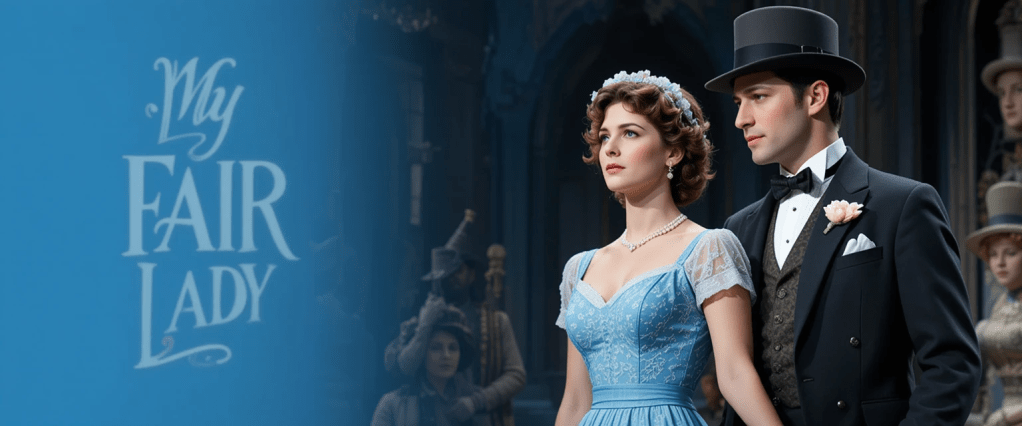
March 15, 1956
How a Musical Redefined Speech and Society
On March 15, 1956, the Broadway premiere of My Fair Lady marked one of the most significant moments in musical theatre history. Adapted from George Bernard Shaw’s 1913 play Pygmalion, with music by Frederick Loewe and lyrics by Alan Jay Lerner, the production explored the power of language, class, and social mobility in English society.
The show’s central theme—the transformation of speech as a marker of identity—made it a landmark piece in discussions of linguistics, dialects, and phonetics. Beyond its immediate theatrical success, My Fair Lady shaped cultural perceptions of accents and social class, reinforcing how pronunciation and word choice influence status and opportunity.
The Power of Language: Themes and Linguistic Influence
At the heart of My Fair Lady is the story of Eliza Doolittle, a Cockney flower seller, and Professor Henry Higgins, a linguist who trains her to speak with an upper-class accent. This premise highlighted fundamental linguistic and sociolinguistic concepts that influenced discussions about language in both academia and popular culture.
- Received Pronunciation (RP): The musical brought attention to Received Pronunciation, also known as “the Queen’s English”, which was traditionally associated with education, prestige, and social status in Britain.
- Cockney Dialect and Rhyming Slang: The contrast between Cockney English (Eliza’s original speech) and Standard English (Higgins’ goal for her) exposed audiences to distinct phonetic patterns, vocabulary, and speech rhythms.
- Phonetics and Social Mobility: Higgins’ insistence that speech alone could transform Eliza into a “lady” emphasized the perceived power of language in determining social class and identity.
Through the lens of musical theatre, My Fair Lady introduced millions to linguistic themes that scholars like Shaw, Henry Sweet (a real-life phonetician who inspired Higgins), and later sociolinguists explored in depth.
Impact on English Dialects, Pronunciation, and Popular Phrases
The show’s dialogue and lyrics emphasized the relationship between language and power, popularizing discussions about accents and dialects in English-speaking societies.
- “The rain in Spain stays mainly in the plain” – This iconic phrase, used as a phonetic exercise for Eliza, became widely quoted as a playful example of pronunciation drills.
- Eliza’s Transformation and the Debate on Prescriptive vs. Descriptive Linguistics – The musical fueled discussions on whether language should be “corrected” or whether all dialects hold equal validity.
- Public Awareness of Linguistic Class Markers – My Fair Lady reinforced awareness of how accents affect social perceptions, influencing both personal attitudes and professional fields like speech training, broadcasting, and education.
While the musical promoted the idea that speech could unlock opportunities, it also satirized class-based prejudice in language—a critique that remains relevant in modern discussions of linguistic bias and discrimination.
Broadway, West End, and Beyond: The Musical’s Cultural Legacy
From its Broadway premiere in 1956 to its West End debut in 1958, and later film adaptation in 1964, My Fair Lady shaped the musical theatre tradition and influenced stage productions worldwide.
- A Record-Breaking Broadway Run: The original production, starring Julie Andrews as Eliza Doolittle and Rex Harrison as Henry Higgins, ran for 2,717 performances, making it one of the longest-running Broadway shows at the time.
- Impact on Musical Storytelling: The success of My Fair Lady solidified the “book musical” format, where songs are deeply integrated into the narrative to develop characters and themes.
- Film Adaptation and Lasting Influence: The 1964 film adaptation, starring Audrey Hepburn and Rex Harrison, won eight Academy Awards, bringing the story to an even wider audience and further embedding its linguistic themes into popular consciousness.
The musical’s influence extended to later works exploring language, identity, and transformation, including Billy Elliot, Educating Rita, and even modern films like The King’s Speech, which also examines the impact of pronunciation and speech coaching.
Enduring Relevance: Language, Class, and Identity in the Modern Era
Even decades after its Broadway premiere, My Fair Lady remains a powerful reference point in discussions about linguistic identity, accent prejudice, and the social power of language.
- Sociolinguistics and Accent Discrimination: The themes in My Fair Lady align with modern studies on linguistic discrimination, where people are judged professionally and socially based on how they speak.
- Pop Culture References and Parodies: The musical has been referenced and parodied in everything from The Simpsons to modern political discourse, reinforcing its lasting impact.
- Educational and Speech Training Influence: Many of Higgins’ linguistic exercises reflect real phonetic training techniques, and the musical continues to be used in speech studies, ESL (English as a Second Language) education, and drama training.
A Lasting Contribution to English and Culture
The Broadway premiere of My Fair Lady on March 15, 1956, was more than a theatrical milestone—it was an exploration of language as a tool for transformation, class mobility, and identity formation. Its legacy endures through:
- Its linguistic influence, shaping public understanding of dialects, phonetics, and class-based language perceptions.
- Its impact on musical theatre, reinforcing the importance of well-integrated songs and dialogue.
- Its cultural and social relevance, as discussions on language discrimination and accent bias remain central to linguistic and social studies.
By using humor, music, and satire, My Fair Lady made complex linguistic and social issues accessible to a broad audience, ensuring its place as one of the most enduring and linguistically influential musicals in history.
When language opens doors, theatre makes them unforgettable.
Originally published on March 15, 2025, on The-English-Nook.com.
Visit my page to find out ‘What Happened on this Day?‘ and learn ‘The Word of the Day‘—you’ll find it here first and all in one place!
If you’re a language enthusiast, you’ll have access to a variety of resources, including short stories in English and Spanish, interesting readings, vocabulary, and much more—not just for English, but also for Spanish. Come check it out!
 What Happened on This Day?
Leave a comment