
March 18, 1893
Redefining War in English Literature
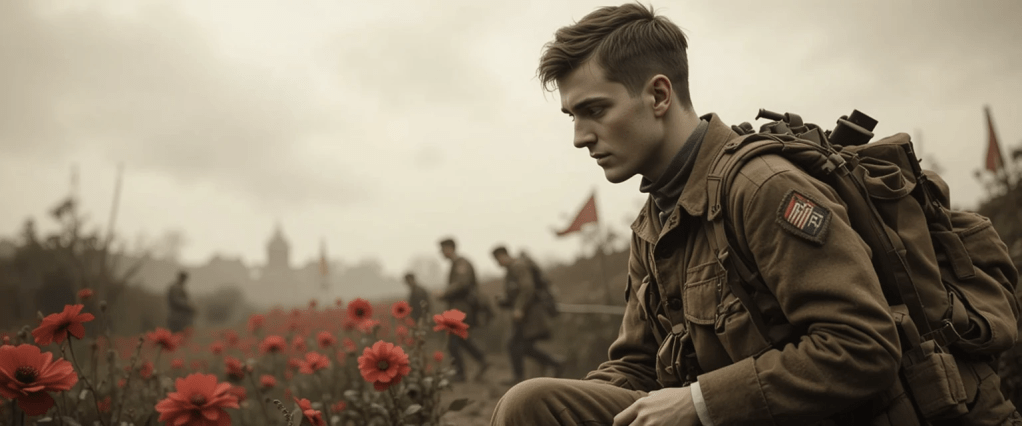
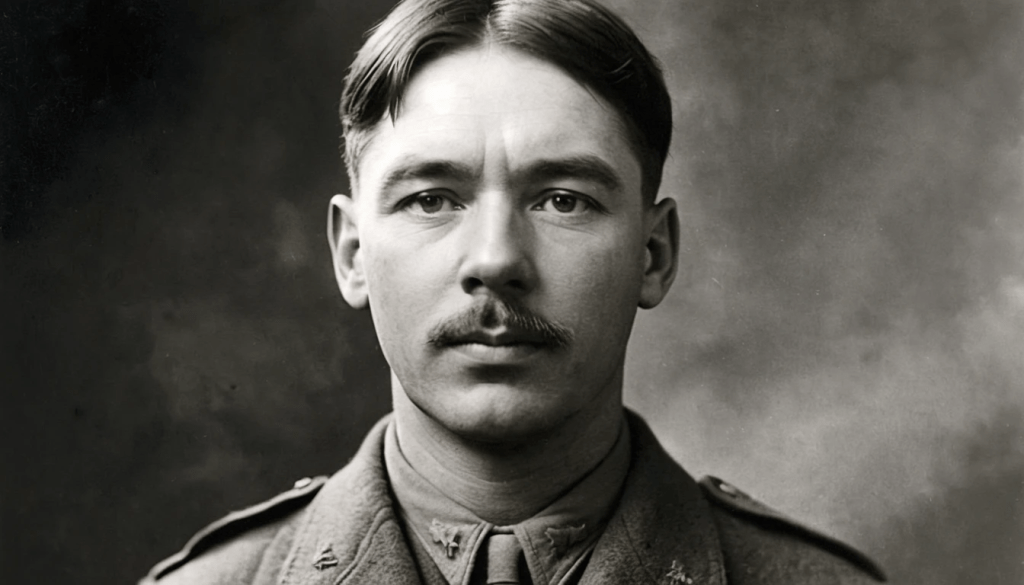
On March 18, 1893, Wilfred Owen, one of the most influential English war poets, was born. His poetry, shaped by his experiences as a soldier in World War I, revolutionized the way war was depicted in literature. Through vivid imagery, innovative language, and unflinching realism, Owen challenged romanticized notions of war, leaving a permanent mark on English literature and influencing the evolution of war-related vocabulary.
Wilfred Owen’s Literary Contributions to the English Language
Owen’s poetry, particularly works like “Dulce et Decorum Est,” “Anthem for Doomed Youth,” and “Strange Meeting,” introduced new ways of describing war, death, and suffering. His stylistic choices and thematic explorations expanded English poetic language in several key ways:
1. The Shift from Heroic to Realistic War Language
Before Owen, much of English war poetry focused on glorifying battle, patriotism, and sacrifice. However, Owen rejected these traditional themes, replacing them with:
- Grim realism: Descriptions of war as “a monstrous anger of the guns” and soldiers “coughing like hags” defied earlier heroic depictions of soldiers.
- Anti-romanticism: Phrases like “The old Lie: Dulce et decorum est pro patria mori” (“It is sweet and fitting to die for one’s country”) exposed the horrors of war propaganda.
- Brutal honesty: Words like “guttering, choking, drowning” (describing a soldier suffering from a gas attack) introduced a new visceral quality to war poetry.
This departure from idealized war language had a lasting influence on English poetry, shaping the work of later poets and novelists, from Siegfried Sassoon to Ernest Hemingway.
2. The Introduction of Psychological and Sensory Vocabulary in War Writing
Owen’s poetry also influenced how psychological trauma and sensory experiences were conveyed in English literature:
- Shell shock (later PTSD): His poetry helped shape the vocabulary used to describe the psychological scars of war, prefiguring terms like “post-traumatic stress disorder” (PTSD).
- Auditory and visual horror: Lines like “the shrill, demented choirs of wailing shells” introduced a more sensory-driven language to war writing.
- Dream-like imagery: Owen often blended reality and hallucination in his poetry, helping to develop a more psychological approach to describing warfare.
3. The Expansion of Poetic Language and Techniques
Owen was a master of poetic form, and his work introduced or popularized several linguistic techniques that have since shaped modern poetry:
- Pararhyme (half-rhyme): Unlike traditional perfect rhymes, Owen used consonant-heavy half-rhymes (e.g., killed/cold, groined/groaned), adding a disjointed, unsettling quality to his poetry.
- Contrast and irony: He frequently juxtaposed glorified war rhetoric with brutal reality, reinforcing his anti-war message.
- Alliteration and assonance: His lines, rich with repetition and musicality, influenced later poetic forms in English.
Owen’s Influence on English War Literature and Beyond
The impact of Owen’s work extended far beyond poetry, influencing novelists, playwrights, and even political discourse.
1. The Influence on Later War Literature
Owen’s raw and unfiltered approach shaped the works of later writers who sought to depict war more authentically, including:
- Erich Maria Remarque’s All Quiet on the Western Front (1929)
- Robert Graves’ Goodbye to All That (1929)
- Pat Barker’s Regeneration trilogy (1990s)
Each of these works echoes Owen’s themes, using vivid, unromanticized language to describe the psychological and physical costs of war.
2. War Journalism and Political Rhetoric
Owen’s influence extends beyond literature into journalism and political language:
- His stark portrayal of suffering helped shape how war correspondents describe modern conflicts.
- Phrases like “the pity of war” (one of Owen’s key themes) continue to be used in political speeches and peace advocacy.
- His works have been referenced in memorial ceremonies, film, and theatre, reinforcing the lasting power of his language.
The Enduring Legacy of Wilfred Owen in English
Wilfred Owen’s contributions to English literature and language remain profound. His innovations in war vocabulary, poetic structure, and psychological depth have influenced generations of writers, poets, and thinkers.
- He transformed the language of war, replacing heroic myths with raw realism.
- He broadened poetic expression, using techniques that are still studied and emulated today.
- He reshaped public discourse on war, influencing journalism, political speech, and historical memory.
Though Owen died in 1918, just days before the Armistice, his poetry endures, ensuring that the language of war—and its human cost—will never be forgotten.
Owen didn’t just write about war—he changed how the world speaks of it.
Originally published on March 18, 2025, on The-English-Nook.com.
Visit my page to find out ‘What Happened on this Day?‘ and learn ‘The Word of the Day‘—you’ll find it here first and all in one place!
If you’re a language enthusiast, you’ll have access to a variety of resources, including short stories in English and Spanish, interesting readings, vocabulary, and much more—not just for English, but also for Spanish. Come check it out!

 What Happened on This Day?
Leave a reply to Caleb Cheruiyot Cancel reply