
March 24, 1199
Lionheart’s Legacy
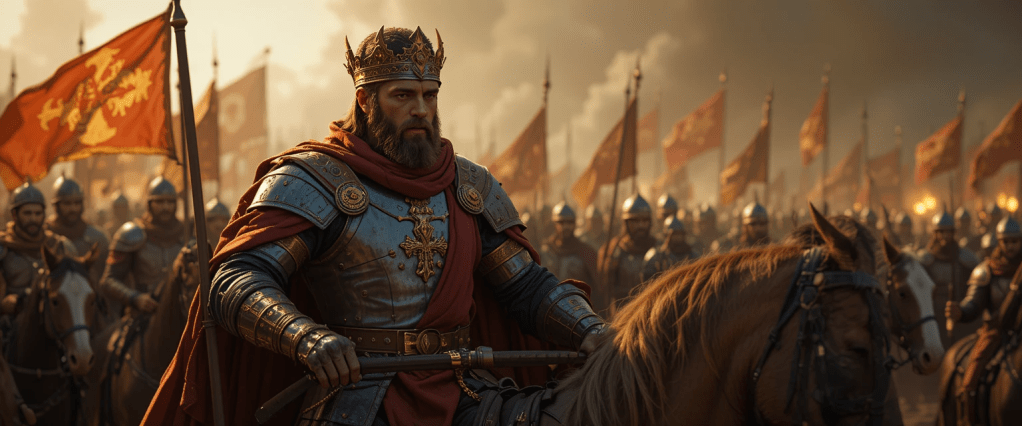
On March 24, 1199, King Richard I of England, known as Richard the Lionheart, suffered a fatal wound from a crossbow bolt while besieging the French castle of Châlus-Chabrol. This injury ultimately led to his death on April 6, 1199. Despite his relatively short reign, Richard’s military prowess, chivalric image, and legendary status left an indelible mark on English history, literature, and language.
Richard the Lionheart’s Influence on English Literary Tradition
Richard I’s adventurous life, participation in the Third Crusade (1189–1192), and warrior-king image have made him one of the most celebrated figures in medieval English literature and folklore.
- Romanticized in Medieval Chronicles – Contemporary and later medieval chroniclers, such as Roger of Hoveden and Matthew Paris, depicted Richard as an ideal chivalric king, reinforcing key medieval literary tropes of heroism, loyalty, and valor.
- A Central Figure in Crusader Literature – His role in the Crusades made him a symbol of Christian warrior ideals, contributing to epic poetry, chansons de geste (songs of heroic deeds), and later historical novels.
- Depictions in Arthurian and Chivalric Literature – The idealized warrior-king concept, popularized by Richard, influenced the portrayal of King Arthur and his knights, solidifying the chivalric code in English literary tradition.
Richard’s Impact on English Folklore and Legend
Beyond historical records, Richard’s legend became intertwined with English folklore, particularly in the tales of Robin Hood.
- Robin Hood and the Return of the King – The Robin Hood ballads often feature Richard as the rightful king, whose absence during the Crusades allows the villainous Prince John (later King John) to oppress England.
- Symbol of Justice and Kingship – Richard’s portrayal in English folk traditions reinforced the idea of a just, heroic ruler who would return to restore order—a theme that influenced later literary and cinematic adaptations.
- Cultural Archetype of the “Absent King” – Richard’s prolonged absence from England led to historical and literary reflections on the responsibilities of kingship, governance, and the balance between military ambition and domestic rule.
Contributions to the English Lexicon and Chivalric Terminology
The reign and reputation of Richard I introduced and reinforced several key terms in the English language, particularly in relation to chivalry, warfare, and leadership.
- “Lionheart” (Lion-Hearted) – Richard’s epithet, “Coeur de Lion” (French for “Lionheart”), became synonymous with courage, bravery, and leadership. The term “lionhearted” is still used in English today to describe a fearless or noble individual.
- “Chivalry” – Though derived from Old French, the concept of chivalry was closely linked to the reputation of kings like Richard, reinforcing ideas of knightly honor, courtly behavior, and martial prowess in English discourse.
- “Crusader” – The participation of kings like Richard in the Crusades helped establish the term “crusader” in English, evolving from its medieval religious connotations to a broader meaning of a person fighting for a cause.
Richard I in Later English Literature and Popular Culture
Richard’s legendary status ensured his continued presence in English literary and cultural works, from Elizabethan drama to modern film and television.
- William Shakespeare’s King John (1596–1597) – While Shakespeare’s play focuses on Richard’s brother, King John, Richard’s legacy and memory loom over the narrative, shaping perceptions of English kingship.
- Sir Walter Scott’s Ivanhoe (1819) – One of the most famous literary representations of Richard I, Scott’s novel presents Richard as the heroic, wandering king, reinforcing his Robin Hood connections and crusader mystique.
- Film and Television Adaptations – Richard has been portrayed in numerous adaptations, including:
- The Adventures of Robin Hood (1938) – Starring Errol Flynn, featuring Richard as the noble king.
- Robin Hood: Prince of Thieves (1991) – Starring Sean Connery as King Richard, reinforcing his legendary status as England’s savior-king.
- The Lion in Winter (1968, 2003) – Dramatizing Richard’s conflicts with his family and his role as a warrior prince.
The Enduring Symbolism of Richard the Lionheart in English History
Richard’s reign, despite his long absences, left a permanent mark on English national identity, influencing language, literature, and cultural memory.
A Legendary Figure in Medieval and Modern Storytelling – His life inspired ballads, novels, plays, and films, reinforcing themes of heroism, duty, and kingship.
A Key Contributor to English Chivalric Language – Terms such as “lionhearted,” “chivalry,” and “crusader” are deeply associated with his legacy.
A Lasting Presence in Historical and Folkloric Narratives – From Robin Hood to Shakespeare to modern historical fiction, Richard remains a powerful symbol of medieval English kingship.
Though his mortal wound on March 24, 1199, marked the beginning of the end of his reign, Richard the Lionheart’s legend lives on through the English language and its vast literary tradition.
The Lionheart fell, but his courage still roars through centuries of legend and language!
Originally published on March 24, 2025, on The-English-Nook.com.
Visit my page to find out ‘What Happened on this Day?‘ and learn ‘The Word of the Day‘—you’ll find it here first and all in one place!
If you’re a language enthusiast, you’ll have access to a variety of resources, including short stories in English and Spanish, interesting readings, vocabulary, and much more—not just for English, but also for Spanish. Come check it out!
 What Happened on This Day?
Leave a comment