
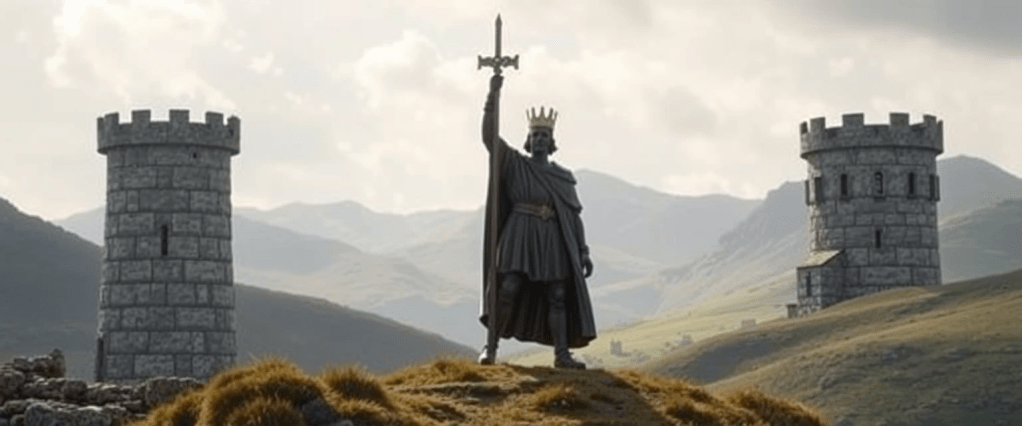
March 25, 1306
The Coronation of a Warrior King
On March 25, 1306, Robert the Bruce was crowned King of Scotland at Scone, igniting his campaign to free Scotland from English rule. His leadership during the Wars of Scottish Independence solidified his place in history as a symbol of resilience, determination, and national pride. The struggle for Scottish independence, led by Robert the Bruce, has been immortalized in literature, historical chronicles, and folk traditions, leaving a lasting imprint on the English language.
The Influence of Robert the Bruce on English Literature
Robert the Bruce’s fight for Scottish sovereignty inspired countless historical accounts, poems, and literary works, many of which contributed to the English lexicon and storytelling traditions.
- Chronicled in Medieval History – One of the most famous early accounts of Bruce’s life is The Brus (1375) by John Barbour, a lengthy poetic chronicle that celebrates his heroism and perseverance. This work reinforced medieval literary themes of chivalry, bravery, and the righteous struggle for freedom.
- Themes of Resistance and Nationalism – The concept of a just leader resisting foreign domination became a powerful motif in English and Scottish literature, later influencing works such as Sir Walter Scott’s Tales of a Grandfather (1828) and The Lord of the Isles (1815), both of which romanticized Bruce’s achievements.
- Impact on Historical Fiction – Bruce’s legend provided inspiration for numerous historical novels, including Nigel Tranter’s The Bruce Trilogy (1971–1978), which brought his story to modern readers and reinforced key aspects of medieval Scottish culture and warfare.
Robert the Bruce in Folklore and National Identity
Beyond historical records, Robert the Bruce became a legendary figure in Scottish and English folklore. His story, particularly his perseverance in the face of adversity, contributed to widely known moral lessons and linguistic expressions.
- The Spider and the King – One of the most enduring folk tales associated with Bruce tells of his retreat to a cave, where he observed a spider repeatedly attempting to spin its web despite constant failure. This inspired the phrase “If at first you don’t succeed, try, try again”, a moral lesson in perseverance that has been echoed in English speech and writing.
- Symbol of Scottish Independence – The name “Robert the Bruce” remains synonymous with the idea of national determination and freedom, influencing discussions on self-governance and resistance against oppression in political discourse.
- The Declaration of Arbroath (1320) – Written in support of Bruce’s kingship, this document emphasized the idea that a king rules by the will of the people, contributing to early notions of popular sovereignty that would later influence English political thought.
Linguistic Contributions and Terminology in English
Robert the Bruce’s era and legacy introduced or popularized various terms and expressions in English, particularly those related to medieval warfare, governance, and Scottish identity.
- “Coronation” – Bruce’s formal crowning at Scone reinforced this term’s usage in describing the official enthronement of a monarch.
- “Covenant” – While more famously associated with the 17th-century Scottish Covenanters, the idea of a sacred or political covenant was present in Bruce’s time and used in agreements between Scottish leaders.
- “Outlaw” – Bruce was briefly declared an outlaw by Edward I of England, reinforcing this term’s connotation of resistance against authority.
- “Chieftain” – The Scottish clan system, which played a role in Bruce’s support network, brought this term into wider use in English to describe tribal or military leaders.
Robert the Bruce in Later English Literature and Popular Culture
The legacy of Robert the Bruce has been kept alive through historical and literary adaptations, ensuring his continued presence in English-speaking cultural narratives.
- Shakespeare’s Macbeth (1606) – While not directly about Bruce, Macbeth explores themes of Scottish kingship and legitimacy that were shaped by the struggles of Bruce’s time.
- Sir Walter Scott’s The Lord of the Isles (1815) – This narrative poem centers around Bruce’s campaign, romanticizing his leadership and Scotland’s struggle for independence.
- Films and Modern Depictions – Bruce has appeared in numerous cinematic and television portrayals, including:
- Braveheart (1995) – Although the film focuses on William Wallace, Bruce is a key figure in Scotland’s fight for independence.
- Outlaw King (2018) – A historical drama centered on Bruce’s rise to power and battles against England.
Enduring Symbolism and Linguistic Legacy
Robert the Bruce’s role in securing Scottish independence ensured his continued influence on English and Scottish historical narratives. His reign contributed to the development of national identity, political discourse, and literary traditions that shaped the language.
- A Lasting Figure in Medieval and Modern Literature – His life and struggles have been chronicled in medieval epics, Romantic-era poetry, and contemporary historical fiction.
- A Contributor to Political and Nationalist Terminology – Words like “sovereignty,” “rebellion,” and “independence” gained weight through narratives surrounding Bruce’s leadership.
- A Universal Symbol of Determination – The lesson of Bruce and the spider continues to be a widely referenced story of resilience, appearing in self-improvement literature and motivational speeches.
The Everlasting Legacy of Robert the Bruce
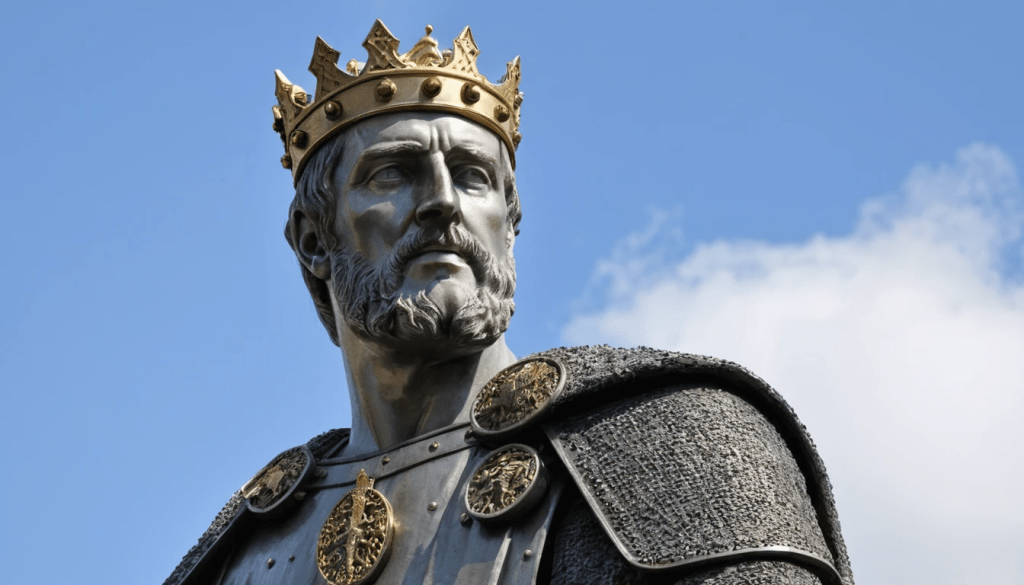
Though his coronation took place on March 25, 1306, Robert the Bruce’s impact extends far beyond his reign. His influence on literature, language, and historical memory ensures that his legacy remains firmly embedded in the English-speaking world.
Robert the Bruce: the king who turned struggle into legend and wove resilience into language forever!
Originally published on March 25, 2025, on The-English-Nook.com.
Visit my page to find out ‘What Happened on this Day?‘ and learn ‘The Word of the Day‘—you’ll find it here first and all in one place!
If you’re a language enthusiast, you’ll have access to a variety of resources, including short stories in English and Spanish, interesting readings, vocabulary, and much more—not just for English, but also for Spanish. Come check it out!
 What Happened on This Day?
Leave a comment