
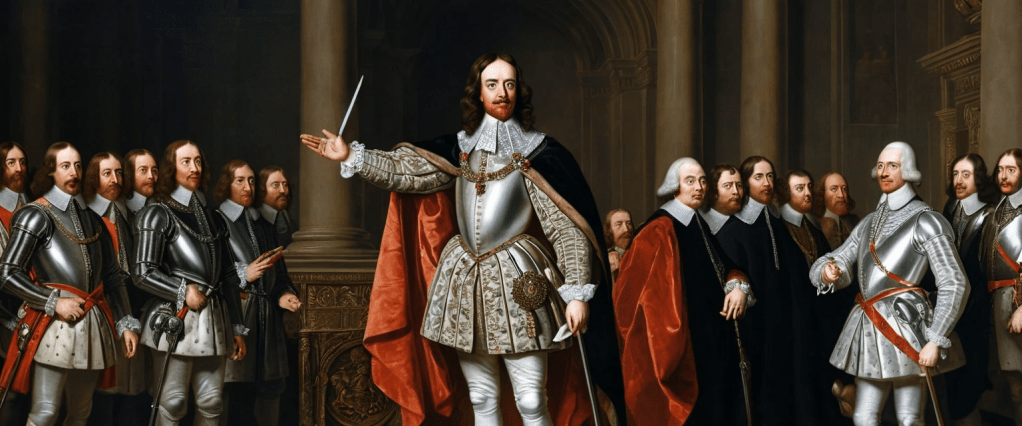
March 27, 1625
The Ascension of Charles I and the Path to Civil War
On March 27, 1625, Charles I was crowned King of England, Scotland, and Ireland, ushering in one of the most tumultuous periods in British history. His reign was marked by deep political and religious conflicts, culminating in the English Civil War (1642–1651) and his eventual execution in 1649. Charles’ unwavering belief in the divine right of kings put him at odds with Parliament and fueled a national crisis that reshaped the English monarchy.
His rule saw ongoing struggles between royal authority and parliamentary power, a battle that has been widely examined in English historical and literary works. The ideological debates and conflicts of his time influenced centuries of literature, from political pamphlets and poetry to modern historical fiction.
Charles I’s Influence on English Literature and Political Thought
The tensions surrounding Charles I’s reign sparked a literary explosion, with writers, poets, and pamphleteers shaping public discourse on governance, monarchy, and civil liberties.
- Royalist and Parliamentarian Propaganda – The Civil War gave rise to a war of words, with both sides producing pamphlets, sermons, and tracts to justify their positions. Royalist writers defended the king’s divine right to rule, while Parliamentarian authors championed constitutional governance and people’s rights.
- John Milton’s Political Writings – Milton, one of the most influential poets of the era, wrote The Tenure of Kings and Magistrates (1649) in support of the regicide of Charles I, arguing that tyrannical rulers could be lawfully overthrown. His later epic, Paradise Lost, is often interpreted as an allegory of the fall of Charles and the monarchy.
- The Development of Political Philosophy – The fall of Charles I deeply influenced thinkers like Thomas Hobbes and John Locke. Hobbes’ Leviathan (1651) defended strong centralized authority to prevent chaos, while Locke’s later works laid the groundwork for democratic governance.
The literary response to Charles I’s reign extended beyond political tracts, influencing drama, poetry, and historical writing, reinforcing themes of authority, governance, and national identity.
The English Civil War and Its Literary Legacy
The English Civil War, fought between Royalist (Cavalier) and Parliamentarian (Roundhead) forces, not only shaped the political landscape but also had a profound impact on literature.
- Cavalier Poetry – The Royalist poets, known as the Cavaliers, such as Robert Herrick and Richard Lovelace, wrote elegant, lyrical verse celebrating loyalty, honor, and the fleeting joys of life in the face of war.
- Puritan Literature – In contrast, Puritan writers, aligned with Parliament, focused on themes of morality, divine justice, and republicanism. Their influence can be seen in later English prose and religious writings.
- Historical Dramas and Novels – The dramatic events of Charles I’s reign and the Civil War have inspired countless works, from Shakespeare’s later history plays to modern historical novels by writers like Hilary Mantel.
The literature of this period not only documented the war but also shaped the evolving concepts of power, rebellion, and governance in English thought.
The Execution of Charles I and the Cultural Aftermath
In 1649, Charles I was tried and executed for treason, a shocking event that resonated deeply in English history and literature. His death transformed him into a martyr for some and a tyrant for others, inspiring contrasting literary depictions.
- Eikon Basilike (1649) – Allegedly written by Charles himself (though likely penned by a Royalist supporter), this book presented him as a saintly figure wronged by his subjects. It became a bestseller, influencing royalist sympathies.
- John Milton’s Eikonoklastes – Written in response to Eikon Basilike, Milton’s work aimed to dismantle the image of Charles as a martyr and justify his execution.
- Romanticized and Critical Depictions – Later writers, such as Walter Scott in Woodstock (1826), explored the personal and political struggles of Charles, often portraying him as a tragic but flawed figure.
The execution of a reigning monarch was unprecedented in English history, and its impact on literature and political thought persisted for centuries.
The Lasting Influence of Charles I in English History and Literature
Though his reign ended in bloodshed, Charles I’s legacy endures in English literature and political philosophy. His rule, the Civil War, and his execution remain central themes in historical fiction, poetry, and political discourse.
- A Defining Moment in Constitutional History – The conflict between monarchy and Parliament that defined Charles’ rule continues to shape discussions on governance and democracy.
- A Literary Catalyst for Political Debate – The writings of Milton, Hobbes, and Locke, inspired by the era, laid the foundation for later democratic ideals and revolutionary thought.
- A Complex Historical Figure in Popular Culture – Charles I appears in plays, novels, and films, often portrayed as either a doomed hero or an arrogant monarch, reflecting the lasting fascination with his rule.
The legacy of Charles I, enshrined in literature and historical thought, serves as a powerful reminder of the enduring struggles between authority and liberty—a conflict that continues to shape political narratives today.
From crown to scaffold—Charles I’s reign rewrote the rules of monarchy, literature, and power.
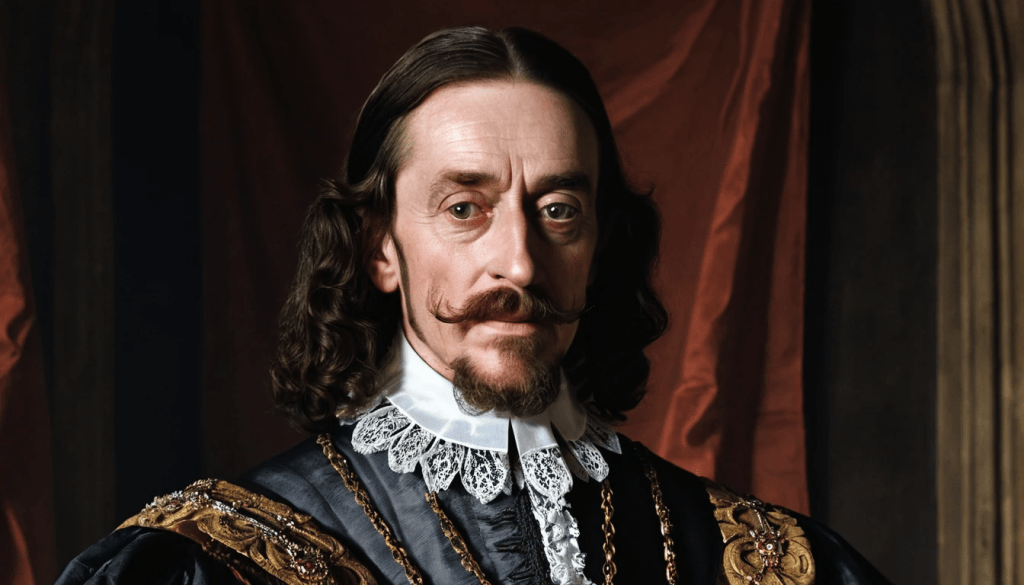
Originally published on March 27, 2025, on The-English-Nook.com.
Visit my page to find out ‘What Happened on this Day?‘ and learn ‘The Word of the Day‘—you’ll find it here first and all in one place!
If you’re a language enthusiast, you’ll have access to a variety of resources, including short stories in English and Spanish, interesting readings, vocabulary, and much more—not just for English, but also for Spanish. Come check it out!
 What Happened on This Day?
Leave a comment