
March 28, 1963
Hitchcock’s The Birds and Its Place in Film History
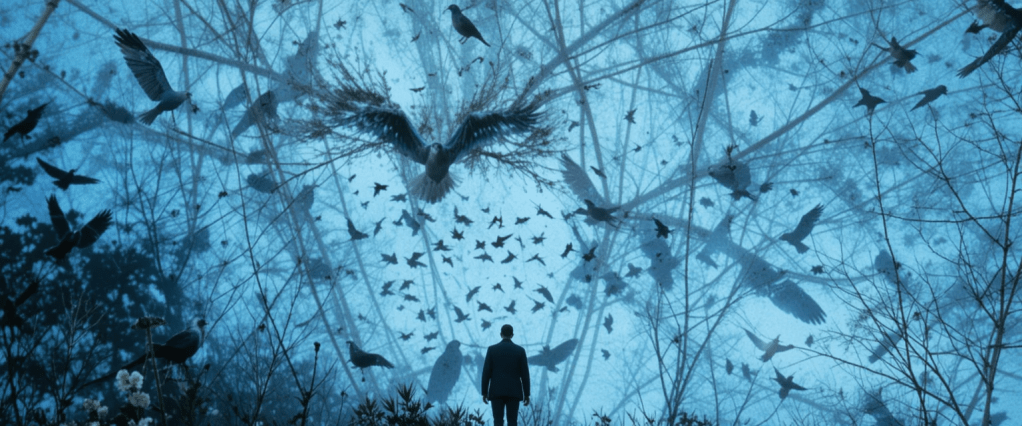
On March 28, 1963, The Birds, directed by Alfred Hitchcock, premiered, cementing its status as one of the most influential horror-thrillers in cinematic history. Based on a short story by British author Daphne du Maurier, the film took the premise of an unexplained avian attack and expanded it into a psychological and suspenseful narrative that has been studied extensively in film and literary analysis.
Hitchcock, known as the “Master of Suspense,” transformed du Maurier’s story into an atmospheric, slow-burning thriller that defied conventional horror tropes. The film’s ambiguous ending, lack of a musical score, and innovative use of sound design contributed to its unsettling effect, influencing future horror and suspense films.
Adaptation from Literature to Screen
The film was loosely inspired by Daphne du Maurier’s 1952 short story The Birds, a tense and eerie tale about a rural English town under siege by inexplicably aggressive birds.
- Key Differences from the Source Material – Hitchcock’s adaptation diverged significantly from du Maurier’s narrative, moving the setting from post-war England to coastal California and introducing entirely new characters and subplots.
- Psychological and Allegorical Layers – While du Maurier’s story focused on the tension between humanity and nature, Hitchcock added psychological depth, incorporating themes of emotional repression, gender dynamics, and fear of the unknown.
- Building Suspense Through Visual Storytelling – Unlike the short story, which relied on written tension, the film used long, dialogue-free sequences and visual motifs to heighten suspense, influencing later adaptations of literary horror.
The transition from page to screen in The Birds is a prime example of how filmmakers can reinterpret literary works to fit cinematic storytelling while maintaining the essence of psychological horror.
Themes and Symbolism in The Birds
Hitchcock’s film is often analyzed for its deeper meanings, with scholars debating the symbolic significance of the bird attacks and their connection to human anxieties.
- Nature as an Uncontrollable Force – The unexplained aggression of the birds serves as a metaphor for the unpredictability of nature and the fragility of human dominance.
- Psychological Horror and Gender Dynamics – The film has been interpreted as an exploration of female relationships and societal expectations, particularly through the character of Melanie Daniels (played by Tippi Hedren) and her interactions with the male lead and his mother.
- Cold War and Societal Fears – Some critics view the film as an allegory for Cold War paranoia and the fear of sudden, inexplicable disaster, much like the nuclear threat looming over the 1960s.
By leaving the cause of the bird attacks unexplained, Hitchcock created a narrative that invites multiple interpretations, adding to its longevity in academic and cinematic discussions.
Influence on Film and Literature
The impact of The Birds extends far beyond its initial release, shaping both the horror genre and cinematic storytelling.
- Redefining Suspense in Horror – Hitchcock’s use of silence, sudden violence, and psychological tension influenced directors like Steven Spielberg (Jaws, 1975) and M. Night Shyamalan (Signs, 2002).
- Literary and Thematic Analyses – The film has been widely studied in English literature and film courses, particularly in discussions of adaptation, narrative ambiguity, and visual storytelling.
- Pop Culture References and Homages – The Birds has been referenced in numerous films, TV shows, and books, from The Simpsons to Stephen King’s works, reinforcing its place in popular culture.
Hitchcock’s masterful adaptation of du Maurier’s story proved that horror could be both cerebral and terrifying, leaving an indelible mark on film history.
The Lasting Legacy of The Birds
More than six decades after its release, The Birds remains a landmark in cinema, demonstrating the power of suspense, visual storytelling, and psychological horror.
- A Pioneering Example of Literary Adaptation – Hitchcock’s reimagining of du Maurier’s story showcases how literature can be transformed into compelling visual narratives.
- An Ever-Relevant Exploration of Fear and the Unknown – The film’s ambiguous nature ensures it continues to be reinterpreted in new cultural and social contexts.
- A Blueprint for Modern Horror and Thriller Films – The influence of The Birds can be seen in contemporary horror cinema, particularly in films that emphasize atmosphere and psychological tension over explicit violence.
By blending literary inspiration with cinematic innovation, The Birds has secured its place as a masterpiece of suspense, ensuring its continued study and appreciation in both film and literary circles.
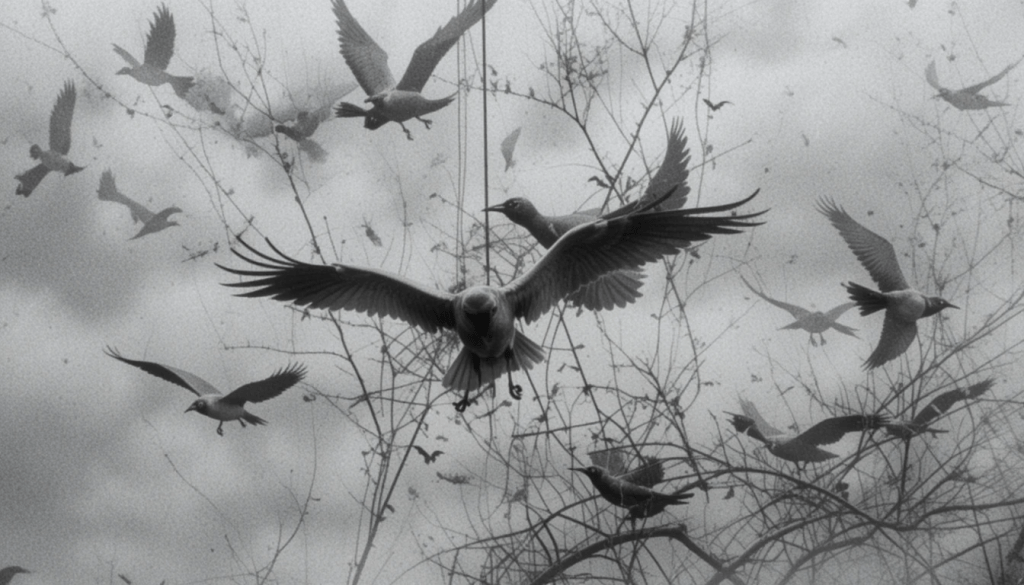
“When Hitchcock turned nature into the ultimate villain, the world learned to fear the sky!”
Originally published on March 28, 2025, on The-English-Nook.com.
Visit my page to find out ‘What Happened on this Day?‘ and learn ‘The Word of the Day‘—you’ll find it here first and all in one place!
If you’re a language enthusiast, you’ll have access to a variety of resources, including short stories in English and Spanish, interesting readings, vocabulary, and much more—not just for English, but also for Spanish. Come check it out!
 What Happened on This Day?
Leave a comment