
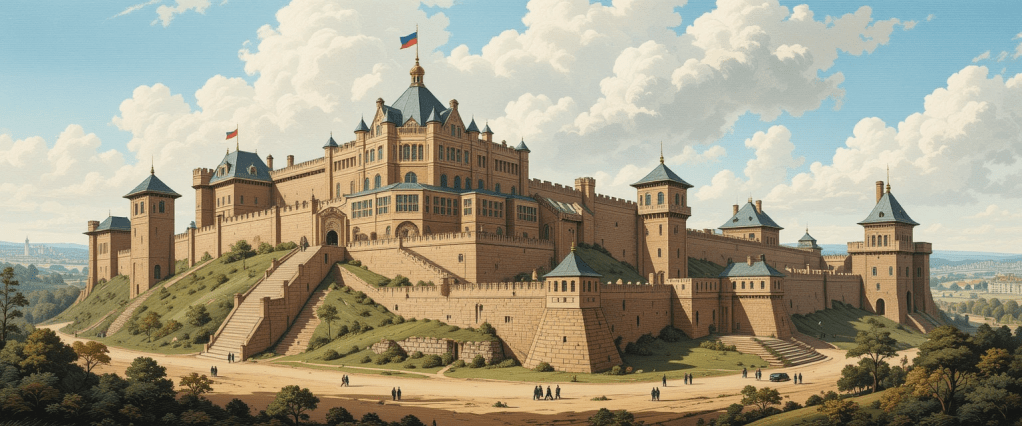
March 29, 1800
Montalembert and the Language of Military Science
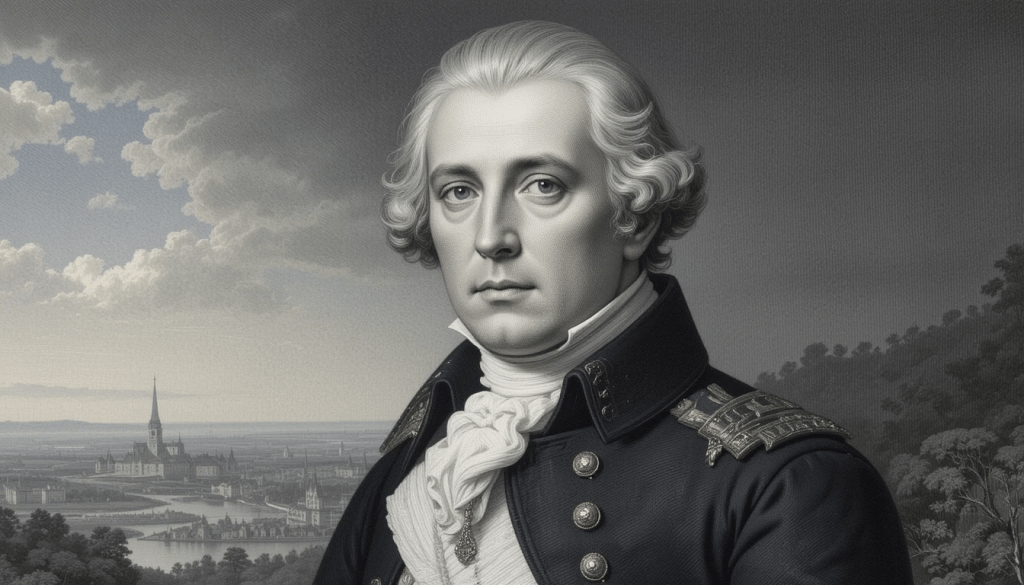
Marc René, Marquis de Montalembert, a French military engineer and strategist, passed away on March 29, 1800. Though his primary contributions were in fortifications and military theory, his influence extended beyond engineering and warfare. His writings and strategic innovations shaped the vocabulary of military science, introducing and reinforcing terms that became standard in English military discourse.
Introducing Technical Military Terminology into English
Montalembert’s extensive work on polygonal fortifications and artillery-based defense contributed to the adoption of several key technical terms in English military writing. His ideas were widely translated and studied, helping to establish a common military lexicon. Some of the terms either introduced or popularized in English include:
- Casemate – A fortified structure housing artillery, a concept central to Montalembert’s defensive designs.
- Bastioned system – A traditional fortification style that Montalembert critiqued, leading to the introduction of polygonal fortifications in later English discourse.
- Defensive works – A general term describing military constructions designed for protection, reinforced by Montalembert’s treatises.
- Counter-battery fire – The strategic use of artillery to neutralize enemy gun positions, a concept detailed in his discussions of fortification defense.
The Spread of His Military Theories into English Literature
Montalembert’s theories were translated and studied by British and American military engineers, influencing military handbooks and manuals written in English. His ideas contributed to the refinement of English vocabulary in military education, particularly in strategy, siege warfare, and defensive planning.
- The term “strategic fortification”, which became standard in English military discourse, was influenced by Montalembert’s emphasis on fortresses as part of a broader strategic defense network.
- His discussions of coastal defenses introduced new terminology for protecting naval entry points, an area of particular importance to the British military.
- His advocacy for artillery dominance reinforced the importance of words like barrage, fortified line, and interlocking fields of fire in English military texts.
Influence on English Military Writing and Doctrine
By the 19th century, Montalembert’s ideas had been absorbed into English military studies, shaping how warfare was discussed in official documents and literature. His works appeared in translations, influencing how terms like defensive architecture, siege warfare, and martial engineering were used in English.
Even beyond military discourse, his contributions reinforced metaphorical military language in English. Terms such as “stronghold” (used figuratively for anything well-defended), “fortified position” (in both military and argumentative contexts), and “defensive strategy” (applied broadly beyond warfare) became more prevalent as his theories were discussed and adapted.
A Lasting Linguistic Impact on English Military Thought
Though Marc René, Marquis de Montalembert, was primarily a military figure, his influence extended into the language of warfare and strategy in English. His theories introduced precise technical vocabulary, influenced military doctrine, and contributed to metaphorical expressions that persist today. His legacy lives on not only in fortifications and strategic thought but also in the enduring words and phrases of military English.
More than fortresses—Montalembert built the language of war.
Originally published on March 29, 2025, on The-English-Nook.com.
Visit my page to find out ‘What Happened on this Day?‘ and learn ‘The Word of the Day‘—you’ll find it here first and all in one place!
If you’re a language enthusiast, you’ll have access to a variety of resources, including short stories in English and Spanish, interesting readings, vocabulary, and much more—not just for English, but also for Spanish. Come check it out!
 What Happened on This Day?
Leave a comment