
August 7, 2022
Historian, Biographer, Storyteller — A Voice That Shaped English Historical Language
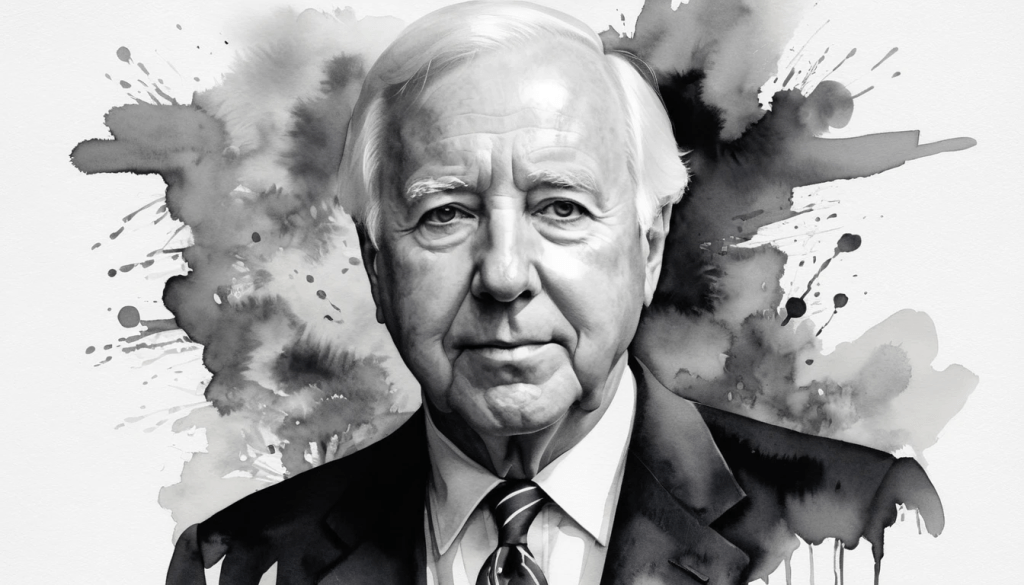
On August 7, we mark the passing of David McCullough, a towering figure in American letters whose work profoundly influenced how English-speakers understand, narrate, and value history. Winner of two Pulitzer Prizes and the Presidential Medal of Freedom, McCullough was more than a historian—he was a master of historical storytelling, responsible for transforming the tone and vocabulary of English-language nonfiction and documentary narration.
His legacy reaches far beyond the bookshelf: McCullough’s impact is visible in how English history is written, taught, spoken, and even heard.
Narrative Style and Lexical Influence
🔹 “McCullough eloquence”
- A phrase now used by critics and educators to describe a particular style of narrative nonfiction—clear, character-driven, emotionally resonant, and historically accurate.
- His books such as John Adams, 1776, Truman, and The Path Between the Seas helped establish a new English register for historical writing that balanced literary grace with factual clarity.
- “McCullough eloquence” now implies prose that is accessible without being simplistic, patriotic without being jingoistic, and dramatic without sacrificing integrity.
Shaping English Discourse on History
🔹 Popularizing the “Narrative Historian”
- Before McCullough, historical writing in English was often academic or dense. He helped elevate the “narrative historian” as a respected identity in literary and journalistic circles.
- Terms like “readable history,” “popular biography,” and “humanized nonfiction” became common in English literary reviews and publishing marketing.
- His style encouraged a wave of successors, prompting publishers to ask for works in the “McCullough tradition”—further embedding the phrase in editorial English.
🔹 Reviving Vocabulary of Civic Virtue
- McCullough’s biographies breathed new life into 18th- and 19th-century English political vocabulary, helping modern readers rediscover terms such as:
- “Civic duty,” “public character,” “executive restraint,” and “constitutional integrity.”
- By quoting figures like Adams and Truman directly—and framing them in familiar, modern English—he made archival political language relatable again.
Voice of History: Audio, Documentaries, and Education
🔹 Narration Legacy
- McCullough was the narrator for landmark PBS series such as The Civil War and American Experience—and his delivery became the model for English-language documentary tone.
- The calm, authoritative, empathetic cadence of his voice helped shape the rhetorical sound of “serious history” in public media. Terms like “voice-of-God narration” and “documentary gravitas” were often linked with his work.
🔹 Quotability in English Classrooms
- McCullough’s books were widely adopted in schools and universities, and his quotes entered civic and educational discourse: “History is who we are and why we are the way we are.”
- His phrasing modeled how to speak about history in ways that felt personal, national, and timeless—and influenced the language of educational materials.
Key Terms Influenced or Popularized
- “McCullough eloquence” – narrative nonfiction that blends beauty and clarity
- “Narrative historian” – a professional title now widely used in publishing and academia
- “Readable history” – a marketing term used to classify accessible nonfiction
- “Voice of American memory” – a journalistic phrase describing his narrative impact
- “Civic biography” – a term used for character-focused histories of public figures
Legacy in the English-Speaking World
David McCullough helped mainstream a language of history that spoke to everyday readers, blending reverence with critique, and facts with storytelling. His influence is evident in:
- The tone of presidential biographies
- The vocabulary of public history programs
- The style of modern nonfiction writers
- The language of museums, documentaries, and lectures across the English-speaking world
He democratized historical language without diluting its depth—a feat few writers achieve.
He didn’t just tell history—he gave it a voice that echoed in English forever.
Curious about what happened today in history? Want to learn a new word every day?
You’ll find it all—first and in one place—at The-English-Nook.com!
If you love languages, this is your space.
Enjoy bilingual short stories, fun readings, useful vocabulary, and so much more in both English and Spanish.
Come explore!
 What Happened on This Day?
Leave a comment