
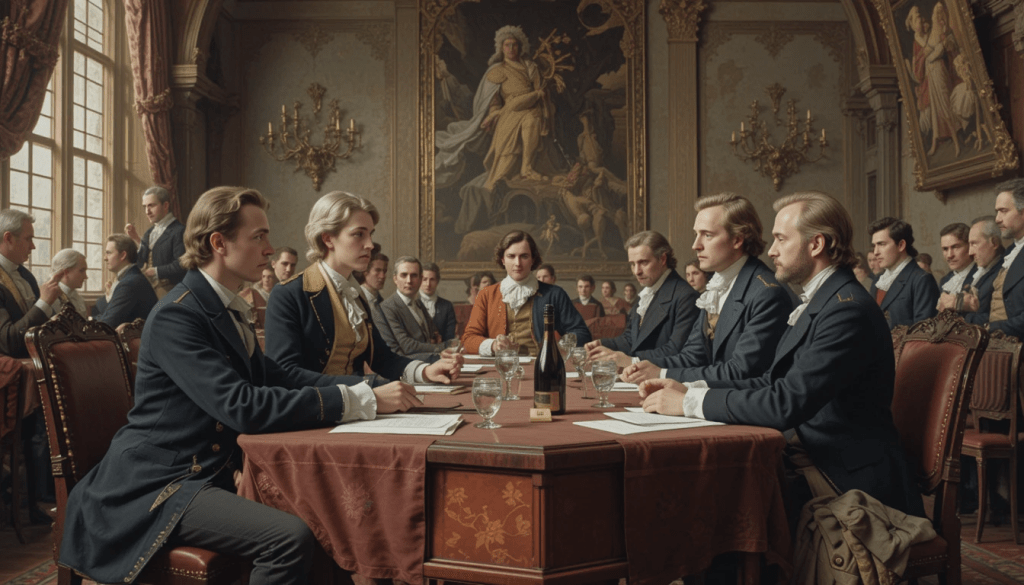
August 8, 1814
A Diplomatic Milestone that Enriched English Political and Historical Language
On August 8, 1814, formal peace negotiations opened in Ghent, Belgium, between representatives of the United States and Great Britain, aiming to end the War of 1812. This meeting initiated one of the 19th century’s most significant diplomatic processes, not only reshaping geopolitical realities but also leaving a deep imprint on English political, diplomatic, and historical vocabulary.
Emergence and Popularization of Key Terms in English
“Treaty of Ghent”
- Originally a specific proper noun, it became shorthand in English for the peace settlement that ended the War of 1812.
- In historical writing, “Treaty of Ghent” is used as a fixed term in English to denote both the document and the diplomatic process behind it.
“Anglo-American relations”
- The negotiations reinforced this phrase as a formal descriptor of the political, economic, and cultural ties between the United States and Britain.
- It has since become a permanent fixture in English-language international relations discourse.
“Diplomatic compromise”
- The talks embodied the concept of negotiated settlements where neither side claims outright victory.
- The term’s modern political use—denoting a balanced agreement reached through concessions—gained wider traction in English in the wake of such negotiations.
“Status quo ante bellum”
- Although Latin in origin, this legal-diplomatic phrase (meaning the state of affairs before the war) entered broader English historical and political writing as a result of the Treaty’s terms.
- Its continued use in political analysis stems from its prominent role in describing the treaty’s outcome.
Influence on English Rhetoric and Historical Narrative
- Formal Treaty Language – The official documents and reports from the Ghent negotiations enriched English with high-register diplomatic expressions like plenipotentiary, ratification, and protocols of peace.
- Framing Peace in English – The settlement became a reference point for how English-language historians frame peace talks as processes requiring patience, strategic concessions, and careful public communication.
- Journalistic Usage – Newspapers of the time popularized phrases like peace commissioners, table of negotiations, and mutual recognition, which remain standard in English diplomatic reporting.
Enduring Lexical Legacy
The start of the Treaty of Ghent negotiations on August 8, 1814, did more than set the stage for peace—it solidified a set of political and diplomatic terms that have endured in English for over two centuries. Today, “Treaty of Ghent” and “Anglo-American relations” are not merely historical references but linguistic landmarks, carrying connotations of negotiation, balance, and the capacity for reconciliation between rival nations.
Some treaties end wars — this one taught English how to talk about peace.
Curious about what happened today in history? Want to learn a new word every day?
You’ll find it all—first and in one place—at The-English-Nook.com!
If you love languages, this is your space.
Enjoy bilingual short stories, fun readings, useful vocabulary, and so much more in both English and Spanish.
Come explore!
 What Happened on This Day?
Leave a comment