
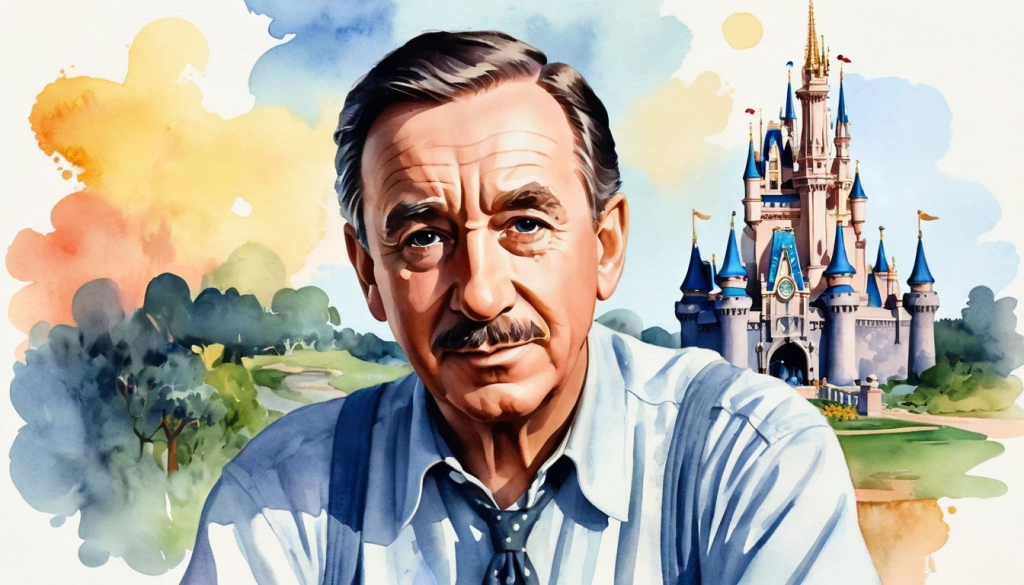
December 15, 1966
The Storyteller Who Reprogrammed How English Learns Its Stories
On December 15, 1966, Walt Disney died in Burbank, California. Though not a literary author in the traditional sense, Disney became one of the most influential shapers of English-language storytelling in the twentieth century. Through animation, film, and popular media, he transformed how English-speaking audiences encounter narrative, character, and myth.
Disney’s adaptations of fairy tales, folklore, and classic literature did not merely retell old stories—they standardized them, softened them, and embedded them in the shared imaginative vocabulary of English-speaking childhood. His influence reaches beyond entertainment into pedagogy, adaptation theory, narrative expectation, and cultural memory.
He did not write books—but he rewrote how English remembers them.
1. The Reinvention of Folklore for English-Speaking Culture
Disney played a central role in reshaping traditional stories for modern English audiences.
- Fairy tales from European oral and literary traditions (Snow White, Cinderella, Sleeping Beauty) were recast into definitive English-language narrative forms.
- Disney adaptations often displaced older, darker versions, becoming the default reference point in English-speaking cultures.
- Through repetition and mass distribution, these stories entered English not just as plots, but as emotional templates.
Disney’s versions became the stories English children thought they had always known.
2. Narrative Structure and the Standardization of Storytelling
Disney’s films helped codify narrative structures that now dominate English-language storytelling.
- Clear moral arcs, sympathetic protagonists, and emotionally legible conflicts became narrative norms.
- Musical integration reinforced storytelling through repetition, refrain, and lyric reinforcement.
- Closure, redemption, and emotional resolution became expected narrative outcomes.
These conventions migrated from film into children’s literature, television, and even classroom storytelling practices.
3. Adaptation as Cultural Translation in English
Disney fundamentally altered how English-speaking culture adapts older texts.
- His approach emphasized accessibility, emotional clarity, and visual symbolism over textual fidelity.
- Literary works and folk tales were translated into a simplified narrative English that favored universal appeal.
- This approach influenced later adaptations across media, shaping expectations about what it means to “retell” a story in English.
Disney turned adaptation into a form of cultural authorship.
4. Shaping Children’s English Narrative Imagination
Disney’s influence on children’s narrative culture is difficult to overstate.
- His storytelling established a shared vocabulary of archetypes—heroes, villains, sidekicks, transformations.
- English-language children learned story structure, moral causality, and emotional pacing through Disney narratives.
- These stories became reference points for later writers, educators, and filmmakers working in English.
Disney helped define the narrative grammar of childhood in English.
5. The Language of Story Beyond Text
Though visual, Disney’s work deeply shaped spoken and narrative English.
- Iconic phrases, character names, and song lyrics entered everyday English usage.
- The cadence of dialogue and musical storytelling influenced later English-language animation and family entertainment.
- Disney’s synthesis of image, sound, and narrative expanded the idea of what “story” means in English culture.
His legacy is linguistic as much as visual.
Glossary of Enduring Narrative Ideas from Disney
- Narrative standardization — shared story structures across media
- Folklore domestication — oral tradition reshaped for modern audiences
- Adaptation as authorship — retelling as cultural creation
- Mythic simplification — clarity and emotional legibility
- Childhood narrative grammar — early story patterns learned through repetition
Disney’s Enduring Narrative Shadow
When Walt Disney died on December 15, 1966, English-language culture lost one of its most powerful narrative engineers. His work reshaped folklore, redefined adaptation, and set the emotional and structural expectations through which millions of English speakers learned how stories work.
He did not write the stories—but he taught English how to remember them.
One imagination, one narrative system, one global echo — Walt Disney transformed English storytelling without ever turning a page.
Curious about what happened today in history? Want to learn a new word every day?
You’ll find it all—first and in one place—at The-English-Nook.com!
If you love languages, this is your space.
Enjoy bilingual short stories, fun readings, useful vocabulary, and so much more in both English and Spanish.
Come explore!
 What Happened on This Day?
Leave a comment