
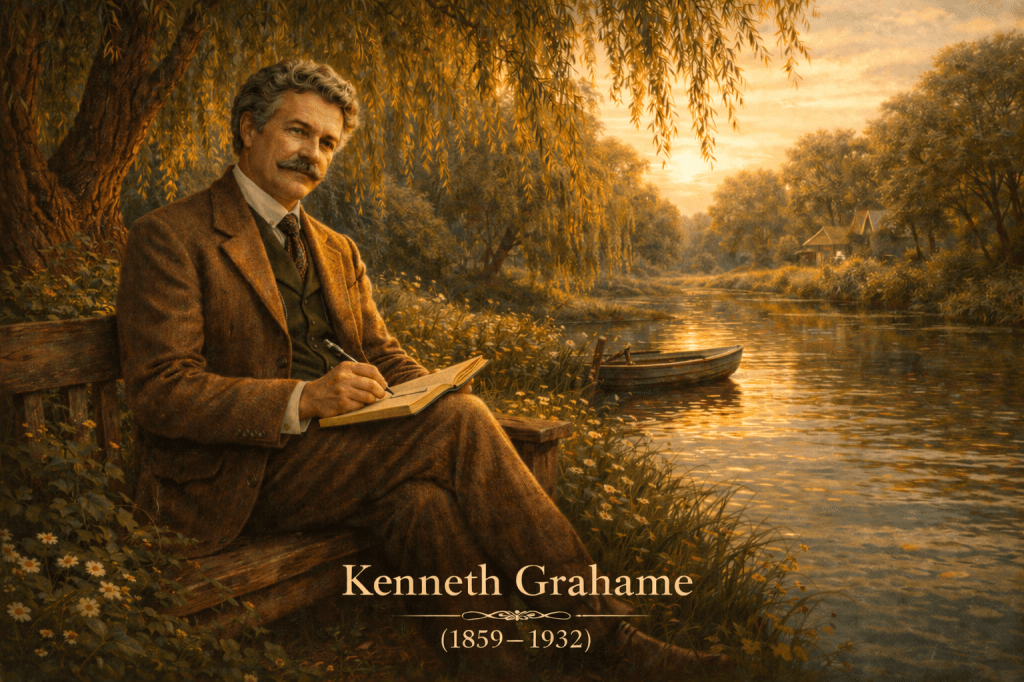
March 8, 1859
When English Children’s Literature Discovered the Poetry of the Pastoral
On March 8, 1859, Kenneth Grahame was born in Edinburgh. He would later become the author of one of the most beloved works in English children’s literature, The Wind in the Willows (1908). Grahame’s writing transformed simple animal stories into rich literary landscapes filled with nostalgia, lyrical description, and subtle humor. His work helped shape the tone of modern English children’s storytelling, blending pastoral imagery, gentle philosophical reflection, and vividly characterized animal figures who speak and behave with human warmth.
1. A Cornerstone of English Children’s Literature
Grahame’s most famous book, The Wind in the Willows, quickly became a foundational text in English-speaking childhood reading. Through characters such as Mole, Rat, Badger, and the irrepressible Toad, Grahame created a world that feels both whimsical and deeply rooted in the English countryside.
His narrative helped define the literary genre often described as animal fantasy, in which animals speak, reason, and participate in human-like societies.
Key contributions to English literary tradition include:
- The popularization of anthropomorphic storytelling (animals with human personalities and dialogue)
- A narrative tone combining gentle humor, adventure, and reflective calm
- A balance between childlike wonder and mature literary craftsmanship
- The creation of characters—especially Toad of Toad Hall—that became enduring figures in English cultural imagination
The book remains a classic read in schools and homes across the English-speaking world.
2. Pastoral Language and the Literary English Countryside
One of Grahame’s greatest stylistic achievements lies in his pastoral prose—language that celebrates the rhythms and beauty of rural landscapes. His descriptions of rivers, woods, and meadows helped reinforce a literary image of the English countryside that still influences storytelling today.
His prose often evokes:
- riverbank life, quiet boating, and seasonal change
- hedgerows, willows, and country lanes
- the slow rhythm of rural English existence
This tradition connects Grahame to a broader pastoral lineage in English literature, echoing earlier writers while influencing later ones.
Important pastoral vocabulary and imagery frequently associated with Grahame’s world includes:
- riverbank, meadow, reed beds, willow trees
- boathouse, lantern light, country roads, summer picnics
- the sense of idyll, tranquility, and homecoming
These elements helped establish a recognizable pastoral register within children’s literature.
3. Narrative Style: Quiet Adventure and Reflective Prose
Unlike many adventure stories of the early 20th century, Grahame’s narrative voice is calm, lyrical, and introspective. Even moments of excitement—such as Toad’s escapades—are balanced with reflective passages that emphasize friendship, nature, and belonging.
His style helped normalize:
- gentle episodic storytelling, where narrative unfolds through loosely connected adventures
- reflective narration, pausing the story to contemplate mood or landscape
- a balance between dialogue-driven humor and descriptive prose
- emotional themes such as nostalgia, loyalty, and the idea of home
This mixture of quiet adventure and philosophical calm became a hallmark of many later English children’s books.
4. A Lasting Influence on English Fantasy and Children’s Storytelling
Grahame’s work helped shape the tone and structure of later children’s literature in English. Writers who followed drew inspiration from his combination of animal characters, pastoral settings, and emotionally resonant storytelling.
His influence can be traced in:
- the gentle animal societies of later fantasy
- narrative traditions that celebrate friendship, comfort, and home
- children’s stories where nature is not merely background but a living presence
Through these elements, Grahame helped expand the expressive possibilities of English prose written for younger audiences.
Final Thoughts
Kenneth Grahame’s birth in 1859 marks the arrival of a writer who helped define the emotional and stylistic landscape of English children’s literature. Through The Wind in the Willows, he transformed the English countryside into a timeless narrative world and demonstrated that stories for children could possess lyrical beauty, philosophical depth, and enduring literary charm. His pastoral prose continues to shape how English imagines nature, friendship, and the quiet magic of everyday life.
Where rivers, willows, and talking animals taught generations
the quiet poetry of home.
 What Happened on This Day?
Leave a comment