
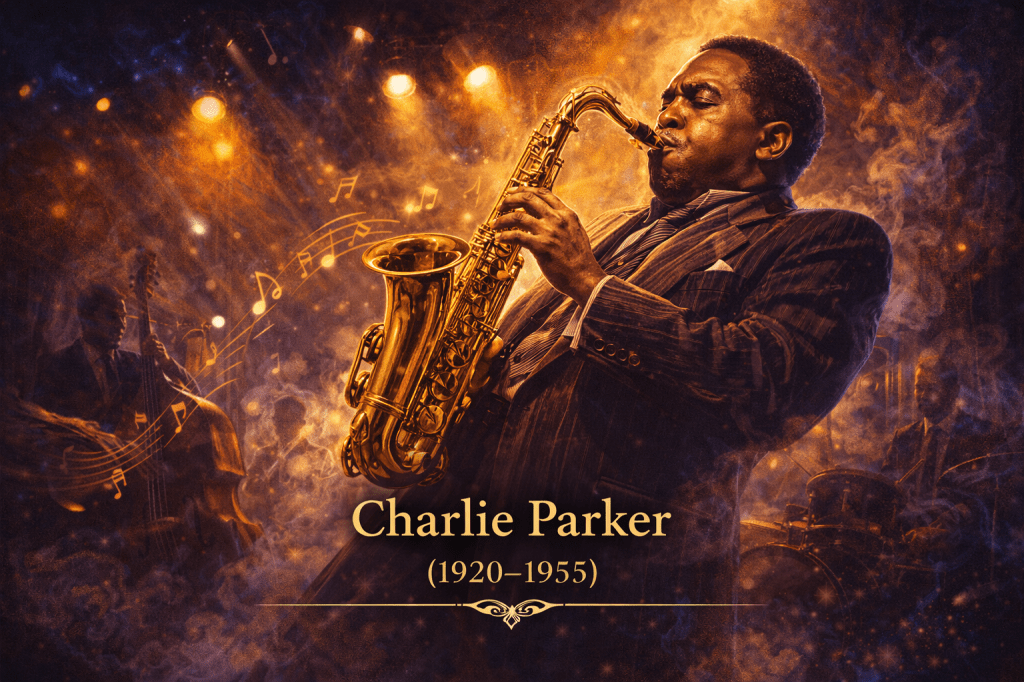
March 12, 1955
When Bebop Changed How English Talked About Music
On March 12, 1955, the world lost Charlie “Bird” Parker, one of the most revolutionary musicians in the history of jazz. A pioneering alto saxophonist and central architect of the bebop movement, Parker transformed not only musical technique but also the way critics, musicians, and audiences discussed music in English. His artistry helped generate a new vocabulary of jazz criticism, performance description, and American cultural slang that still shapes the language of music writing today.
1. The Birth of Bebop Vocabulary in English Music Criticism
Parker was a leading figure in the development of bebop, a complex and improvisational form of jazz that emerged in the 1940s. As critics struggled to describe this radical new music, English-language journalism and criticism expanded its terminology.
Key vocabulary associated with bebop culture:
- bebop / bop
- riff, lick, and run (describing musical phrases)
- jam session
- improvisation as a central aesthetic principle
- descriptions of players as “cool,” “hip,” or “hot”
These terms entered mainstream English writing about music and helped formalize the language of jazz criticism.
2. Shaping the Language of Musical Improvisation
Parker’s playing was so intricate and inventive that critics had to develop new metaphors and descriptive strategies to capture his style.
Common descriptive language that grew around bebop performance includes:
- “rapid-fire phrasing”
- “angular melodies”
- “harmonic daring”
- “virtuosic improvisation”
- “breakneck tempo”
This vocabulary remains central to how English-language critics describe jazz performance today.
3. Influence on American Slang and Cultural Expression
The jazz world of the 1940s and 1950s was closely linked to evolving forms of American urban slang. Parker’s cultural influence helped spread this expressive language beyond jazz clubs into broader popular culture.
Expressions associated with jazz culture that became widely recognized include:
- cool (stylish, composed)
- hip (socially aware or culturally savvy)
- dig (to understand or appreciate)
- cat (a musician or person, often used informally)
- groove (a strong rhythmic feeling or enjoyable flow)
Many of these terms eventually entered everyday American English.
4. Establishing the Language of Jazz Biography and Myth
Parker’s dramatic life story—marked by brilliance, struggle, and early death—also helped shape the narrative language surrounding jazz musicians.
Common themes and expressions that emerged in jazz writing include:
- the idea of the “tortured genius” artist
- narratives of creative rebellion and improvisational freedom
- descriptions of musicians “finding their voice” through improvisation
- mythologizing the jazz club as a site of artistic experimentation
These narrative frameworks influenced how later critics and historians wrote about jazz culture.
Final Thoughts
The death of Charlie Parker in 1955 marked the loss of one of the most transformative figures in modern music. Through his revolutionary bebop style, Parker forced critics, journalists, and audiences to develop a richer vocabulary for discussing improvisation, rhythm, and musical innovation.
In doing so, he helped shape not only the sound of modern jazz but also the language through which English describes creativity, coolness, and artistic freedom.
Before Parker, jazz changed music.
After Parker, it changed the words used to describe it.
 What Happened on This Day?
Leave a comment