
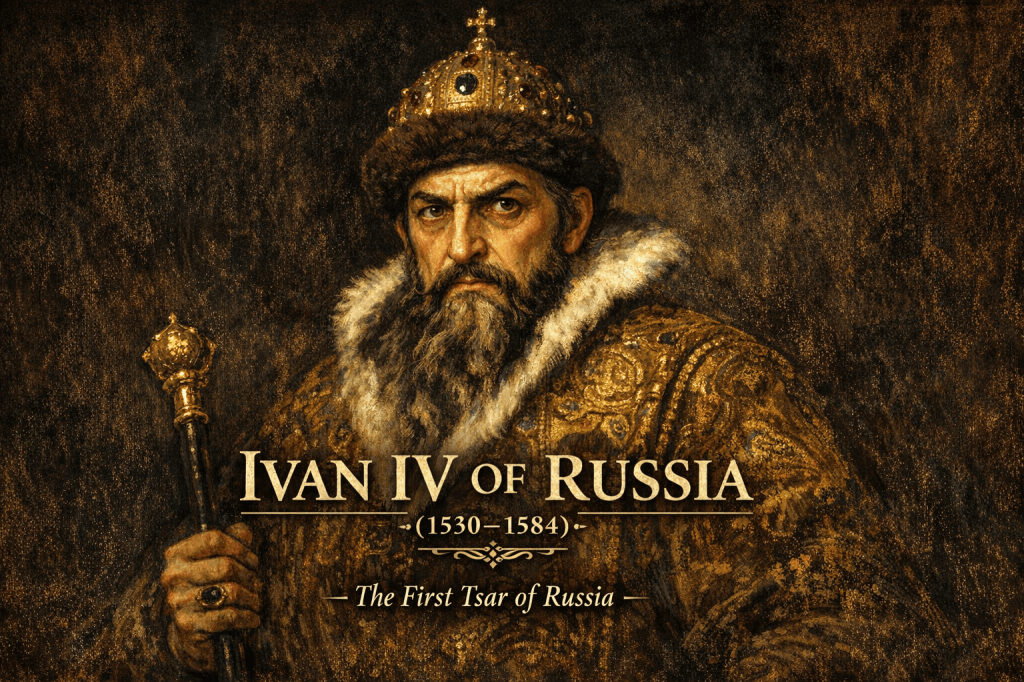
March 28, 1584
When a Tsar Entered the English Imagination as a Symbol of Absolute Power
On March 28, 1584, Ivan IV of Russia—known as Ivan the Terrible—died after a reign marked by centralization of power, political violence, and enduring historical controversy. Although a Russian ruler, his legacy was widely transmitted through English-language histories, political writings, and later literature. Over time, his name and reign helped shape the vocabulary and imagery of tyranny, absolutism, and autocratic rule in English discourse.
1. A Historical Figure Transformed into Political Symbol
As English historians and writers engaged with European and Russian history, Ivan IV became more than a distant monarch—he became a symbolic figure.
Key linguistic consequences:
- association of his name with extreme autocratic power
- use of “the Terrible” as a descriptive model in English characterization
- transformation of a historical figure into a rhetorical reference point
- incorporation into narratives of despotism and state violence
- recurring presence in English historical and political writing
His identity became shorthand for a particular kind of rule.
2. Reinforcing the Vocabulary of Tyranny and Absolutism
Accounts of Ivan IV’s reign contributed to the development and reinforcement of political terminology in English.
Key terms and concepts strengthened include:
- tyranny
- absolutism
- despotism
- autocracy
- state terror
These terms were used to interpret not only Russia, but political power more broadly.
3. Shaping Narrative and Dramatic Representations
Ivan IV’s dramatic life and rule made him a compelling subject for storytelling, influencing how English writers constructed narratives of power and fear.
Literary and rhetorical developments include:
- portrayal of rulers as psychologically complex and dangerous figures
- use of heightened, dramatic language to depict authority
- integration of historical material into plays, biographies, and essays
- emphasis on spectacle, cruelty, and unpredictability in leadership
- development of narrative tropes around the “fearsome ruler”
These patterns influenced both historical writing and literary imagination.
4. A Lasting Influence on Political Language in English
Through centuries of retelling and reinterpretation, Ivan the Terrible remained part of the English-speaking world’s vocabulary of power.
Long-term impact:
- continued use of his name as a metaphor for ruthless leadership
- reinforcement of English as a language for analyzing global political figures
- influence on discussions of authority beyond national boundaries
- contribution to a shared international vocabulary of governance
- illustration of how history feeds into modern political expression
His legacy shows how language absorbs and reshapes historical memory.
Why It Matters
The death of Ivan IV in 1584 marks the end of a reign that extended far beyond Russia in its linguistic impact. Through English histories and literature, he became a symbol—a way of speaking about power at its most extreme.
In this way, Ivan the Terrible lives on in English not just as a figure of the past, but as part of the enduring vocabulary of tyranny and political imagination.
A ruler died—but a symbol of power remained.
 What Happened on This Day?
Leave a comment