
2026 February
-
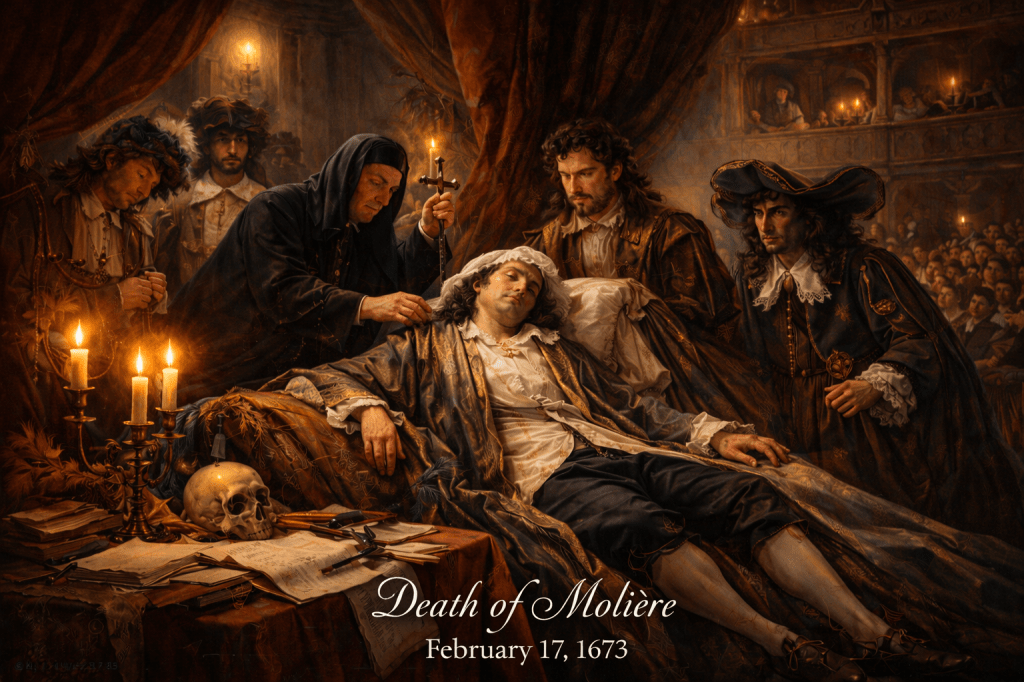
On February 17, 1673, Molière died after collapsing during a performance, sealing a life where theater and reality intertwined. His sharper legacy lies in language: he transformed satire into disciplined intelligence, shaping comic dialogue, social critique, and the evolution of modern dramatic prose across Europe, including English literature.
-
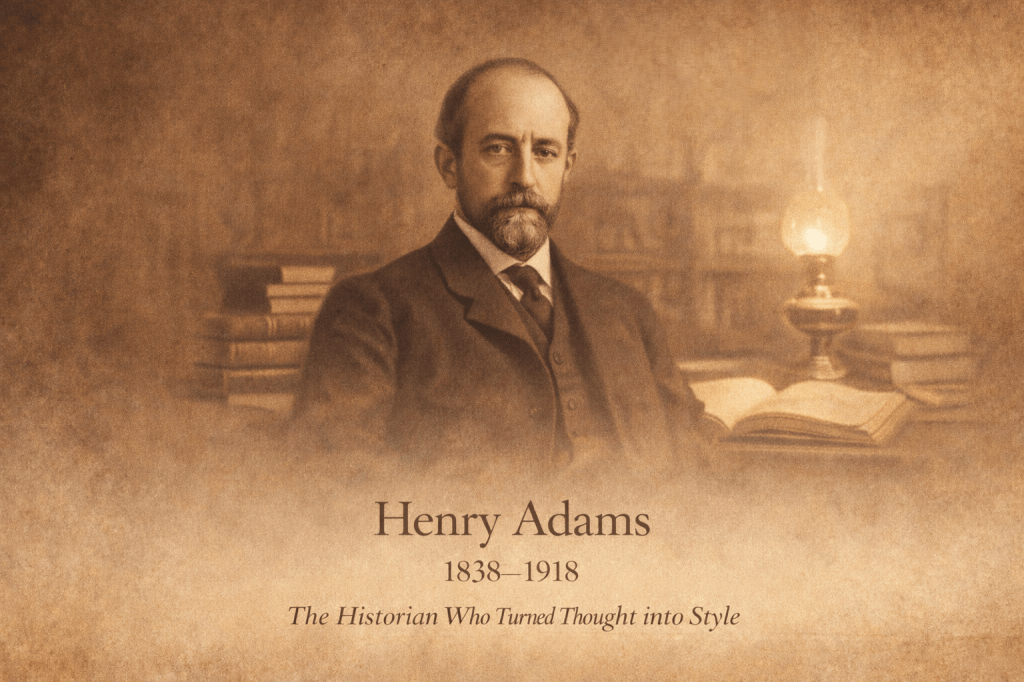
Born February 16, 1838, Henry Adams transformed historical writing into reflective art. In The Education of Henry Adams, he fused philosophy, autobiography, and analysis, proving that English nonfiction could think deeply while sounding elegant. His prose reshaped how history narrates consciousness, modernity, and the intellectual evolution of the self.
-

Born on February 15, 1874, Ernest Shackleton transformed exploration into narrative art. Through Antarctic journals and reports, he shaped how English expresses endurance, uncertainty, and leadership under extreme conditions. His prose blended scientific clarity with dramatic tension, forging the modern voice of survival storytelling and resilient human experience.
-
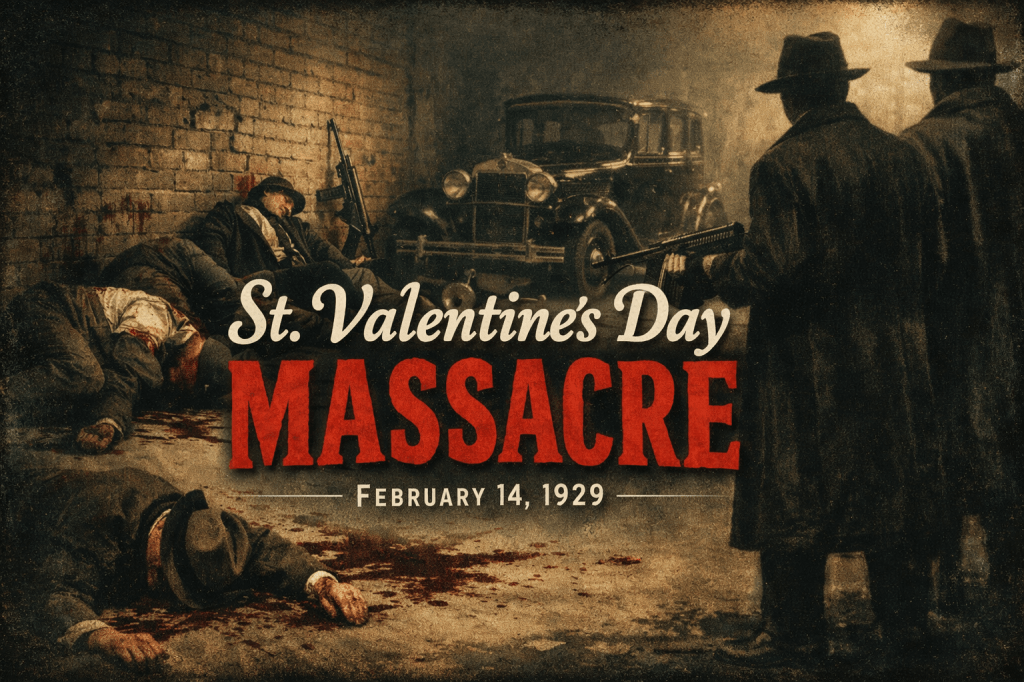
On February 14, 1929, the St. Valentine’s Day Massacre transformed violence into narrative. Newspaper coverage of the crime, linked to Al Capone, forged a modern crime lexicon and a sharp, visual prose style that still shapes true crime, noir fiction, and investigative storytelling in English today.
-
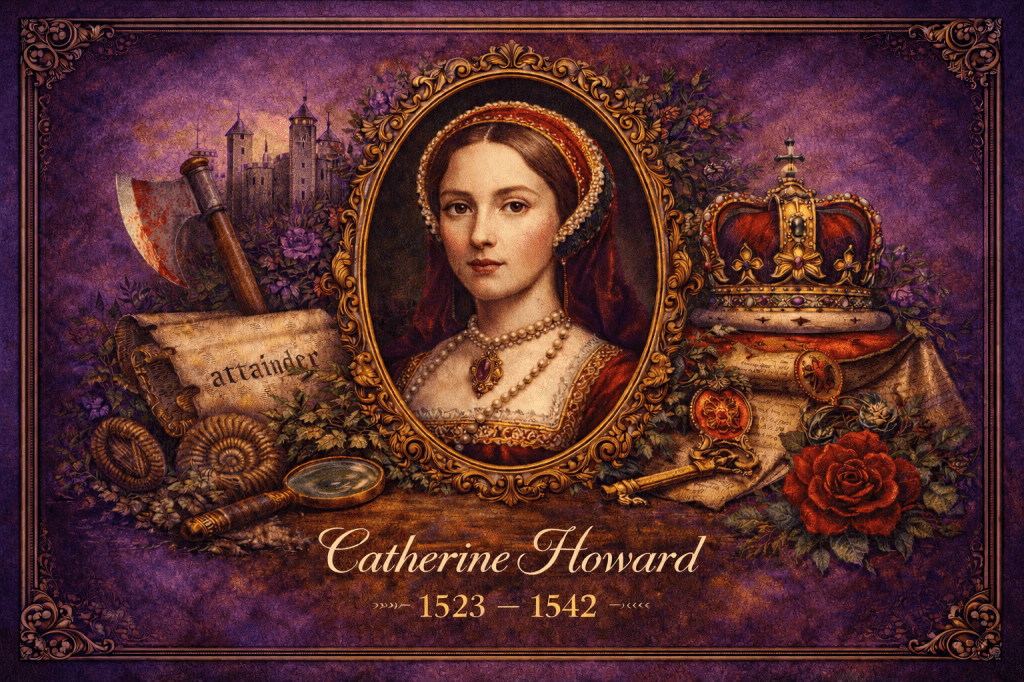
On February 13, 1542, Catherine Howard was executed at the Tower of London, transforming political catastrophe into literary permanence. Her fall shaped chronicles, ballads, legal language, and drama, fueling centuries of English historical narrative and embedding the Tudor court’s vocabulary of scandal, treason, and tragic downfall into cultural memory.
-
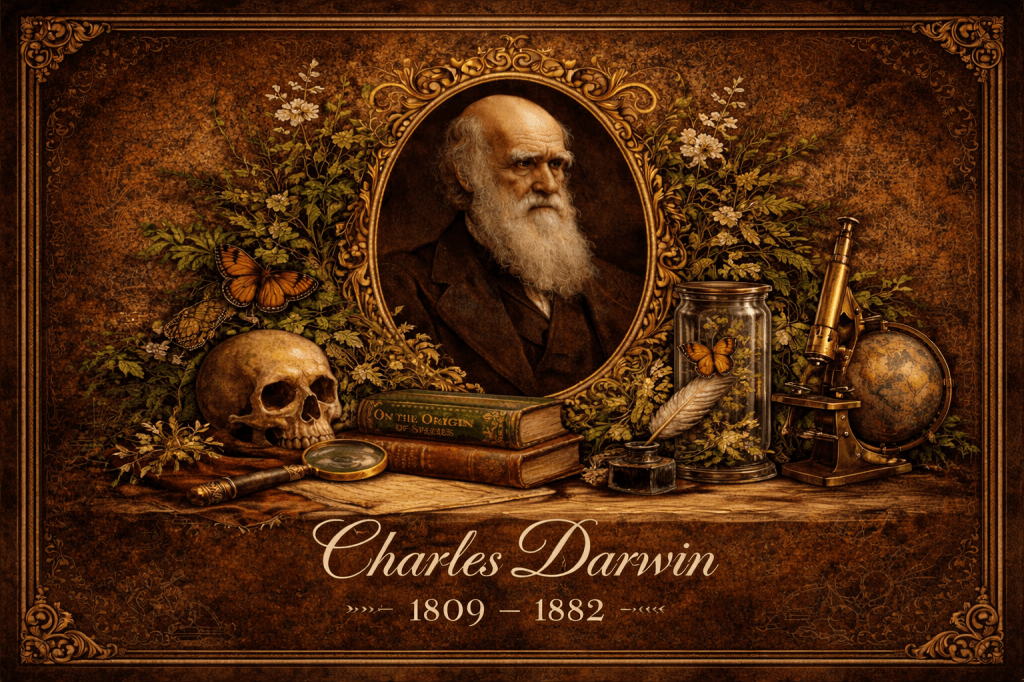
On February 12, 1809, Charles Darwin was born — a thinker who reshaped not only biology but the architecture of modern English prose. His writing proved that scientific language could be precise yet persuasive, cautious yet revolutionary, establishing a model of argument built on evidence, clarity, and intellectual humility.
-
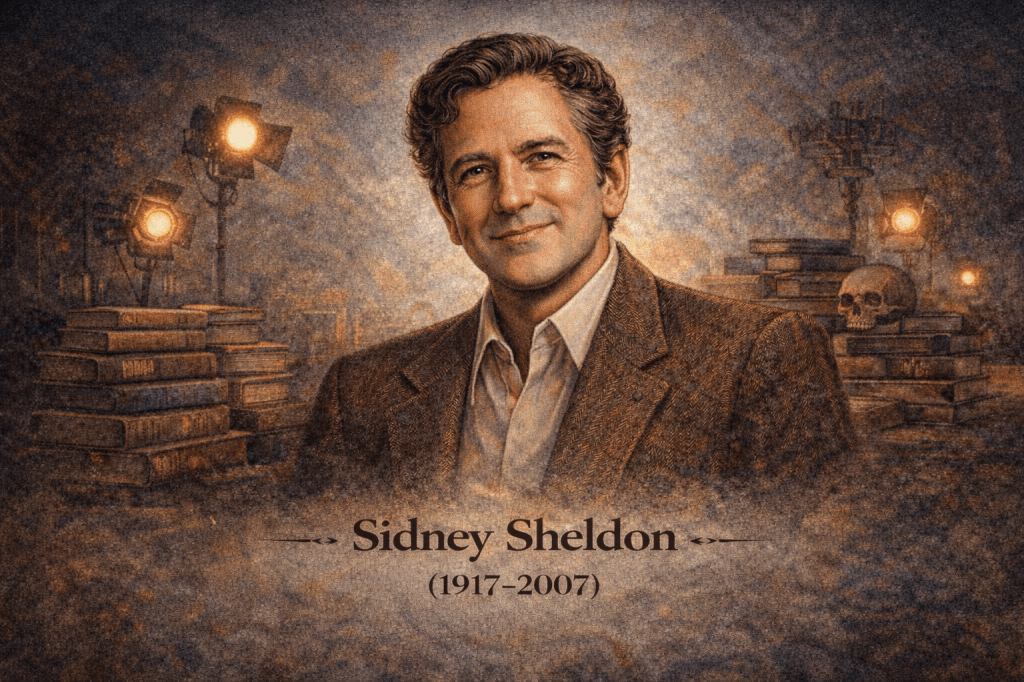
Born February 11, 1917, Sidney Sheldon refined the architecture of the modern page-turner. His lean, cinematic prose prioritized speed, suspense, and clarity, shaping commercial English fiction worldwide. By perfecting cliffhangers and momentum-driven chapters, he engineered narrative as propulsion—storytelling calibrated for global readability and relentless anticipation.
-
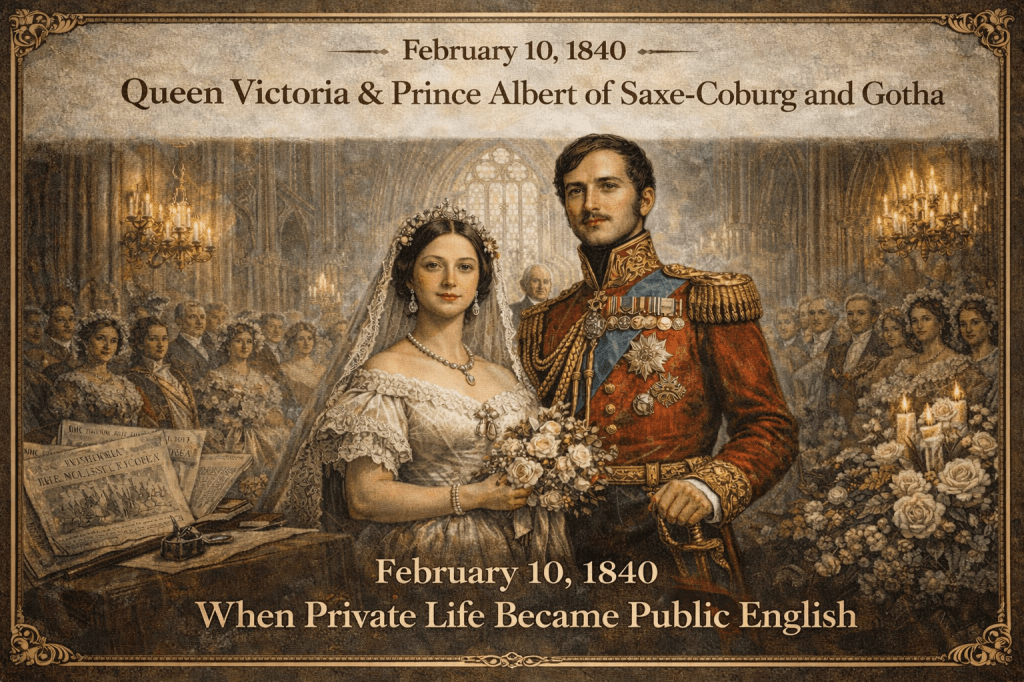
On February 10, 1840, Queen Victoria married Prince Albert, and English entered a distinctly Victorian register. Their union helped stabilize a language of respectability, domestic virtue, and institutional authority. Journalism, biography, and private correspondence adopted disciplined sincerity, shaping a standardized, morally weighted English for generations.
-
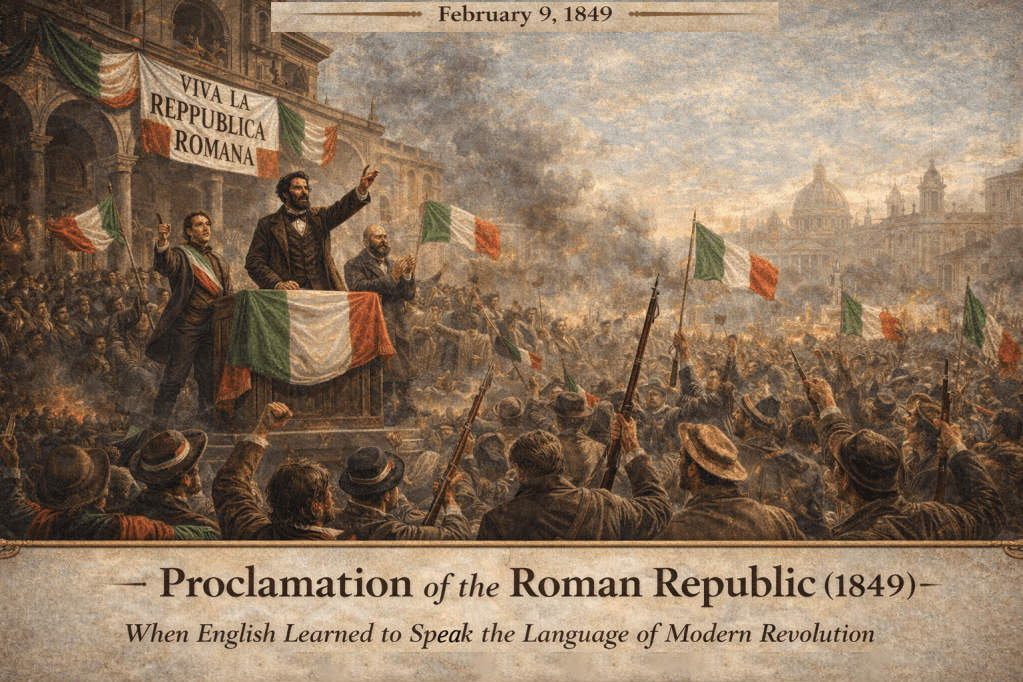
The Roman Republic of 1849 sharpened English political prose by forcing it to describe revolution as lived reality, not theory. Journalism and political writing absorbed urgent terms—republicanism, popular sovereignty, counter-revolution—while developing a nuanced tone of tragic idealism. English learned to narrate power, failure, and hope with greater precision.
-
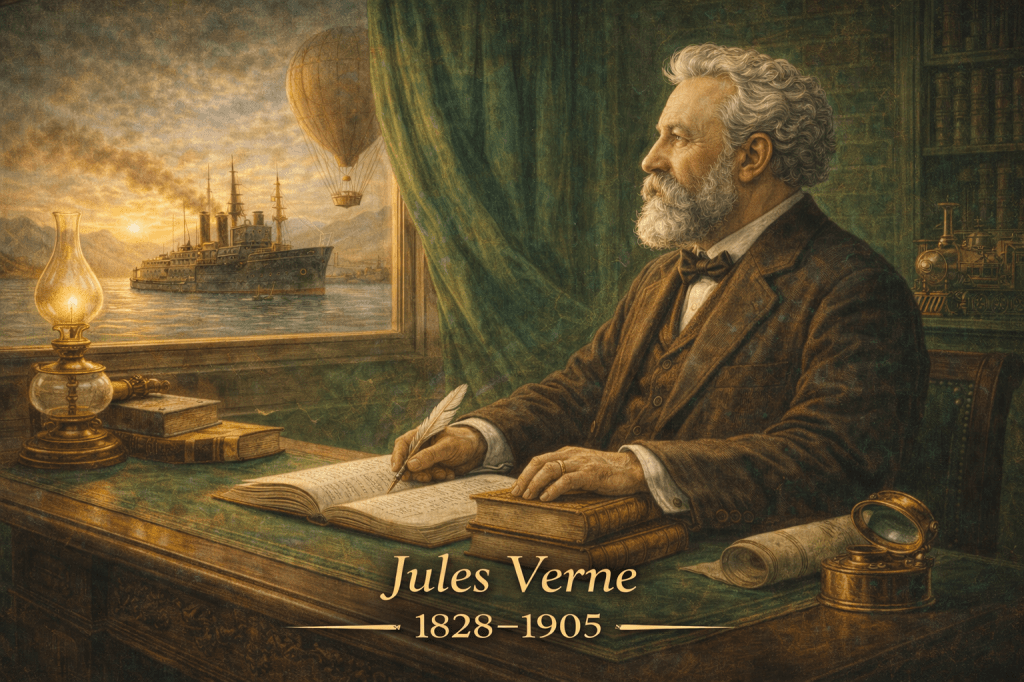
Born February 8, 1828, Jules Verne taught English to narrate the future as fact. Through translation, his scientific adventures fused technical precision with narrative momentum. English fiction learned to treat invention as documentation, exploration as method, and imagination as measurable possibility rather than distant fantasy.
 What Happened on This Day?