
What Happened on This Day?
-
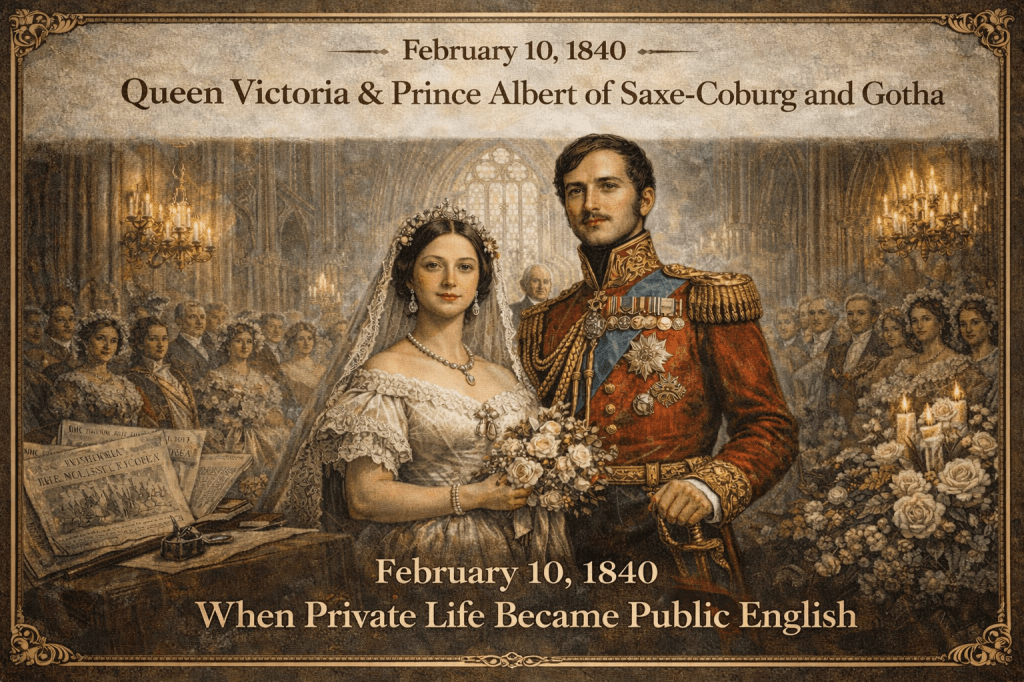
On February 10, 1840, Queen Victoria married Prince Albert, and English entered a distinctly Victorian register. Their union helped stabilize a language of respectability, domestic virtue, and institutional authority. Journalism, biography, and private correspondence adopted disciplined sincerity, shaping a standardized, morally weighted English for generations.
-
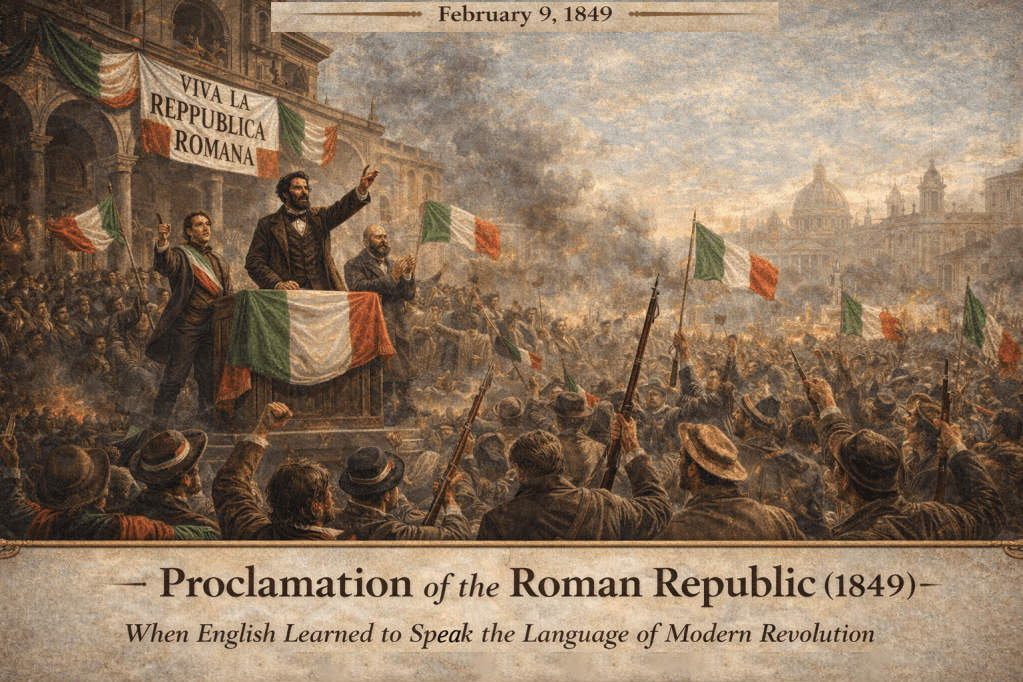
The Roman Republic of 1849 sharpened English political prose by forcing it to describe revolution as lived reality, not theory. Journalism and political writing absorbed urgent terms—republicanism, popular sovereignty, counter-revolution—while developing a nuanced tone of tragic idealism. English learned to narrate power, failure, and hope with greater precision.
-
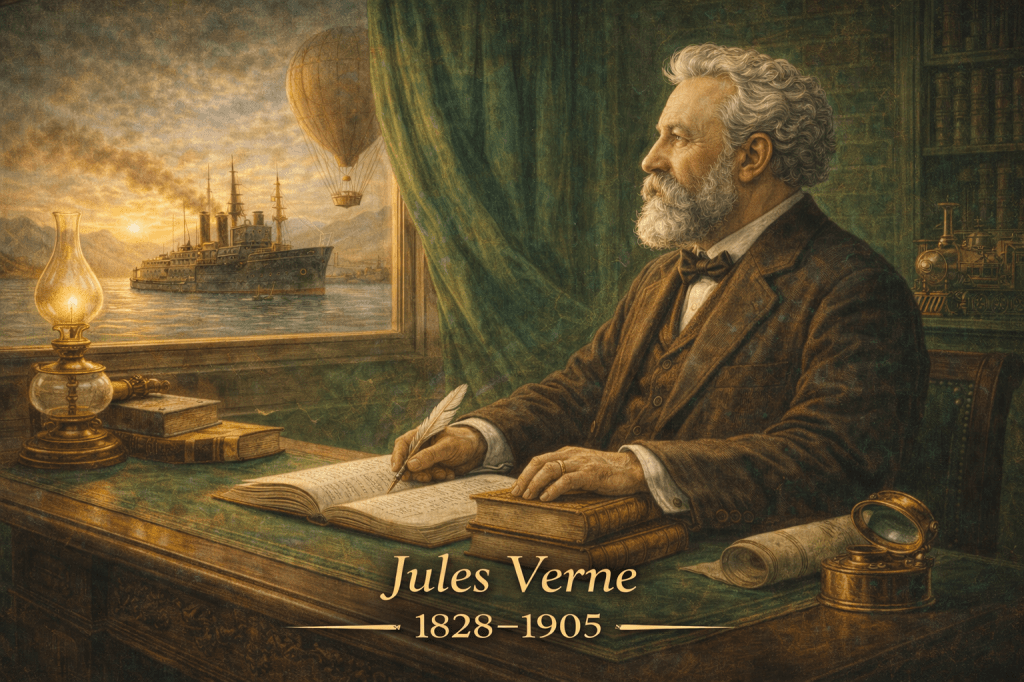
Born February 8, 1828, Jules Verne taught English to narrate the future as fact. Through translation, his scientific adventures fused technical precision with narrative momentum. English fiction learned to treat invention as documentation, exploration as method, and imagination as measurable possibility rather than distant fantasy.
-
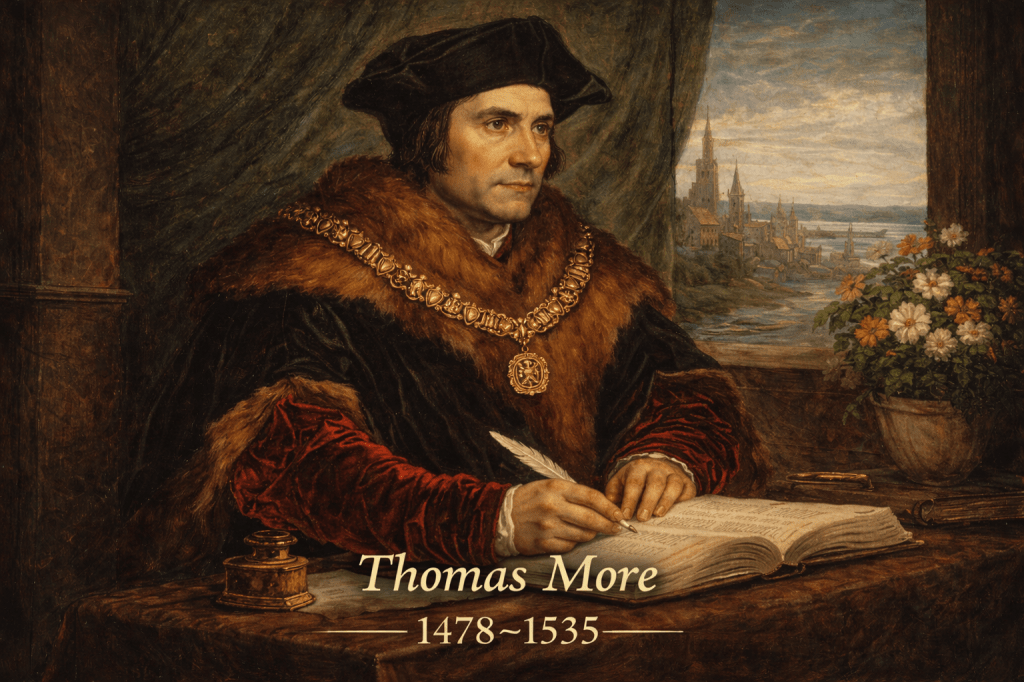
Thomas More transformed English thought by introducing utopia—a word and method for exploring politics through fiction. His work showed that imagined societies could critique real ones, expanding English prose to hold irony, ambiguity, and reformist vision. Through narrative, English learned to question power without direct confrontation.
-
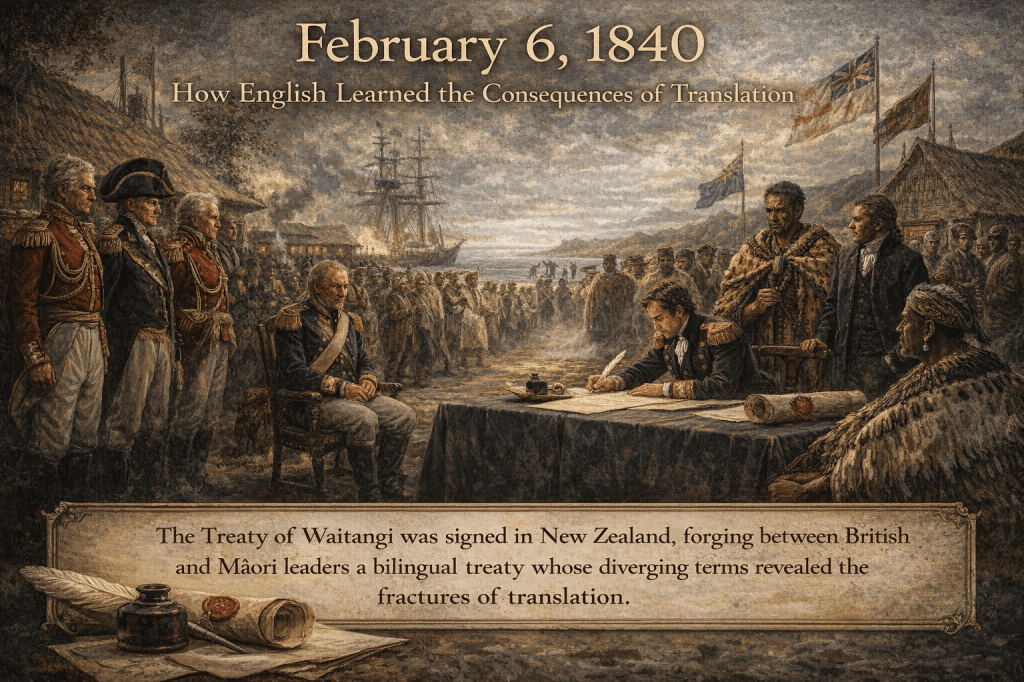
On February 6, 1840, the Treaty of Waitangi revealed how English meaning can fracture when translation, law, and power intersect. Differences between English and Māori versions exposed semantic ambiguity, reshaped legal vocabulary, and transformed English into a more self-aware instrument of interpretation, authority, and historical responsibility.
-
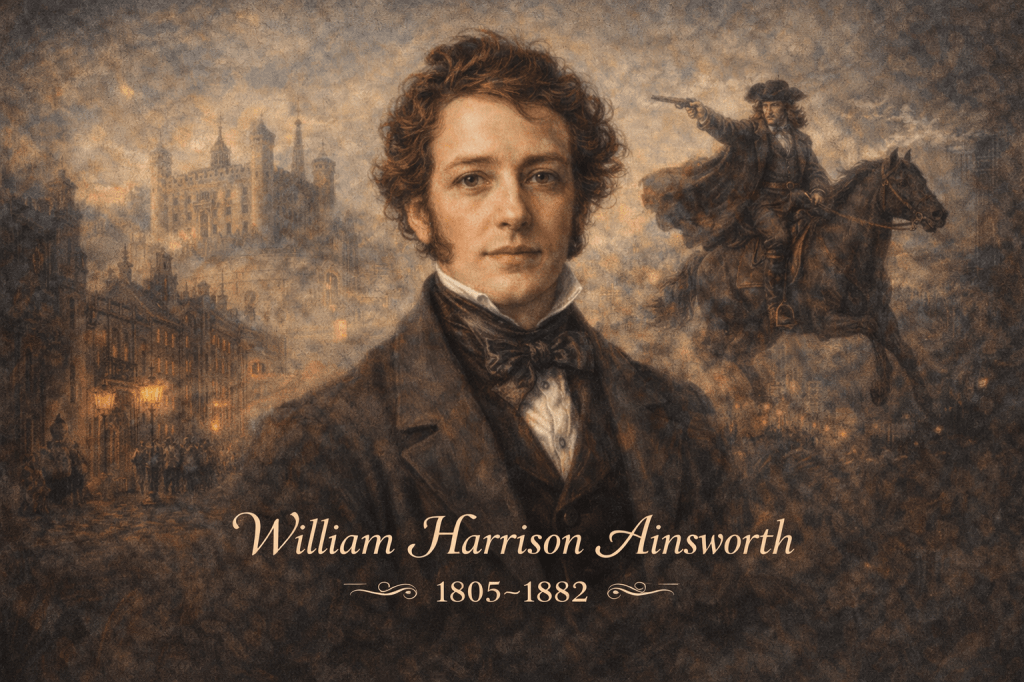
Born February 4, 1805, William Harrison Ainsworth turned English history into mass reading. Through serialized romances, spectacle, and vivid prose, he fused fact with folklore, teaching English to narrate the past as drama. His novels democratized historical storytelling, shaping how generations encountered history not as scholarship, but as shared imaginative experience.
-
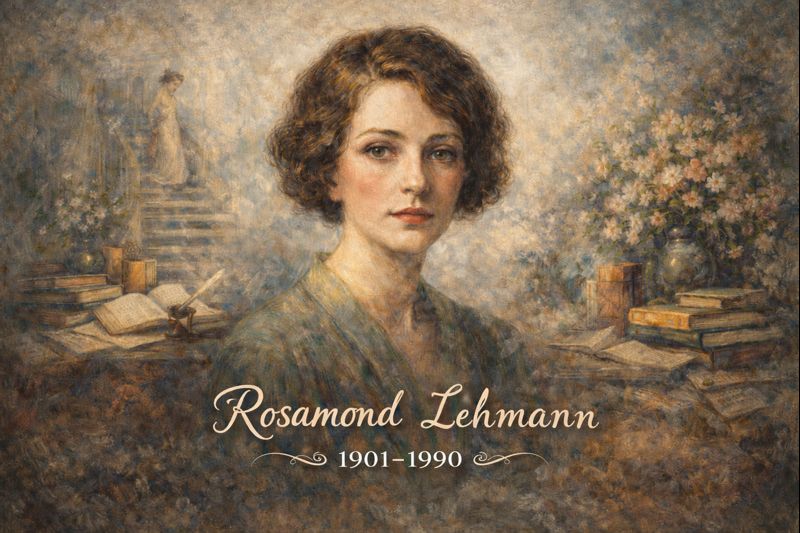
Born in 1901, Rosamond Lehmann refined English prose to capture emotional precision and feminine interior life. Her novels traced love, loss, and consciousness with rare psychological clarity, granting women’s inner worlds literary authority. Lehmann reshaped modern English fiction by proving that emotional nuance, hesitation, and vulnerability were not weaknesses, but structural strengths.
-
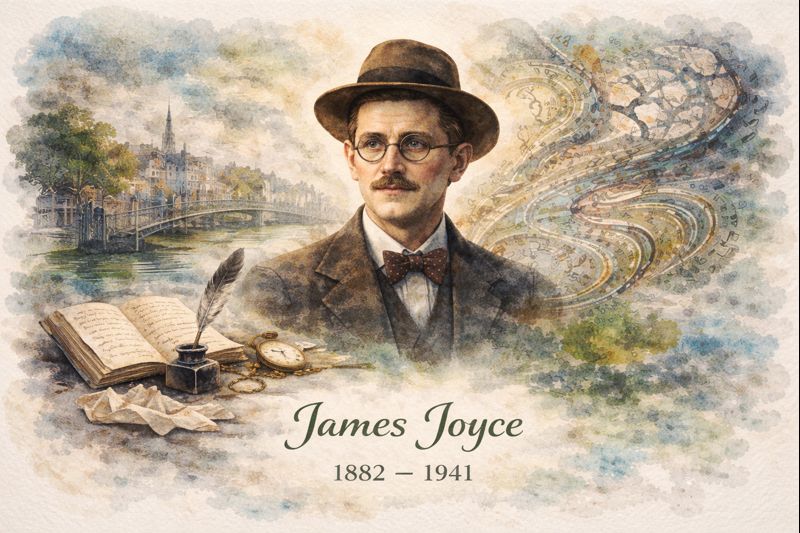
Born February 2, 1882, James Joyce forced English to mirror consciousness itself. He broke neutral narration, elevated everyday speech, and stretched syntax to hold memory, sensation, and doubt. After Joyce, English fiction could think, hesitate, contradict, and listen to inner speech without apology, forever changing narrative possibility and literary history.
-
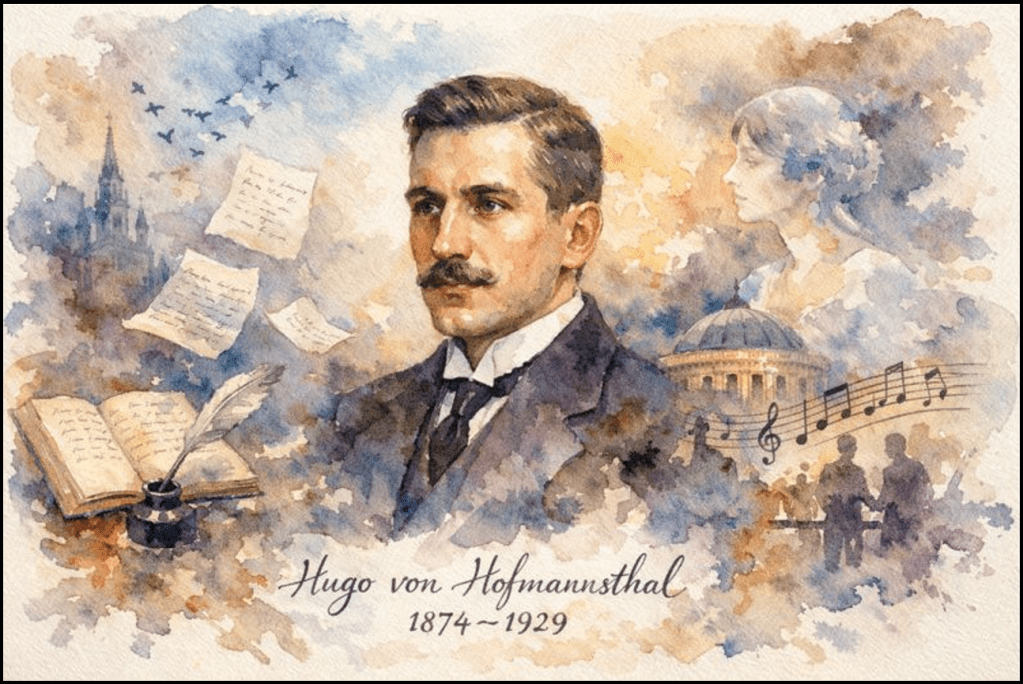
Hugo von Hofmannsthal reshaped how English modernism understands the failure of language. Through translation and criticism his work taught English to name silence fragmentation and interior doubt. He helped writers and scholars confront moments where speech falters meaning fractures and modern consciousness begins.
-

Ham the chimpanzee’s 1961 spaceflight forced English to narrate the unprecedented before humans could speak from orbit. Journalists and scientists shaped a new narrative nonfiction, blending technical precision with suspense, ethics, and empathy, teaching English how to tell stories of risk, procedure, and progress beyond Earth for the first time.
 What Happened on This Day?